- Key Takeaways
- Why Sustainable Productivity Matters
- Design Work That People Can Manage
- Communicate Clearly and Listen Consistently
- Create Psychological and Physical Safety
- Offer Flexibility With Clear Expectations
- Replace Annual Reviews With Continuous Coaching
- Recognize Contributions and Support Growth
- Build Trust and Team Connection
- Connect Everyday Work to Customers
- Protect Breaks, Focus, and Personal Boundaries
- Hire and Develop People for Today’s Work
- Further Guidance & Tools
- Next Steps
- Final Words
We may earn a commission if you click on a product link and make a purchase at no additional cost to you. For more information, please see our disclosure policy.
Last updated: July 14, 2026
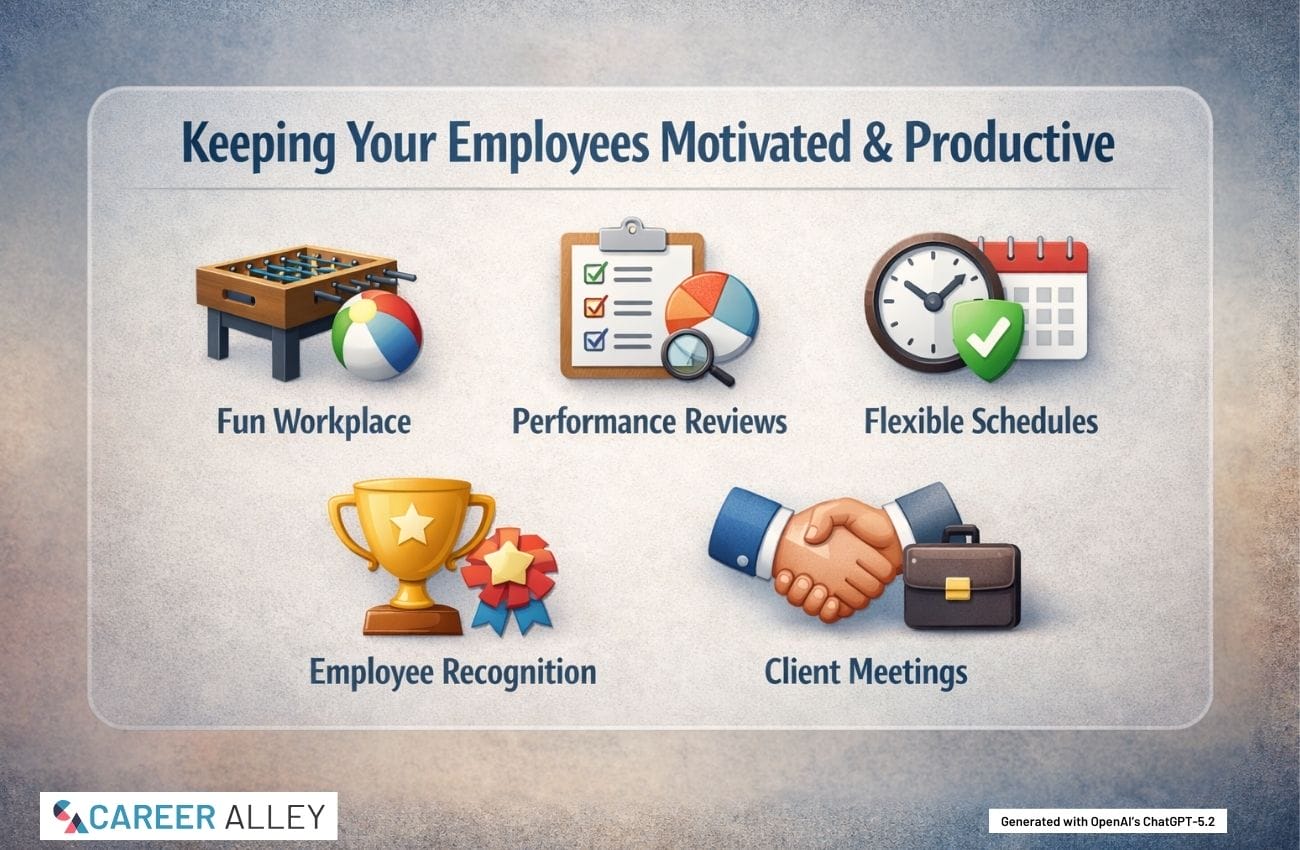
Key Takeaways
- Work Design Matters: Sustainable productivity comes from realistic workloads, clear priorities, dependable tools, and managers who remove obstacles before employees become overwhelmed.
- Flexibility Needs Structure: Flexible schedules work best when employees understand expected results, collaboration hours, response times, and their responsibilities for meeting commitments.
- Employee Voice Builds Trust: Regular listening, honest communication, and safe channels for raising concerns help managers identify problems before they undermine performance.
- Recognition Must Be Specific: Timely appreciation that explains an employee’s impact is more motivating than generic praise, occasional perks, or forced workplace activities.
- Burnout Requires Prevention: Breaks and wellness programs help, but employers must also address excessive workloads, unclear expectations, poor management, and constant interruptions.
Why Sustainable Productivity Matters
Employees are responsible for serving customers, maintaining operations, solving problems, and advancing the business. When good employees become exhausted, disengaged, or frustrated, customer service and company performance eventually suffer. Increasing productivity, therefore, cannot mean continually asking people to work faster, stay later, or absorb more responsibilities.
The World Health Organization describes burnout as an occupational phenomenon associated with chronic workplace stress that has not been successfully managed. That distinction matters. Burnout is not simply an employee failing to stay positive. Employers must examine workloads, management practices, communication, resources, control, recognition, and workplace relationships. The goal is to create conditions in which employees can perform consistently without sacrificing their health or personal lives. Managers seeking a deeper understanding of the stress cycle may also find Burnout: The Secret to Unlocking the Stress Cycle useful.
Burnout. You, like most American women, have probably experienced it. What’s expected of women and what it’s really like to exist as a woman in today’s world are two different things—and we exhaust ourselves trying to close the gap.


Design Work That People Can Manage
Before introducing motivational programs, examine how work is assigned. Employees struggle when everything is labeled urgent, responsibilities are unclear, or deadlines are set without considering existing commitments. Managers should identify the organization’s most important priorities, establish clear ownership, and explain which work can wait when demands conflict.
Employees also need suitable equipment, secure access, updated documentation, and dependable systems.
Become focused, organized, and calm with Todoist. The world’s #1 task manager and to-do list app. Todoist is the personal and team task manager used by over 25 million people to keep track of everything from work projects to birthday reminders.

Communicate Clearly and Listen Consistently
Employees cannot make good decisions when they do not understand company priorities, organizational changes, or the reasoning behind management decisions. Share information early, explain how changes affect individual teams, and provide one reliable place where employees can find current policies, decisions, responsibilities, and project updates.
Communication must also travel upward. Give employees regular opportunities to raise concerns, suggest improvements, and explain what is preventing them from succeeding. Managers should listen without becoming defensive and report back on what will change, what will not change, and why. Resources such as 4 Essential Keys to Effective Communication can help leaders improve these conversations, while practical guidance on providing effective employee feedback can strengthen day-to-day coaching.
Create Psychological and Physical Safety
Employees must be able to work without fearing harassment, discrimination, violence, retaliation, humiliation, or preventable physical hazards. Establish clear reporting procedures, respond promptly to complaints, protect confidentiality when possible, and hold people accountable regardless of seniority or performance. Regularly reviewing workplace safety practices and trends can help employers recognize risks that may otherwise be overlooked.
Psychological safety also means employees can admit mistakes, ask questions, and request help before a problem becomes a crisis. Managers should make workload discussions routine rather than waiting for someone to announce that they are overwhelmed. When leaders respond constructively, employees are more likely to raise risks early, share useful ideas, and challenge decisions that could harm customers or the business.
Stay healthier and more comfortable during the workday with practical picks for movement, posture, hydration, focus, and everyday wellness. This list includes helpful items for creating a more active, ergonomic, and balanced workspace whether you work from home, in an office, or on the go.

Offer Flexibility With Clear Expectations
Flexible work can improve employees’ control over when and where they complete their work, but flexibility should not mean confusion. Define expected outcomes, availability requirements, core collaboration hours, response standards, and any responsibilities that must be performed at a particular location. Evaluate performance through results and reliability rather than physical visibility.
Flexibility may include remote or hybrid work, adjusted starting times, compressed schedules, shift swaps, or occasional schedule changes. The appropriate arrangement will depend on the job, customers, security requirements, and team needs. Employers can review the CIPD flexible-working guidance and CareerAlley’s discussions of remote versus hybrid work and how hybrid work can affect employees. Whatever model you choose, protect a reasonable work-life balance and avoid treating evening availability as the default.
Replace Annual Reviews With Continuous Coaching
Formal performance reviews can be useful, but employees should not wait a year to learn whether they are meeting expectations. Schedule brief coaching conversations throughout the year. Discuss current priorities, progress, obstacles, development needs, and the support the employee requires from the manager.
- Clarify Results: Define what successful performance looks like, which outcomes matter most, and how progress will be evaluated.
- Discuss Obstacles: Identify missing information, conflicting priorities, skill gaps, approval delays, and other barriers the manager can help remove.
- Agree on Actions: End each conversation with a manageable set of responsibilities, deadlines, and follow-up commitments for both parties.
Goals should be meaningful, measurable, and adjustable when business priorities change. S.M.A.R.T. Goals Made Simple offers a useful framework, but managers should avoid creating too many goals that cause employees to lose sight of the work that matters most.
Get a ten-step plan for setting and achieving your goals. Unlike other titles, this book will teach you to turn any idea into an actionable plan.

Recognize Contributions and Support Growth
Recognition is most effective when it is timely, specific, and connected to meaningful impact. Rather than saying someone did a great job, explain what the person accomplished, who it helped, and why it mattered. Recognition can be private or public depending on the employee’s preferences, but it should be fair and based on contribution rather than visibility or popularity.
Employers can use platforms such as Nectar, but recognition does not require an elaborate program. A thoughtful message, greater autonomy, protected development time, mentorship, or an opportunity to lead a well-supported project may be more valuable than a generic gift. Managers should also create visible paths for advancement and strengthen the management skills needed to support employee success.
Build Trust and Team Connection
Employees do not need to become close friends, but they must be able to communicate respectfully, resolve disagreements, and depend on one another. Managers can strengthen relationships by clarifying team norms, addressing destructive behavior quickly, and creating opportunities for employees to understand each other’s responsibilities and working styles.
Occasional team-building activities can help, but forced entertainment will not repair mistrust or poor management. Practical connection often comes from peer mentoring, cross-functional problem-solving, shared learning sessions, and opportunities to celebrate completed work. These activities should be accessible to remote, hybrid, deskless, and on-site employees whenever possible.
Explore CareerAlley’s curated Amazon picks for job search tools, resume help, interview prep, work essentials, and smart career-building resources.

Connect Everyday Work to Customers
Employees are more motivated when they understand how their work affects customers and the organization’s mission. Share customer comments, support trends, renewal information, project outcomes, quality measures, and examples of problems the team helped solve. This provides context that cannot be created through abstract performance targets alone.
Customer-facing employees should have reasonable opportunities to share what they are hearing, while employees who do not meet customers directly should still see the results of their work. Avoid using customer urgency to justify permanent overwork. Instead, use customer information to set better priorities, improve processes, and help employees make informed decisions.
Protect Breaks, Focus, and Personal Boundaries
Employees need breaks, uninterrupted focus time, and the ability to disconnect after work. Managers should reduce unnecessary meetings, shorten recurring meetings that no longer serve a clear purpose, and avoid expecting immediate responses to every message. Leaders must model these behaviors themselves because employees will follow what managers do more closely than what a policy says.
Books such as Getting Things Done: The Art of Stress-Free Productivity may help individuals organize their commitments, but personal productivity techniques should not serve as a substitute for adequate staffing and sensible priorities. When employees repeatedly work through breaks or after hours, examine the system before advising them to manage their time better.
We’re with you until you land your next job — placement support guaranteed. Four expert services. One simple fee. This personal, done-for-you, job placement support service has everything you need to find your next role.

Hire and Develop People for Today’s Work
Hiring motivated employees begins with an accurate job description. Explain the workload, working arrangement, decision-making authority, performance expectations, and advancement opportunities. Look for the skills the role actually requires, including communication, adaptability, judgment, collaboration, and reliable follow-through, rather than relying on vague ideas about cultural fit.
Once employees are hired, provide useful onboarding, job-specific training, regular coaching, and opportunities to build new skills. Development should not be reserved for a small group of presumed future leaders. Employees are more likely to remain engaged when they can see how their capabilities, responsibilities, and careers can grow with the organization.
Further Guidance & Tools
- Engagement Research: Use Gallup Workplace to explore research and management practices related to engagement, performance, recognition, and retention.
- Flexible Work: Review SHRM workplace resources for practical guidance on scheduling, hybrid policies, employee relations, and manager responsibilities.
- Burnout Guidance: Consult the World Health Organization for recognized guidance on workplace mental health, burnout, and organizational risk reduction.
- Work Stress: Use the NIOSH work-stress resources to understand how job demands, resources, and working conditions affect employee well-being.
- Well-Being Framework: Explore the Surgeon General’s workplace framework for practical principles involving protection, connection, belonging, growth, and work-life harmony.
Motion increases productivity by 137%. With automation and AI that intelligently plan your day, schedule meetings, and build the perfect to-do list.

Next Steps
- Survey Employees: Ask about workload, priorities, communication, flexibility, safety, and management support, then share the most important findings with the team.
- Review Workloads: Identify employees carrying conflicting or excessive responsibilities and decide which tasks should be reassigned, delayed, simplified, or eliminated.
- Reset Meetings: Remove recurring meetings without a clear purpose and create protected focus periods when employees can complete demanding work without interruption.
- Coach Monthly: Hold brief monthly conversations about performance, obstacles, development, and support, rather than saving important feedback for the annual review.
- Recognize Impact: Ask managers to acknowledge one specific contribution each week and explain how that employee’s work helped customers, colleagues, or the business.
Final Words
Sustainable productivity is not created through pressure, slogans, occasional perks, or a demand that employees remain positive regardless of their working conditions. It develops when leaders set sensible priorities, communicate honestly, listen to concerns, provide useful resources, recognize meaningful contributions, and respect employees’ time. Improve the systems surrounding the work, and motivation becomes easier to maintain because employees can see progress, trust their managers, and perform well without being pushed toward burnout.
A compact glass desktop whiteboard that fits between your keyboard and monitor, offering a smooth dry-erase surface, hidden storage and device trays, and all included accessories to keep notes, tools, and your workspace neatly organized.


Mark Fiebert is a former finance executive who hired and managed dozens of professionals during his 30-plus-year career. He now shares expert job search, resume, and career advice on CareerAlley.com.