- Key Takeaways
- The Modern Reality of Motivation and Burnout
- Build an Engaging Work Environment Beyond the Office
- Make Performance Reviews a Year-Round Practice
- Offer Flexible Working Hours With Clear Guardrails
- Provide Recognition Opportunities That Feel Meaningful
- Set Aside Time for Client Feedback and Real-World Context
- Hold Team Building Events That Create Trust
- Reward Employees for Their Efforts the Right Way
- Show Your Appreciation in Simple, Visible Ways
- Hire the Right People for Today’s Work
- Encourage Employees to Take Breaks and Protect Focus
- Further Guidance & Tools
- Next Steps
- Final Words
We may earn a commission if you click on a product link and make a purchase at no additional cost to you. For more information, please see our disclosure policy.
Last updated: February 25, 2026
Key Takeaways
- Burnout Hurts Performance: Chronic, unmanaged workplace stress reduces focus, increases errors, and drives turnover, making prevention a core business priority.
- Flexibility Wins Talent: Hybrid-friendly policies and outcome-based expectations improve retention and widen the candidate pool without sacrificing accountability.
- Feedback Should Be Continuous: Regular coaching, clear goals, and timely course-corrections create stronger performance than relying on annual reviews alone.
- Recognition Drives Engagement: Frequent, specific appreciation builds momentum, strengthens culture, and helps high performers feel seen and valued.
- Systems Beat Slogans: Motivation improves when tools, workflows, and leadership habits remove friction and make great work easier to repeat.
The Modern Reality of Motivation and Burnout
Employees are the heart and soul of every organization. Employees handle their office tasks, maintain a positive workplace atmosphere, and build strong relationships with their business clients. Unfortunately, all these responsibilities can lead to burnout and a lack of motivation. If this situation occurs, it can severely damage your company.
In today’s market, burnout is widely treated as an occupational phenomenon tied to chronic workplace stress that has not been successfully managed. That framing matters because it shifts the solution away from “work harder” pep talks and toward better systems, clearer expectations, healthier workloads, and stronger management practices. When people are overloaded, under-recognized, or stuck in low-control roles, motivation drops even if they care about the mission. The best employers treat energy and engagement as resources to be managed, not as personality traits employees are expected to supply on demand.
Wasting the talent of the stellar people you brought on board would be a crime. To prevent them from losing their productivity, you should always look for ways to improve your business. Luckily, there are some ways to keep your dream team productive. Here are some proven ways to encourage and motivate your workers.
Build an Engaging Work Environment Beyond the Office
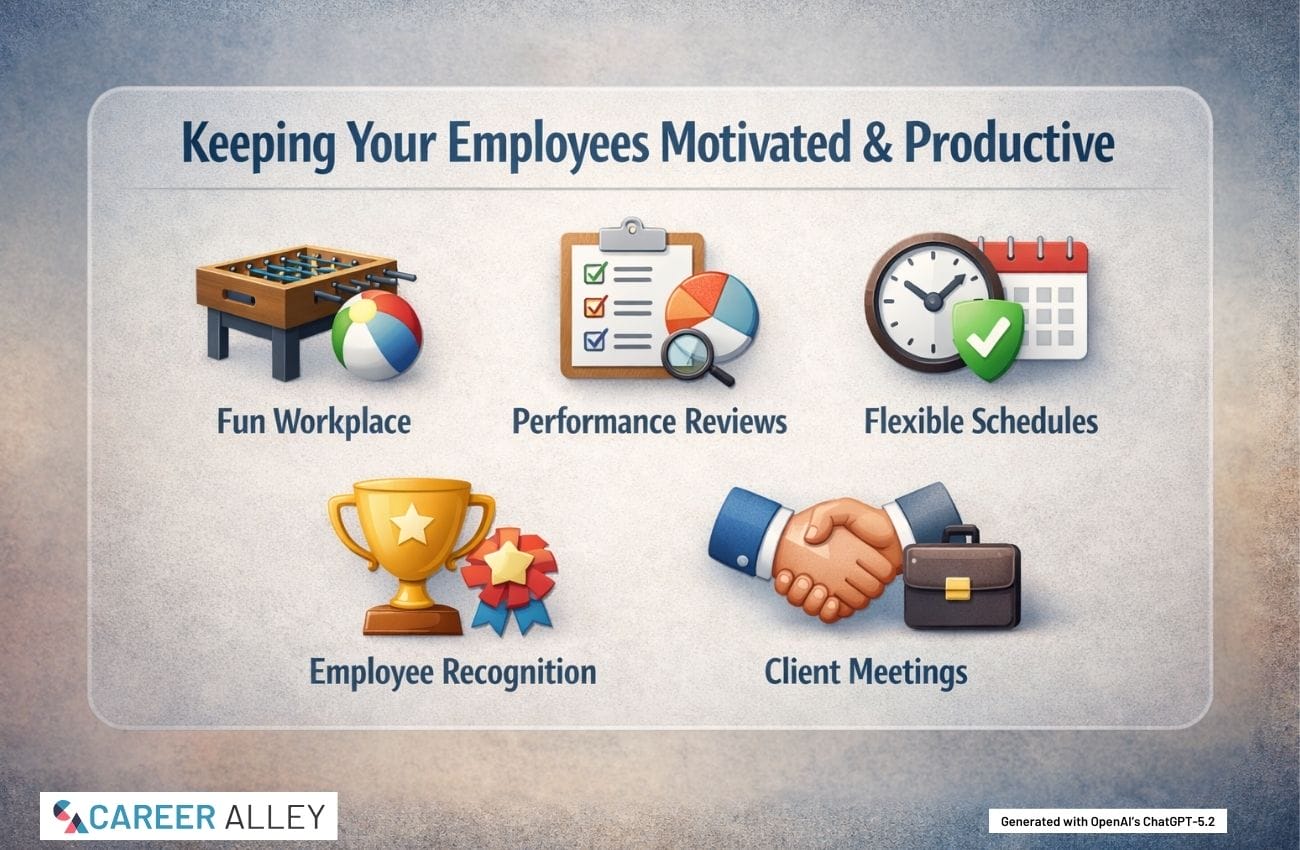
Your office should feel like a place people want to spend most of their time, not just a place where they are forced to work. Going to work every day should be an enjoyable experience, so you may want to look into ways to make your workplace more enjoyable. In 2026, “workplace” often includes home offices, coworking spaces, and hybrid shared environments, so the goal remains consistent: reduce friction, make collaboration easy, and ensure employees have what they need to do high-quality work.
Getting the necessary equipment for your employees to do their job is one of those things. Providing your employees with the right equipment for their jobs can make them excited about what they do. That includes dependable devices, secure access, and the right software stack, but it also includes simple workflow improvements like fewer meetings, clearer ownership, and better documentation. When people spend their day fighting tools or unclear processes, motivation bleeds out. When the day is structured for focus and progress, morale rises naturally.
You can also introduce daily activities to boost morale in the office. A great way to do this is to add a few games or other activities that boost staff morale and productivity. For hybrid teams, consider “connection rituals” that don’t feel forced: short weekly wins roundups, optional interest channels, or rotating demos where people show what they’ve built. You can even ask professionals like the MentorcliQ Company for guidance on designing and implementing activities that support connection, development, and belonging.
Make Performance Reviews a Year-Round Practice
The best way to ensure your employees get the most out of their jobs is through regular performance reviews. If you have been neglecting these reviews, it is time for you to get back on track. The modern update is simple: keep formal reviews, but stop treating them as the main event. Strong teams rely on continuous feedback, frequent coaching, and measurable goals that can be adjusted as priorities shift.
A performance review should include the following components:
- Self-assessment – This should be part of every employee’s review. Employees should be given the chance to assess themselves according to specific criteria they set themselves and what they think their manager wants to hear.
- Feedback – The person conducting the review should provide feedback for each assessment. Employees should be praised for what they did right and told what they could do better next time.
- Goals – At the end of each review, the employee should have clear goals as well as a timeline for meeting them. This is when you can offer bonuses for achieving goals ahead of schedule.
To keep reviews relevant, anchor them to outcomes and behaviors, not office visibility. Track progress with lightweight check-ins, clarify what “great” looks like, and remove blockers early. When managers coach consistently, performance issues become smaller and easier to address, and high performers feel supported rather than taken for granted.
Offer Flexible Working Hours With Clear Guardrails
Your employees may be feeling exhausted or run down from their set work hours. Each employee may have separate needs and may want to either come in earlier or stay later. You can help your employees by offering them flexible working hours. This way, they can choose when to show up at the office, making it easier for them to plan their day.
Flexibility works best when paired with clear expectations: defined core collaboration hours (if needed), service-level response times, and measurable deliverables. Instead of tracking effort, track results and reliability. This shift reduces burnout by giving employees greater control over their day while maintaining high performance standards.
Provide Recognition Opportunities That Feel Meaningful
A good way to motivate your employees is by recognizing their hard work and dedication. One easy way to do this is to send company newsletters highlighting their accomplishments and thanking them for their contributions. Another way is to give your employees a certificate or another gift for outstanding performance and exceptional service.
You can also give your employees the chance to work on projects that can help your company grow, while also allowing them to take personal time off whenever they wish. Giving your employees recognition shows them you value their hard work, motivating them to continue performing well and producing high-quality work.
The modern best practice is specificity and timeliness. Praise should name the impact (“what changed because of their work”), not just the effort. Tie recognition to values and outcomes so it reinforces culture rather than creating popularity contests. When recognition is consistent, employees stop wondering whether their work matters.
Set Aside Time for Client Feedback and Real-World Context
Your employees need regular meetings with clients to get feedback on how well you are serving them and how well their needs are being met. Meeting with clients also allows your employees to build relationships with them, which will translate into repeat business and bigger profits for you in the long run.
To ensure your employees can meet with clients regularly, you may want to book time on their calendars and give them the option to schedule meetings whenever it’s convenient for them. It is always best to send a description of the client before the meeting so your employees can prepare. This will also give them a chance to prepare some talking points in case their clients have questions or concerns about your services or products.
If not everyone meets clients directly, you can still create the same motivational effect by sharing customer feedback, renewal data, product usage insights, and support trends. People work harder when they understand the customer story and can see how their work improves real outcomes.
Hold Team Building Events That Create Trust
Team building events are perfect opportunities for employees from different departments or teams within your company to socialize and bond with one another. They also give you a chance to discuss pressing matters affecting many employees in your organization at once, rather than having separate discussions with each of them. A team-building event could include a barbecue or a team sports competition between departments.
These events can be held at any time of year, but it is best to hold team-building activities annually so everyone has a chance to participate, regardless of the projects they are currently working on or where they are in their careers. For hybrid teams, mix in low-lift, high-trust routines like peer mentoring, cross-functional “show and tell,” and structured problem-solving sessions that help people learn how each other works.
Reward Employees for Their Efforts the Right Way
Rewarding your employees for their efforts is a great way to motivate them. However, the rewards you offer should not come in the form of monetary bonuses. Instead, you should reward them for their hard work and dedication in the form of recognition or additional responsibilities. Some companies also reward employees with things like company-sponsored trips, dinners out, and other perks that can be enjoyed by everyone regardless of whether they have been working for you for many years or just started yesterday.
Doing this will create a positive work environment that will encourage employees to work harder and better serve clients. The most effective rewards often combine autonomy and growth: protected focus time, learning stipends, access to mentorship, stretch projects with support, and clear paths to advancement. Perks are nice, but growth and trust keep top performers.
Show Your Appreciation in Simple, Visible Ways
Being recognized for a job well done is one of the most satisfying feelings for any employee. You can easily do this by simply telling employees how much you appreciate them. All it takes is a quick
Make appreciation a leadership habit, not a special occasion. A short, specific message within 24 hours of a meaningful contribution lands harder than a vague compliment weeks later. Over time, this practice strengthens psychological safety because people learn that effort, learning, and impact are noticed.
Hire the Right People for Today’s Work
Whenever you hire someone, make sure you look for someone with the right attitude, skills, and commitment to succeed in your company. If you hire people who are passionate about what they do and committed to performing well, they will naturally want to give their best every single day.
Today, “right people” also means adaptability, communication, and self-management. Hybrid work requires clear writing, reliable follow-through, and comfort with changing tools and workflows. Hiring for these traits reduces management overhead and prevents the quiet drift into disengagement.
Encourage Employees to Take Breaks and Protect Focus
It is important to allow your employees some time to relax after long hours of work. The key here is to allow them to take breaks whenever they need to, but not too often. Make it clear that you do not want them to abuse these breaks so that they can get back to work quickly and avoid wasting time at the office.
A modern approach is to normalize breaks and also protect deep work. Short breaks improve attention, but uninterrupted focus blocks are what drive meaningful output. Managers can help by reducing unnecessary meetings, setting clear priorities, and modeling healthy boundaries so employees do not feel pressure to be “always on.”
Further Guidance & Tools
- Engagement Benchmarks: Use Gallup Workplace to compare engagement patterns and identify practical levers that improve performance and retention.
- Flexible Work Playbook: Review SHRM resources to design flexibility policies with clear accountability, fairness, and manager-ready guidelines.
- Mental Health Frameworks: Reference World Health Organization guidance to align burnout prevention with recognized workplace health definitions and risk reduction approaches.
- Manager Coaching: Explore Harvard Business Review articles for leadership practices that strengthen feedback quality, motivation, and psychological safety.
- Tool Comparisons: Check G2 to evaluate productivity platforms that reduce admin work and improve coordination across hybrid teams.
Next Steps
- Run a Pulse: Survey employees about workload, clarity, and support, then share top findings and one or two immediate changes you will make.
- Reset Reviews: Add monthly coaching check-ins and align goals to measurable outcomes, so feedback happens continuously rather than once per year.
- Audit Flexibility: Define core collaboration hours and response expectations, then let employees choose schedules that fit their lives while meeting results.
- Build Recognition: Launch a simple recognition cadence that highlights specific impact weekly, with leaders reinforcing company values and team wins.
- Protect Focus: Reduce recurring meetings, create focus blocks, and set boundary norms so employees can finish high-value work without constant interruption.
Final Words
Motivated employees are not created by slogans, perks, or pressure, but by an environment that makes great work repeatable. When you reduce friction, set clear goals, coach consistently, recognize real contributions, and respect employees’ time and energy, productivity becomes sustainable. Use these strategies to strengthen culture, protect your best talent, and build a workplace where people want to perform at a high level.

There are many excellent networking books available that can help job seekers learn the skills they need to build meaningful relationships and advance their careers


Mark Fiebert is a former finance executive who hired and managed dozens of professionals during his 30-plus-year career. He now shares expert job search, resume, and career advice on CareerAlley.com.