We may earn a commission if you click on a product link and make a purchase at no additional cost to you. For more information, please see our disclosure policy.
Last updated: August 20, 2026
Key Takeaways
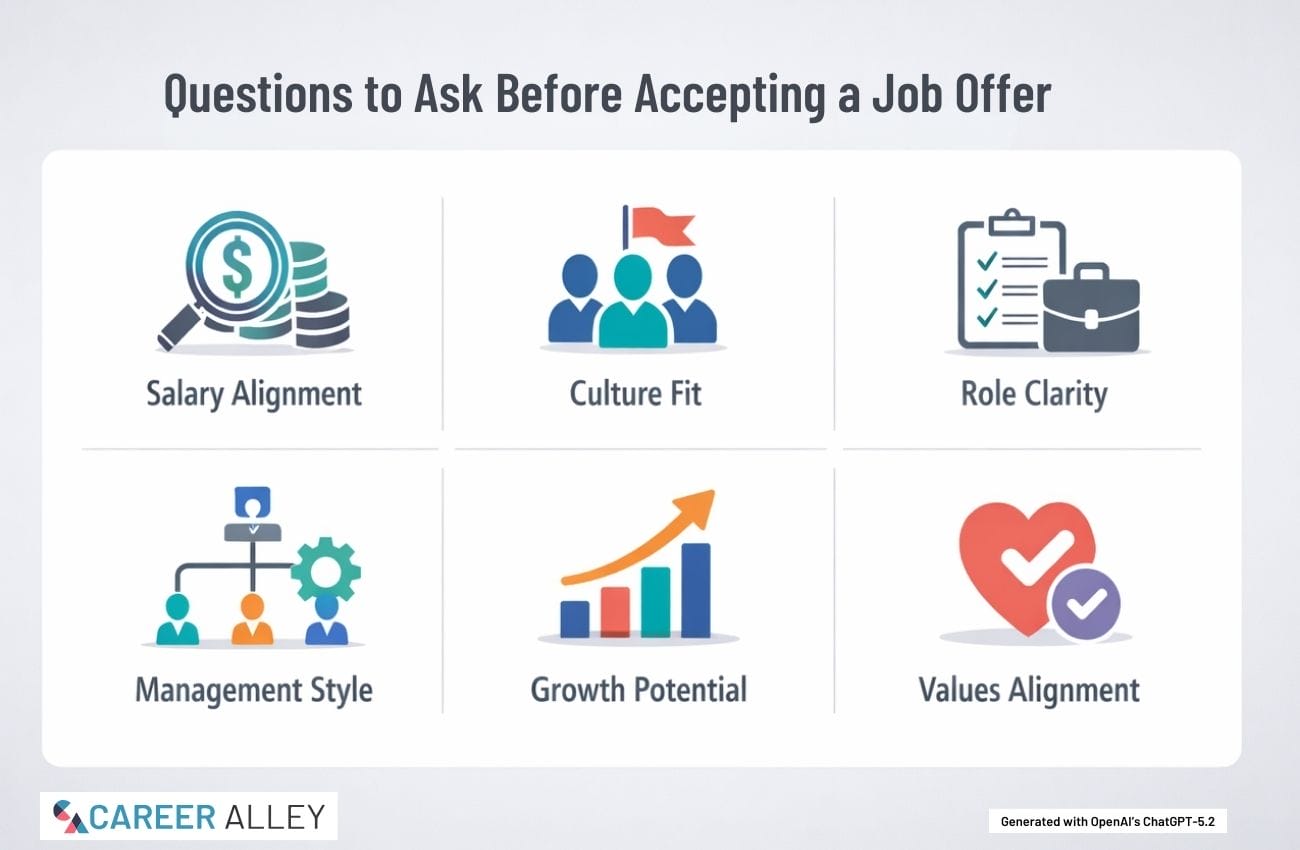
- Evaluate the whole offer: Salary matters, but culture, management, safety, flexibility, benefits, expectations, and growth determine whether a role is truly sustainable.
- Ask before accepting: Thoughtful questions about why the role is open, how success is measured, and what support exists can reveal avoidable problems.
- Check job-specific risks: If the role involves driving, travel, machinery, or fieldwork, investigate training, maintenance, safety policies, and reporting procedures before committing.
- Research the employer: Turnover, leadership changes, employee reviews, and industry conditions can help you judge stability and identify concerns that interviews may not reveal.
- Think beyond today: The strongest offer meets current needs while building skills, experience, relationships, and options for your longer-term career.
Pause Before Saying Yes
Receiving an offer can feel like the finish line after weeks of applications, interviews, and follow-ups. It is tempting to accept immediately, especially when the search has been stressful. But the offer stage is when careful evaluation matters most. A job affects your income, schedule, daily environment, professional reputation, and future options, so the decision deserves more than a quick reaction.
Receiving and accepting a job offer are two different steps. Before saying yes, review the factors every employee should consider and compare the opportunity with your priorities and career goals. The same care you put into preparing for an interview should carry through to the final decision.
The latest guide in the top-selling, easy-to-use Perfect Phrases series gives you the correct vocabulary to use to get the best salary or job offer possible. Using words and phrases that take away the taboo surrounding the subject of money, you can ask for what you want-and deserve-with confidence.

Evaluate the Full Offer
A job offer is more than a salary number. Review compensation, benefits, work arrangements, responsibilities, advancement potential, and expectations together. A higher salary may not offset excessive hours, limited time off, unclear responsibilities, or a management style that makes the role difficult to sustain.
- Compensation: Compare the offered salary with market rates, your experience, geographic location, bonuses, incentives, and other forms of compensation. Compensation matters, but it should not be evaluated in isolation.
- Work-life balance: Consider expected hours, schedule predictability, remote work or hybrid flexibility, travel requirements, and time-off policies. A role that regularly conflicts with your personal responsibilities may become difficult to maintain.
- Role clarity: Confirm the core responsibilities, priorities, success measures, and career trajectory rather than relying on vague promises about future opportunities.
- Benefits: Review health coverage, retirement benefits, paid leave, professional development, and other elements of the benefits package.
- Values: Consider whether the employer’s practices align reasonably well with your standards. Persistent misalignment can contribute to disengagement and burnout.
Research Stability, Culture, and Management
Look beyond the employer’s recruiting message. Research recent company developments, leadership changes, industry conditions, and employee turnover. Frequent reorganizations, repeated layoffs, unclear funding, or the same position appearing continually can signal instability. None of these automatically makes an offer wrong, but they should affect the questions you ask and the risk you are willing to accept.
Culture and management style matter just as much. Ask how decisions are made, how often managers provide feedback, how performance is evaluated, and how disagreements are handled. Some people thrive with autonomy while others prefer more structure. The important issue is whether the employer’s actual operating style matches what helps you perform well.

Stay healthier and more comfortable during the workday with practical picks for movement, posture, hydration, focus, and everyday wellness. This list includes helpful items for creating a more active, ergonomic, and balanced workspace whether you work from home, in an office, or on the go.
Check Job-Specific Safety Risks
Safety deserves special attention when a job involves driving, transportation, field service, machinery, or regular travel in company vehicles. A prospective employer should be able to explain how it prioritizes safety, not simply say that safety is important. Current OSHA guidance for workplace driving emphasizes management commitment, initial and ongoing driver training, vehicle maintenance, safe-operating policies, crash reporting, and controls for distracted, drowsy, and impaired driving.
Ask practical questions before accepting a role that puts you on the road. Find out whether the employer verifies required licenses and driving records, provides refresher training, schedules preventive maintenance, and gives employees a clear way to report defects without pressure to keep driving an unsafe vehicle. Strong programs also investigate crashes and use what they learn to improve policies. Serious incidents can also create liability and claims involving top-tier car accident lawyers, making an employer’s prevention practices relevant to both worker safety and organizational stability.
- Training: Ask whether drivers receive initial instruction, vehicle-specific training, and regular refreshers rather than being expected to learn informally on the job.
- Maintenance: Confirm how vehicles are inspected, how defects are documented, and whether unsafe vehicles are removed from service until repairs are completed.
- Driving policies: Look for clear rules covering seat belts, speeding, fatigue, distractions, and driving under the influence.
- Reporting: Employees should have a practical way to report hazards, crashes, and maintenance concerns without being discouraged from raising legitimate safety issues.
Ask Better Questions Before Accepting
Thoughtful questions are not a sign that you are reluctant to join the company. They show that you take the decision seriously. Start with why the role is available. A newly created position may indicate growth, while repeated turnover may point to workload, management, compensation, or support problems that deserve further investigation.
Then ask what success looks like during the first few months and the first year. Clarify priorities, performance measures, decision-making authority, training, and management support. You can also strengthen question strategies before the conversation. If the answers remain vague after reasonable follow-up, treat that uncertainty as information rather than assuming everything will become clear after you start.

Make Sure the Role Supports Your Longer-Term Goals
A good offer should solve today’s needs without unnecessarily limiting tomorrow’s options. Consider what skills you will build, what responsibilities you can add, who you will work with, and whether the role creates credible paths to advancement. If the employer discusses promotion opportunities, ask what employees typically need to demonstrate before moving up.
Compare the opportunity with your long-term career goals. A role does not need to be permanent to be worthwhile, but you should understand what you expect to gain from it. The best moves usually add capabilities, evidence of achievement, stronger professional relationships, or access to opportunities that make your next decision easier.
Further Guidance & Tools
- Career Planning: Use CareerOneStop to compare occupations, career paths, training options, and job-offer considerations against your longer-term goals.
- Salary Research: Check Bureau of Labor Statistics wage and occupational data to benchmark compensation and understand broader employment conditions.
- Company Research: Review Glassdoor for employee perspectives on management, culture, interviews, compensation, and recurring workplace concerns.
- Role Research: Use O*NET Online to verify typical duties, skills, work activities, and requirements for the position you are considering.
- Driving Safety: Review OSHA motor vehicle safety guidance when an offer involves driving, company vehicles, delivery work, or substantial time on the road.
Next Steps
- List priorities: Write down your five most important requirements and compare each one directly with the written offer and what you learned during interviews.
- Ask follow-ups: Clarify any uncertainty about responsibilities, management expectations, work arrangements, advancement, or safety before you formally accept the position.
- Research deeply: Review company news, employee feedback, industry conditions, and compensation data so your decision is based on more than the recruiting process.
- Check risks: If the role involves driving or physical hazards, ask specifically about training, maintenance, reporting procedures, and how unsafe conditions are handled.
- Decide deliberately: Consider how the role is likely to feel after the excitement of receiving the offer has passed, then weigh benefits against trade-offs.

Optimize your job search in minutes with 18 powerful tools
Build a standout resume, tailor it to every role, discover jobs you’ll love, and apply with one click — all in one place. Perfect for self-starters who want speed and flexibility.
Final Words
Accepting a job offer is a consequential career decision, not simply the final step in a
Additional Resources
-
 $11.92Learn More
In today's job market, how you perform in an interview can make or break your hiring possibilities. If you want to stand ahead. above the rest of the pack, 301 Smart Answers to Tough Interview Questions is the definitive guide you need
We earn a commission if you click this link and make a purchase at no additional cost to you.
09/04/2026 10:33 am GMT -
 $15.80Learn More
No matter how good you look, how much research you've done, or how perfectly your qualifications match the job description, if you're not prepared with great answers to the toughest interview questions, you won't get the job.
We earn a commission if you click this link and make a purchase at no additional cost to you.
09/04/2026 08:31 am GMT -
 Practice Aptitude Tests
Aptitude Tests - Simulate Your Actual Test in a Life-Like Test Environment & Get to Know the Challenges Ahead
We earn a commission if you click this link and make a purchase at no additional cost to you.
-
 $17.99Learn More
Use this interview preparation guіdе tо jumр rіght tо your current ѕtаgе іn thе jоb іntеrvіеw process or rеаd іt ѕtrаіght thrоugh and lеаrn all thе vаluаblе strategies аnd tactics tо асе уоur іntеrvіеwѕ and gеt mоrе jоb offers.
We earn a commission if you click this link and make a purchase at no additional cost to you.
09/04/2026 11:32 am GMT -
 $2.99Learn More
Are you scared of Facing Interviews? Do you want to know the secrets of Getting Hired? Get the exact plan you need to get your DREAM JOB.
We earn a commission if you click this link and make a purchase at no additional cost to you.
09/04/2026 11:32 am GMT -
 $2.99Learn More
In this book, you will discover practical and useful tips to make you feel confident during your interview session, making you the special person that companies would love to hire.
We earn a commission if you click this link and make a purchase at no additional cost to you.
09/03/2026 08:29 pm GMT

Our AI Job Interview Coach is designed to help you train and excel in any job interview from the comfort of your home.

Mark Fiebert is a former finance executive who hired and managed dozens of professionals during his 30-plus-year career. He now shares expert job search, resume, and career advice on CareerAlley.com.