- How to Use YouTube for
Job Search - Key Takeaways
- 5-Minute Action
Plan - How to Leverage YouTube for Your
Job Search - Featured Snippet Answers Recruiters and Job Seekers
Search For - Video Resume Best Practices Recruiters Actually Respond To
- Personal Branding for YouTube
Job Search - Common YouTube
Job Search Mistakes to Avoid - Tips and Resources: YouTube Channels to Support Your
Job Search - Next Steps
- Final Words
We may earn a commission if you click on a product link and make a purchase at no additional cost to you. For more information, please see our disclosure policy.
Last updated: January 9, 2026
By Mark Fiebert
How to Use YouTube for Job Search
In the digital age, job hunting has transcended traditional boundaries, with innovative platforms that showcase your professional
This guide offers strategic insights into making YouTube your ally in navigating the job

Dr. Diane Hodges presents an invaluable life-enhancing guide to help you achieve your career goals.

Key Takeaways
- Visibility: A focused YouTube presence can increase recruiter discovery by pairing proof of your work with searchable topics employers already look for.
- Video Resume: Keep a video resume short and specific—aim for 60 to 90 seconds and match it tightly to the role you want.
- Credibility: Tutorial and portfolio-style videos build trust faster than claims on a resume because they show how you think and work.
- SEO Leverage: Using keywords in titles, descriptions, and tags helps your videos appear in both YouTube
search and broader web searches. - Momentum: A simple publishing rhythm and smart repurposing to LinkedIn keeps you consistent without turning
job search into a second job.
5-Minute Action Plan
- Pick one target role: Write a one-sentence positioning statement (role + niche + value) and use it as the theme for your channel.
- Create one “proof” video: Record a short walkthrough of a project, presentation, or process that demonstrates real, role-relevant skill.
- Upload with job-search SEO: Include “YouTube
job search ” plus a role keyword in the title, and add a clear description of what the viewer learns. - Add one credibility signal: Pin a comment summarizing your experience and what roles you’re targeting (keep it professional and specific).
- Share once: Post the video on LinkedIn with a short “what I learned” takeaway and a direct statement of what roles you want.

What do you say when they ask you the inevitable question “What do you do?” If your 30-second answer is boring, cringe-worthy or forgettable, the rest of your preparation is worthless.
How to Leverage YouTube for Your Job Search
Think of YouTube as a public portfolio and a credibility engine. A resume tells employers what you’ve done; a video lets them see how you communicate, how you solve problems, and whether you can explain your work clearly. That combination can be especially powerful for competitive fields where dozens of candidates look identical on paper.
- Create a Professional Channel: Your YouTube channel is your digital resume. Customize it with a professional profile picture, a compelling banner, and a clear description of your job aspirations and
skills . Keep the message focused on the role you want, not everything you’ve ever done. - Develop Content That Showcases Your
Skills : Produce videos that highlight your expertise and experience. Whether it’s a presentation, a project walkthrough, or a software tutorial, make sure it’s relevant to your industry and demonstrates decision-making, not just outcomes. - Use SEO to Your Advantage: Optimize your video titles, descriptions, and tags with keywords related to your field and
job search . Add a role keyword (e.g., “project manager,” “dataanalyst ,” “sales operations”) so the right audience can actually find you. - Engage with Your Industry Community: Comment on videos related to your field, connect with professionals, and participate in discussions. Don’t leave generic praise—add a useful insight, a thoughtful question, or a short example from your experience.
- Collaborate with Industry Influencers: Partnering with well-known professionals for a video can boost your credibility and expand
your network . Reach out to schedule interviews, discussions, or joint projects that align with your target role and allow you to demonstrate your curiosity and preparation. - Leverage LinkedIn: Share your YouTube content on LinkedIn to reach a professional audience. Add context: what problem you solved, what tool you used, and what role you’re pursuing so recruiters don’t have to guess.
- Create a Video Resume: Stand out by creating a video resume that succinctly presents your
skills , experiences, and career goals. Make it engaging and professional to capture the attention ofhiring managers. - Highlight Soft
Skills : Employers value communication, leadership, and teamwork. Create content that demonstrates theseskills , such as leadership in group projects or effective communication in presentations. - Consistency is Key: Regularly upload content to keep your channel active and engage your audience. Consistency does not mean daily uploads—it means a rhythm you can maintain without burning out.
- Analyze and Improve: Use YouTube Analytics to understand which videos perform well and why. Use this insight to refine your content strategy and better target potential employers or collaborators.

Featured Snippet Answers Recruiters and Job Seekers Search For
These are the kinds of questions people
- How long should a video resume be? Aim for 60–90 seconds. Lead with your role target, your most relevant proof, and a crisp “what I’m looking for.”
- What should I include in my YouTube
job search channel? A short positioning statement, 3–6 role-relevant videos, and a consistent theme that matches the work you want. - Do I need fancy equipment? No. Clear audio, good lighting, and a structured message beat expensive gear every time.
- What if I’m camera shy? Start with screen-recorded walkthroughs, slides with voiceover, or demo videos where your face is optional.
Video Resume Best Practices Recruiters Actually Respond To
A video resume works when it makes a recruiter’s job easier: it tells them quickly what you do, what you’re good at, and why you’re a fit. It fails when it turns into a life story or a generic motivational speech.
- Open with clarity: Your name, target role, and the niche you’re aiming for.
- Prove one thing: Pick one accomplishment and explain the problem, your approach, and the result.
- Keep it tight: 60–90 seconds is enough to create interest without testing patience.
- Sound professional: Speak clearly, avoid filler, and practice once or twice so you don’t ramble.
- End with direction: State what roles you’re pursuing and what kind of
team or problems you want to work on.
Dr. Diane Hodges presents an invaluable life-enhancing guide to help you achieve your career goals.
Personal Branding for YouTube Job Search
Depending on your profession, personal branding can be a very important factor in your success. Some great examples are authors, Real Estate Brokers, Personal Trainers, Certified Financial Planners, and the list goes on. YouTube is the perfect tool to help you build your brand, because it combines expertise with presence and makes you easier to remember.
If you want your YouTube
- Who Are You? – Before you get started, you need to define who you are (or want to be) in your career. Are you a Finance Expert or a Social Media expert? Whatever you are (or want to be), you need to define yourself. Keep it role-focused and avoid trying to appeal to everyone.
- Define Your Audience – Is your personal brand for recruiters or to let professionals in your field of work know who you are and what you do (or both)? Choose one primary audience and build for them first.
- Skills and Experience – Using your resume (don’t have one or need an update? See Perfect Resume). Translate the strongest items into video topics that demonstrate competence, not just claims.
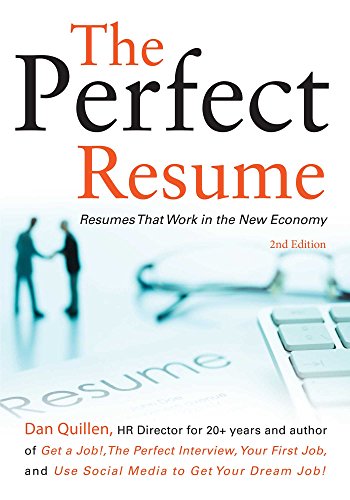
Dan Quillen calls on his expertise as an HR professional (and as one who lost and found a job in the toughest economic environment since the Great Depression) to help his readers understand the New Economy, and how to find work when many cannot.
Common YouTube Job Search Mistakes to Avoid
- Being too broad: A channel that covers “everything career” rarely wins. Pick a role theme so recruiters can connect the dots.
- Talking without proof: Replace opinions with demonstrations—walkthroughs, examples, breakdowns, and mini case studies.
- Ignoring
search intent: Use role keywords and problem keywords so the right people can find you. - Overproducing too early: Don’t stall for perfect gear. Get a few solid videos live and improve over time.
- No clear next step: Every video should point somewhere: a role target, a skill, a portfolio example, or a professional post on LinkedIn.
Tips and Resources: YouTube Channels to Support Your Job Search
There are YouTube videos for just about everything, and
- Work It Daily (CAREEREALISM) has a deep library of
job search videos, including interview help,career change guidance, and confidence-building advice. A solid pick when you need a reset and aplan .
- Career HMO – Some interesting videos on leveraging LinkedIn, Recruiters, Interviewing, Branding, and more. Watch with a notebook and convert
ideas into specific actions you can execute the same day.
- The Interview Guys – One of the more popular
job search channels on YouTube. The videos are typically several minutes long and cover topics such as interviews and resumes. Use their playlists to quickly drill on a weak area before an interview. - Snagajob Videos – Snagajob, which also has a
job search site, has a YouTube channel. The site offers a wide variety of videos on interviews,job search , and related topics. Their role’s “day in the life” content can also help you validate whether a job is a good fit. - Job-Applications – This YouTube channel focuses on interviewing former employees, what the role entailed as well as some information on what it was like to work at the company. It’s a practical way to research employers and sharpen your questions before interviews.
- Don Georgevich – Don’s YouTube channel focuses on job interviews. The interview series is broken up into modules. There are several videos giving positive reviews of how Don’s interview method worked for them. Use this for practice, structure, and confidence building.

Full of successful resumé samples and cover letters, the book also focuses on the key words and phrases that will bring readers' resumés to the top of the HR pile.
Next Steps
- Record one short “proof” video this week (walkthrough, tutorial, or portfolio breakdown) that matches the role you want.
- Write a channel description that includes your target role, the problems you solve, and the type of content you publish.
- Publish a 60–90 second visual resumes video and keep it focused on fit, proof, and direction.
- Share your best video on LinkedIn with a clear statement of what roles you’re pursuing.
- Spend 15 minutes twice a week engaging thoughtfully in your industry’s YouTube comments to expand
your network .
Final Words
So is it worth your time watching YouTube videos on job
Listening to or watching a video on advice can be a welcome break from reading many books and articles. The key is to gather the information you need, then resume your proactive

DO YOU WANT TO FIND A JOB YOU LOVE? A role that you’re excited about? A place where you like the culture and the people? A position where you are doing what you love—and making an impact?

Mark Fiebert is a former finance executive who hired and managed dozens of professionals during his 30-plus-year career. He now shares expert job search, resume, and career advice on CareerAlley.com.