

- Key Takeaways
- Assess Your Strengths, Interests, and Priorities
- Set Career Goals You Can Actually Measure
- Create a Practical Career Development Plan
- Invest in Education and Skills That Matter
- Build Professional Relationships and Credibility
- Evaluate Career Changes and Independent Work
- Review Your Progress and Adjust Your Plan
- Further Guidance & Tools
- Next Steps
- Final Words
We may earn a commission if you click on a product link and make a purchase at no additional cost to you. For more information, please see our disclosure policy.
Last updated: November 20, 2026
Key Takeaways
- Define Your Direction: A useful career plan begins with understanding your strengths, interests, financial needs, and the kind of work you want to pursue.
- Set Measurable Goals: Translate long-term ambitions into realistic milestones, specific actions, and regular reviews rather than relying on vague intentions to advance.
- Invest Selectively: Choose education, certifications, and practical experience based on employer expectations, career relevance, total cost, and likely professional benefits.
- Build Relationships: Maintain professional connections and seek useful feedback throughout your career, not only when you need a job or promotion.
- Stay Flexible: Review your progress, recognize changing priorities, and adjust your career plan when new opportunities or circumstances make another direction more appropriate.
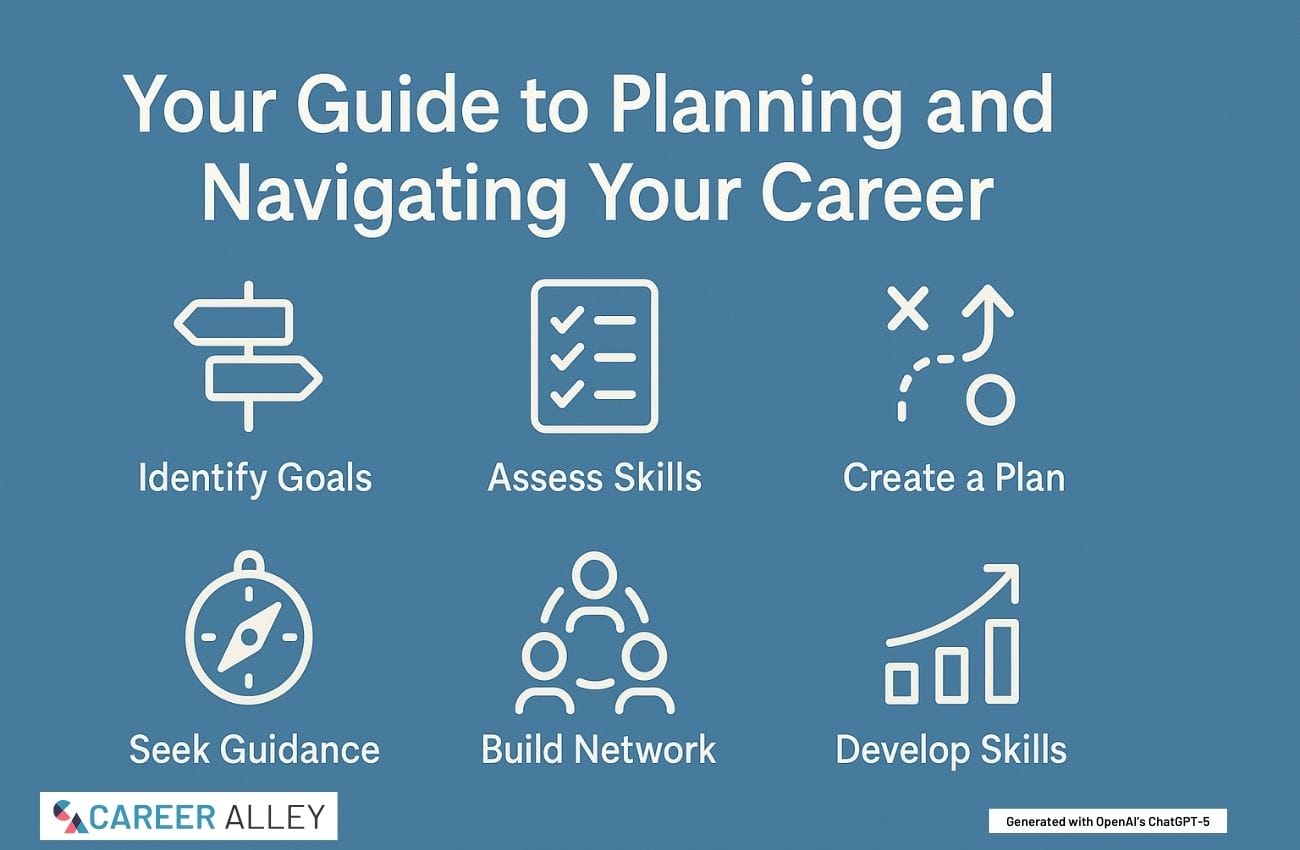
A career planning guide helps you make deliberate decisions about where your professional life is heading and what you need to do next. A useful career plan provides structure, but your decisions should still reflect your circumstances rather than a book’s one-size-fits-all formula. Rather than assuming hard work or another degree will automatically lead to advancement, a sound career plan connects your goals with your strengths, market opportunities, financial circumstances, and practical development steps.
Whether you are beginning your career, pursuing a promotion, or considering a significant change, the process involves five essential activities: assessing your current position, setting goals, building relevant skills, developing professional relationships, and reviewing your progress. Investing in yourself is part of that process, but the investment should be purposeful and proportionate to the benefits you expect.
Assess Your Strengths, Interests, and Priorities
Before choosing a career direction, understand what you already bring to the workplace. Evaluate your technical knowledge, communication abilities, accomplishments, interests, and preferred working conditions. Look beyond job titles to identify the responsibilities you enjoy and the situations in which you perform particularly well.
Self-assessment should also consider practical circumstances. Compensation requirements, family commitments, working hours, commuting expectations, and the need for employment stability can influence which opportunities are realistic. An attractive
Clarifying your interests, skills, and long-term goals is a useful starting point for identifying which opportunities deserve attention. CareerAlley’s guide to understanding your strengths, skills, and interests provides additional guidance on translating self-assessment into a practical development plan.
Review previous achievements, including projects you completed successfully, problems you resolved, and responsibilities you handled independently. Identify the skills behind those accomplishments. For example, someone who enjoys organizing complicated projects might find opportunities in operations, project coordination, or management without needing to start in a completely new industry.
Finally, separate professional ambitions from external expectations. A prestigious title or high salary may be appealing, but neither guarantees that the everyday responsibilities will suit you. The right direction should reflect the work you want to do and the life you want to maintain.
Set Career Goals You Can Actually Measure
Effective career goals describe a specific result and the actions needed to achieve it. Rather than deciding simply to become more successful, identify an outcome such as qualifying for a management position, gaining expertise in a particular technology, moving into another department, or becoming eligible for a new occupation.
Clear, well-structured goals make it easier to focus effort and evaluate whether your actions are producing results. The familiar SMART approach can help: define goals that are specific, measurable, achievable, relevant, and time-bound.
A useful planning framework distinguishes three time horizons:
- Short-Term Goals: Actions to complete over the next one to three months, such as researching target roles, updating
your resume , or completing introductory training. - Mid-Term Goals: Outcomes to pursue over the next three to twelve months, including earning a relevant credential, managing a new project, or developing a portfolio.
- Long-Term Goals: Professional objectives extending beyond a year, such as entering a new occupation, advancing into leadership, or building an independent consulting practice.
Use whichever planning system you will actually revisit. Free notes or a spreadsheet can be as effective as a paid goal-setting book when they capture milestones, deadlines, and results.
A practical goal should identify both the result and the next action. For example, a professional seeking a supervisory role might commit to leading a cross-functional assignment within six months, obtaining feedback from a manager, and demonstrating measurable improvements in team performance. Those actions provide better evidence of progress than an ambition without a plan.
Create a Practical Career Development Plan
A career development plan connects where you are today with the qualifications, experience, and relationships needed for your next opportunity. For people who prefer writing plans by hand, the Intelligent Change 3-Month Productivity Planner offers an optional three-month format for tracking actions and reviewing progress; a free spreadsheet works too. Keep it short enough to use regularly, rather than a document you complete once and forget.
Business-school guidance on creating a structured plan to achieve your career goals emphasizes defining objectives, evaluating training needs, and identifying stages of professional development.
Your plan should record the role or outcome you want, the qualifications typically expected, gaps in your existing experience, actions you will take, and dates for reviewing results. Include evidence that can demonstrate your progress to an employer or prospective client.
For example, if you want to move from financial analysis into business operations, compare actual job descriptions with your experience. You may already have relevant analytical, budgeting, reporting, and process-improvement skills. Your greatest gap could be operational project experience rather than formal education.
Professional development should build on what you already know when possible. A carefully chosen assignment or certification may offer a more efficient route than beginning an entirely new degree program.
Include financial considerations in the plan. Estimate the cost of courses, credentials, examinations, possible income interruptions, and equipment. Then compare those costs with reasonable career benefits. A plan should distinguish what is necessary now from what might become useful later.
Invest in Education and Skills That Matter
Investing in yourself can improve professional opportunities, but more education does not automatically produce better outcomes. The right educational choice depends on your occupation, existing qualifications, employer expectations, and the skills you intend to develop.
Some careers require degrees, licenses, or regulated credentials. Others emphasize demonstrated ability, relevant experience, and work samples. Before paying for training, compare several job advertisements for your target occupation and identify the qualifications employers consistently request.
Skill development can start with focused online courses, while Coursera offers another route to explore subjects and formal learning programs. Compare course content, instructors, costs, completion requirements, and employer recognition before buying.
Training is most valuable when it addresses an identifiable skills gap. For example, completing a data-analysis course may help someone already working with financial information. But the credential becomes more persuasive when paired with a project that demonstrates the new capability.
Consider several ways to develop qualifications:
- Formal Education: Appropriate when a degree is required, strongly preferred, or provides a clear advantage for the intended occupation.
- Professional Certifications: Useful when employers recognize a specific credential and it validates knowledge directly related to the work.
- Short Courses: Suitable for filling focused knowledge gaps or exploring a subject before committing to a larger program.
- Practical Experience: Projects, internships, volunteering, and temporary assignments can demonstrate abilities that classroom instruction alone may not establish.
- Mentorship: Experienced professionals can provide feedback, explain workplace expectations, and help identify areas requiring further development.
Education also includes learning from other fields. Business professionals may benefit from studying technology, communication, design, or organizational behavior. The value lies in applying new knowledge to improve decisions or solve problems, not simply accumulating additional credentials.
Build Professional Relationships and Credibility
Professional relationships are an important career asset because people can provide information, feedback, introductions, and perspective that formal training cannot. Networking should therefore be a regular part of career development, not something reserved for a
Maintaining strong relationships can support career transitions and advancement within an existing organization. Books such as Highly Effective Networking offer additional approaches to building and maintaining professional connections.
Useful relationships extend beyond senior executives or people with hiring authority. Former colleagues, mentors, clients, industry specialists, and peers can all contribute valuable knowledge. For independent workers, professional credibility and referrals are especially important because clients often need confidence in a provider before committing to a service.
A vibrant network of professional connections is more useful when relationships involve genuine exchanges of ideas, assistance, and introductions rather than repeated requests for favors.
Maintain contact with people whose judgment you respect. Share relevant opportunities, recognize accomplishments, and offer useful assistance when appropriate. Online professional communities can extend those relationships, but meaningful conversations and a reputation for reliability remain essential.
Evaluate Career Changes and Independent Work
Career planning should allow for changes in direction. A position that suited you earlier may no longer fit your interests, responsibilities, or financial goals. Changing careers can be worthwhile, but the decision should follow a realistic assessment of the opportunity and its costs.
Career transitions may involve learning unfamiliar systems, accepting different responsibilities, or temporarily reducing income. Research the occupation, speak with professionals in it, and identify which of your existing skills are transferable before committing.
Independent consulting and self-employment are alternatives for some experienced professionals. They can offer control over clients, projects, and working arrangements, but they also involve business development, irregular revenue, administrative responsibilities, and the cost of benefits previously provided by an employer.
Before choosing independent work, evaluate whether prospective clients need your service, how you will acquire them, what you must charge, and whether you have enough financial reserves to manage slow periods. A successful consulting practice requires both professional expertise and the ability to operate a business.
High-profile success stories can be interesting, but an exceptional entrepreneur’s experience is not a reliable model for predicting your own results. Focus instead on the skills, resources, customers, and risks relevant to your circumstances.
Review Your Progress and Adjust Your Plan
Career plans need regular review because opportunities, employer expectations, and personal priorities change. Schedule a quarterly assessment rather than waiting until you feel dissatisfied or face an unexpected employment decision.
Compare your original objectives with actual results. Did you finish the training you selected? Have you gained responsibilities that demonstrate your abilities? Are your professional relationships growing? Has your compensation, experience, or access to opportunities improved?
Evaluate progress using evidence rather than effort alone. Completing several courses may indicate commitment, but employers generally need to understand what those courses enable you to do. Similarly, attending numerous networking events is less meaningful than developing a smaller number of productive professional relationships.
CareerAlley’s discussion of the habits of a highly successful person provides additional context for developing consistent routines. The most useful habits produce measurable progress toward your own priorities.
If your plan is not working, identify why before making a major change. The issue may be unrealistic timing, insufficient experience, weak employer demand, limited networking, or changed personal circumstances. Revise the next action rather than abandoning an otherwise reasonable long-term goal.
Success can also create opportunities to contribute beyond your immediate responsibilities. Mentoring colleagues, developing junior employees, supporting professional organizations, or volunteering professional expertise can strengthen leadership skills while providing practical benefits to others. These activities should complement your career goals rather than serve as obligations imposed by an arbitrary definition of success.
Further Guidance & Tools
- Career Exploration: Use My Next Move to explore occupations, compare responsibilities, and identify career options aligned with your interests.
- Occupational Research: Consult the Occupational Outlook Handbook for information about job duties, typical entry education, compensation, and employment projections.
- Career Planning Tools: Explore CareerOneStop career tools for occupational comparisons, skills information, and related training resources.
Next Steps
- Assess Your Position: Record your strongest skills, recent accomplishments, preferred responsibilities, and financial or lifestyle requirements before identifying new opportunities.
- Set Three Goals: Define one immediate objective, one twelve-month target, and one longer-term career outcome with measurable milestones.
- Research Requirements: Compare several relevant job descriptions to identify qualifications or experiences employers consistently expect before spending money on training.
- Build Connections: Contact two professionals in your preferred field and ask about realistic entry requirements, advancement opportunities, and everyday responsibilities.
- Schedule Reviews: Evaluate progress every three months, document measurable achievements, and revise actions when your results or circumstances justify a different approach.
Final Words
A useful career plan should guide decisions without restricting your ability to adapt. The strongest investments are not necessarily the most expensive courses, impressive credentials, or ambitious career moves. They are the actions that improve your capabilities, strengthen professional relationships, and create realistic opportunities. By regularly comparing your progress with your priorities, you can direct your time and resources toward a career that continues to meet your needs.







Mark Fiebert is a former finance executive who hired and managed dozens of professionals during his 30-plus-year career. He now shares expert job search, resume, and career advice on CareerAlley.com.
Discover more from CareerAlley
Subscribe to get the latest posts sent to your email.

