We may earn a commission if you click on a product link and make a purchase at no additional cost to you. For more information, please see our disclosure policy.
Last updated: December 10, 2025
Key Takeaways
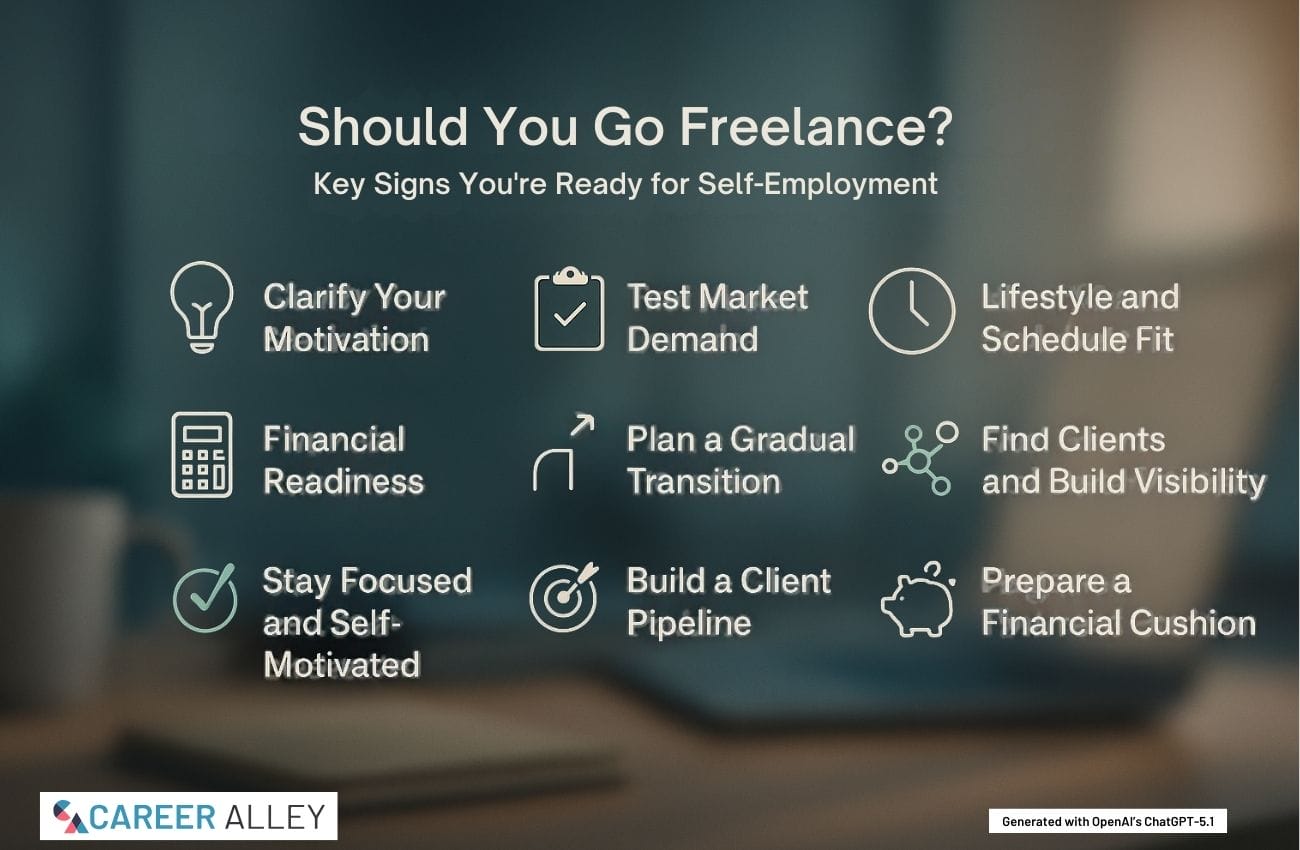
- Know Your Why: Freelancing works best when driven by purpose, flexibility, and independence, not just frustration with a boss or current job.
- Validate Demand: A sustainable freelance career depends on a steady stream of paying clients, built through networking, platforms, and consistent outreach.
- Check Lifestyle Fit: Self-employment requires comfort with autonomy, variable hours, and often working alone, supported by healthy routines and boundaries.
- Strengthen Finances: Irregular income, unpaid time off, and startup costs demand
savings , realistic pricing, and honest awareness of financial risk. - Plan The Transition: The perfect time rarely appears; a staged, well-planned move with booked work beats waiting indefinitely for ideal conditions.
Deciding To Go Freelance
At some stage in your career, you may feel a strong pull toward more control over your time, income, and work. Perhaps you want greater flexibility, or you seek a career imbued with a more profound sense of purpose. Maybe you want to be your own boss and build something you wholly own. Freelancing can deliver those outcomes, but it is not a quick escape from a bad job.
If your primary motivation is irritation with your manager or boredom in your current role, pause before jumping. Better reasons to

Find the Best Remote Jobs for You
- 100% verified work-from-home jobs
- Full-time, part-time, and freelance jobs
- Entry-level to executive roles
- No ads, scams, or junk

Finding Clients And Work
No matter how talented you are, freelancing only works if you can secure paying projects consistently. Guidance from resources like The Freelancer’s Bible can help you structure your services, pitch effectively, and build a realistic pipeline.
You can start with your existing network. Former colleagues, friends, and acquaintances may know someone who needs a writer, photographer, IT consultant, or other specialist. Online, there is almost always a marketplace or
Lifestyle And Work Style
Self-employment offers flexibility, but you need to confirm it aligns with how you like to live and work. Some freelancers thrive working late at night after children are asleep, while others prefer early-morning focus before the day’s demands begin. Books like Freelance to Freedom explore how to design your schedule around your life rather than recreating an office job at home.
Modern technology, global clients, and online tools mean nine-to-five is no longer the default for productive work. You can handle errands or personal commitments during traditional office hours and make up the time later, or even work from anywhere with Wi-Fi. At the same time, a

You want a better work-life balance… You want the freedom to choose when and where you work… You want to pick your projects and do away with those stressful commutes… And you want to build from success to success.
Motivation And Mindset
As a freelancer, you are entirely responsible for your own motivation and results. No manager is checking in daily, and no
Research from institutions such as MIT highlights traits common in successful entrepreneurs, including drive, self-confidence, initiative, tolerance for ambiguity, and an internal locus of control. Other factors, such as moderate risk-taking, long-term commitment, strong use of feedback, problem-solving ability, resourcefulness, high personal standards, and clear goal-setting, also matter. You do not need all fourteen traits, but strong

Get more than 20 years of real-life experience – plus advice from over 100 freelancers – in 200 unputdownable pages. The bestselling guide to freelance life has helped thousands of freelancers in more than 26 countries to get more enjoyment from self-employment. Join them, and give YOUR freelance business the edge.
Money, Risk, and Stability
Financial readiness often determines whether freelancing becomes a sustainable career or a short-lived experiment. The startup costs of a
Income patterns for freelancers can vary widely, making it essential to understand how inconsistent earnings may impact your financial stability. Research on self-employed income highlights the challenges of tracking and predicting
Tools like a work hours calculator help you estimate what you currently earn per hour and what you would need to average as you go fully freelance. Because income will fluctuate, building sufficient

A sharp, practical guide that teaches freelancers how to build a profitable, scalable business in the gig economy and reach consistent six-figure earning potential.
Preparing Before You Quit
Even strong motivation and solid finances will not protect you if you resign without enough work lined up. There is little sense in leaving a full-time job if you only have a few weeks of assignments booked. Take a hard look at the
Consider upcoming commitments that could strain your finances or attention, such as major trips, home repairs, or medical

A practical guide for startup founders, Startup Funding explains how venture capital works and outlines clear steps to successfully raise investment capital.
Is The Time Right Now
Many professionals dream of a freelance lifestyle, yet keep delaying, waiting for the perfect conditions. Experienced business owners often agree that such a moment rarely appears. Life, markets, and personal obligations are constantly shifting. Instead of chasing perfection, look for a moment that is good enough—perhaps a significant contract, a chance to move to part-time work, or a consistent pattern of substantial side income. Guidance from resources such as entrepreneurship guides can help you recognize when conditions are sufficient, even if not perfect.
When enthusiasm, financial readiness, and client demand line up, you may decide it is time to commit. Some freelancers print a resignation letter, hand it to their boss, and never look back; others negotiate a phased exit. Either way, many find reassurance in proven playbooks that show how to build a mobile, healthy

Written by some of Lonely Planet's very own nomadic experts, this book is packed with top tips, insights and real life tales on what it's really like to be working on the road.
Further Guidance & Tools
Once you understand the trade-offs of freelancing, external resources can deepen your planning, improve your systems, and reduce costly trial-and-error.
- Freelance Overview: Review Freelancers Union’s Freelancing 101 for plain-language guidance on contracts, money,
insurance , and basic legal protections. - Online Platforms: Use Upwork’s beginner guide to understand proposals, client expectations, and how marketplace algorithms surface
freelance profiles. - Business Planning: Download SCORE’s startup business plan template to clarify your services, pricing, and long-term revenue goals.
- Tax Basics: Explore the IRS self-employed tax center for official guidance on estimated payments, deductions, and compliance.
- Skill Growth: Read Coursera’s article on what it means to be self-employed and explore courses that strengthen high-demand
freelance skills .
Next Steps
Clarity turns into progress only when you convert reflection into concrete, time-bound actions that move you closer to or away from full-time freelancing.
- Clarify Motivation: List your top five reasons for freelancing, then remove any that are purely emotional reactions to a boss or coworker.
- Map Your Week: Sketch an ideal weekly schedule that includes client work, marketing, learning, and rest so you see where
freelance hours fit. - Run The Numbers: Calculate your minimum monthly income, expected
freelance rate, and requiredsavings buffer to cover at least three to six lean months. - Test The Market: Secure two or three paying clients while still employed to validate demand, refine your services, and stress-test routines.
- Design Your Exit: Build a 90-day transition plan covering reduced hours,
expense cuts, client outreach, and the earliest realistic date you could resign.
Are you tired of the daily grind and dreaming of breaking free from the corporate world? Look no further! The Corporate Escape Plan: Transitioning from Employee to Entrepreneur is your ultimate guide to leaving behind the 9-5 and becoming the master of your own destiny.
Final Words
Freelancing can offer meaningful autonomy, purpose, and flexibility, but it is not automatically easier or safer than traditional employment. Thoughtful preparation, realistic financial planning, honest self-assessment, and a clear client strategy make the difference between a stressful experiment and a sustainable business. By weighing your motivations,

The Freelancer’s Bible will help those new to freelancing learn the ropes, and will help those who’ve been freelancing for a while grow and expand.

Mark Fiebert is a former finance executive who hired and managed dozens of professionals during his 30-plus-year career. He now shares expert job search, resume, and career advice on CareerAlley.com.