- Practical Skills Can Create Opportunities That Qualifications Alone Cannot
- A New Skill Can Help You Stand Out
- Learning Can Open the Door to Career Changes
- Skills Can Increase Confidence
- Practical Learning Helps Build Transferable Skills
- The Career Market Is Constantly Changing
- Learning Can Expand Your Professional Network
- Small Skills Can Produce Big Career Changes
- How to Choose the Right Practical Skill
- Turning Learning Into Career Progress
- A Practical Skill Can Change More Than Your Job Title
We may earn a commission if you click on a product link and make a purchase at no additional cost to you. For more information, please see our disclosure policy.
Last updated: August 19, 2026

Career growth is often associated with promotions, higher salaries, impressive qualifications, or years of professional experience. While these factors certainly matter, there is another powerful driver of career development that is sometimes overlooked: learning practical skills.
A practical skill is something you can apply directly in real-world situations. It could involve communication, technology, a creative discipline, a language, customer service,
That distinction can have a significant impact on a career. Learning something useful can create new opportunities, strengthen confidence, broaden professional networks, and even make it possible to move into an entirely different field.
A practical skill can do more than improve your resume. It can open new career paths, increase your value, and give you options when your role stalls. See why hands on skills can change your trajectory. #CareerGrowthClick To TweetPractical Skills Can Create Opportunities That Qualifications Alone Cannot
Education provides a foundation, but employers often need people who can turn knowledge into action. Someone may understand marketing principles, for example, but being able to create a campaign, analyze performance data, communicate with customers, or manage a project demonstrates a different level of capability.
This is one reason practical learning can be so valuable. It gives people an opportunity to build evidence of their abilities.
Imagine an employee working in an administrative role who develops strong digital marketing skills outside of work. Initially, the new knowledge may simply be a personal interest. Over time, however, the employee might create social media campaigns, learn analytics tools, build a portfolio, and volunteer to support marketing projects at work. Those experiences can eventually make the person a candidate for a marketing position.
The
A New Skill Can Help You Stand Out
Many industries have large pools of applicants competing for the same positions. When candidates have similar educational backgrounds and work histories, additional skills can become a valuable differentiator.
Consider two candidates applying for a customer-facing position. Both have relevant work experience, but one can also communicate comfortably with customers in another language. That additional ability may make the candidate more attractive to employers that serve international communities.
The same principle applies across industries. A hospitality employee who develops stronger beverage knowledge, for instance, may qualify for responsibilities that were previously unavailable. Someone in an office role who learns data visualization may become more useful to a reporting team. A healthcare professional who develops stronger patient communication techniques may be able to take on additional responsibilities.
Practical skills give employers another reason to remember a candidate.
Learning Can Open the Door to Career Changes
Career changes can feel risky because people often assume they need to start from zero. In reality, a career transition can be much more gradual.
A new practical skill can act as a bridge between an existing career and a new direction.
For example, someone interested in hospitality may begin to learn mixology on evenings or weekends while continuing to work in another profession. That training can provide foundational knowledge, hands-on experience, and an understanding of how the industry operates. Eventually, the person could take on part-time work, freelance opportunities, events, or a full-time role.
The same approach works outside hospitality. Someone interested in international business could study another language. A marketing professional might learn basic web development. A teacher could develop instructional design skills. An office worker might learn photography or video editing and begin building a portfolio.
The important point is that career transitions do not always require abandoning your current path immediately. A practical skill can provide the first step toward a new one.
Skills Can Increase Confidence
Career development is not only about what other people see. It is also about how people see themselves.
Learning a useful skill can create a sense of progress. Every new ability that moves from “I cannot do this” to “I can do this” provides evidence that improvement is possible.
This can be especially important for people who feel stuck in their current careers.
Someone who has spent years performing repetitive tasks may begin to believe that their opportunities are limited. Learning something new challenges that assumption. Completing a course, practicing a skill, solving a real-world problem, or creating something from scratch can restore a sense of personal capability.
That increased confidence can influence professional behavior. People may become more willing to apply for new positions, speak up during meetings, take on projects, or approach employers in unfamiliar industries.
Sometimes the first
Practical Learning Helps Build Transferable Skills
One of the biggest advantages of practical learning is that a single skill can strengthen several abilities at the same time.
For instance, learning a language is not only about memorizing vocabulary and grammar. It can also improve listening, communication, cultural awareness, patience, and adaptability. Someone who decides to take Spanish lessons may discover that the learning process itself develops confidence in communicating with people from different backgrounds.
Similarly, learning a hands-on professional skill often develops discipline, problem-solving, attention to detail, and
These transferable skills are valuable because employers rarely hire people based on one isolated ability. They look for combinations of skills that help employees solve problems, work with others, adapt to change, and deliver results.
A practical skill therefore becomes more powerful when it strengthens multiple capabilities at once.
The Career Market Is Constantly Changing
The value of continuous learning is becoming increasingly important because job requirements are changing faster than they once did.
The World Economic Forum’s Future of Jobs Report 2025 estimates that just under 40% of workers’ core skills are expected to change by 2030. The report also highlights the growing importance of skills such as creative thinking, resilience, flexibility, agility, and leadership alongside technology-related capabilities.
The changing skills landscape means that career security increasingly depends on the ability to adapt, rather than relying exclusively on skills learned earlier in one’s career.
This does not mean everyone needs to constantly chase the newest trend. Instead, it suggests that professionals benefit from developing the habit of learning and adapting.
A useful practical skill can be part of that strategy.
Learning Can Expand Your Professional Network
Another overlooked benefit of practical education is the people you meet while learning.
Courses, workshops, training programs, community classes, and professional events bring together people with shared interests. Some may work in the industry you hope to enter. Others may already have experience that you can learn from.
These connections can lead to opportunities that are difficult to find through traditional job searches.
A person attending a skills workshop might meet an instructor who knows about an opening. A classmate might later become a business partner. A training program may introduce someone to a professional community that provides advice, mentorship, or freelance opportunities.
The skill itself may open one door, but the network built while learning can open another.
Small Skills Can Produce Big Career Changes
A common mistake is assuming that career development always requires a dramatic commitment. People sometimes postpone learning because they believe they need another degree, a major certification, or months of intensive study.
That is not always necessary.
Career transformation can begin with a small, focused skill.
Learning spreadsheet automation could help an employee save hours of work each week. Improving public speaking could make someone more effective in leadership situations. Understanding basic search engine optimization could allow a content writer to take on more specialized projects. Learning a new creative tool could help a designer expand their services.
The key is choosing a skill that solves a genuine problem or supports a realistic career goal.
Small improvements can become cumulative. One new skill leads to a project. The project creates experience. The experience strengthens a résumé or portfolio. That leads to another opportunity, which creates more experience.
Over time, the career trajectory can look very different from where it began.
How to Choose the Right Practical Skill
Not every skill will have the same impact on your career. The most useful choice is usually one that sits at the intersection of personal interest, market demand, and practical application.
Start by asking what you want to change. Are you trying to earn more? Move into a new industry? Become more valuable in your current role? Start freelance work? Build a business? Improve your confidence?
Once the objective is clear, identify skills that directly support it.
It is also helpful to choose something you can practice. Practical learning becomes much more valuable when you can produce visible results. Instead of simply consuming information, look for opportunities to create, solve, communicate, build, or perform.
A portfolio, completed project, real-world experience, or measurable improvement can often demonstrate competence more effectively than a list of courses.
Turning Learning Into Career Progress
Learning a skill is only the beginning. To influence your career trajectory, you need to put that skill to work.
Look for projects where the skill can be applied. Offer to help with a relevant task at work. Create personal projects if professional opportunities are not immediately available. Document your progress and keep examples of your work.
You should also communicate your new capabilities.
Update your résumé when the skill becomes relevant. Add meaningful projects to your professional profiles. Discuss your new expertise during networking conversations. More importantly, connect the skill to outcomes. Employers are generally more interested in what you can accomplish than in how many courses you have completed.
For example, instead of simply saying that you learned data analysis, explain that you created a reporting dashboard that helped identify performance trends. Instead of saying that you studied communication, explain how you used those skills to deliver
Evidence turns learning into credibility.
A Practical Skill Can Change More Than Your Job Title
Ultimately, learning a practical skill can influence much more than someone’s next job.
It can change how people approach problems, interact with others, evaluate opportunities, and think about their own potential. It can introduce them to new communities, industries, and professional possibilities.
Career development is rarely a straight line. People move sideways, explore new interests, develop unexpected strengths, and discover opportunities that were not visible earlier in their careers.
A practical skill can become the starting point for that movement.
The most important step is often simply deciding to learn something that has real value and then finding a way to use it. Whether the goal is a promotion, a
And once that momentum begins, one skill can lead to another, one opportunity can lead to the next, and a career that once felt fixed can begin to move in an entirely new direction.
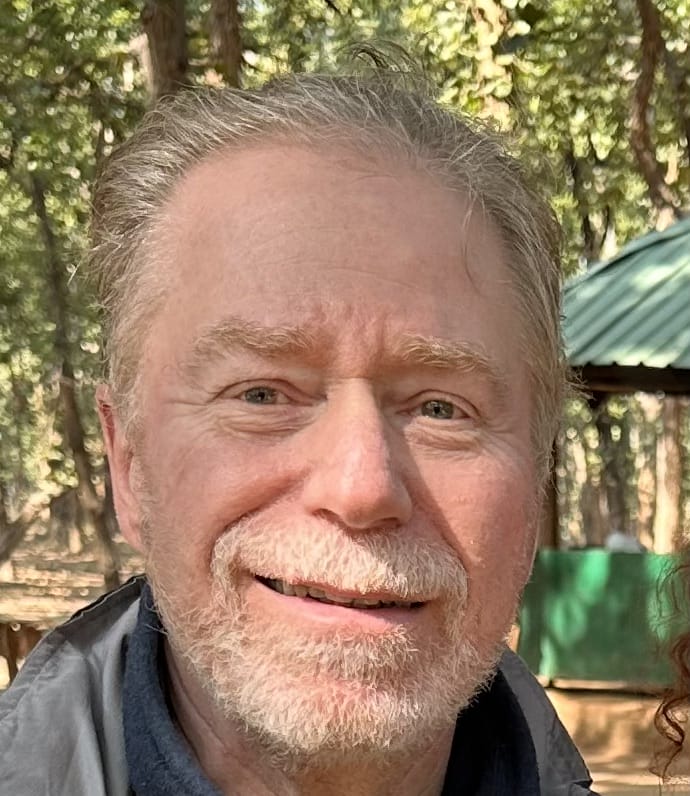
Mark Fiebert is a former finance executive who hired and managed dozens of professionals during his 30-plus-year career. He now shares expert job search, resume, and career advice on CareerAlley.com.