

- Key Takeaways
- Analyze the Job Description Before Your Interview
- Identify Your Strengths and Prepare Evidence
- Research the Company and Explain Your Interest
- Practice Your Answers Without Sounding Rehearsed
- Make a Strong Impression During the Interview
- Ask Questions That Help You Evaluate the Employer
- Follow Up and Learn From the Experience
- Further Guidance & Tools
- Next Steps
- Final Words
We may earn a commission if you click on a product link and make a purchase at no additional cost to you. For more information, please see our disclosure policy.
Last updated: November 21, 2026

Key Takeaways
- Understand the Role: Match the employer’s most important requirements with specific examples of your experience before preparing answers to
interview questions . - Prepare Strong Evidence: Use concise accomplishment stories with measurable results to demonstrate relevant skills instead of relying on general claims about your abilities.
- Research the Employer: Investigate the company’s priorities, products, recent developments, and work culture to explain why the opportunity genuinely interests you.
- Make a Positive Impression: Communicate clearly, listen carefully, and ask thoughtful questions that show both your qualifications and your interest in the position.
- Follow Up Purposefully: Send a personalized thank-you message when appropriate, reinforce a relevant strength, and respect the employer’s stated hiring timeline.
Making a strong impression in a
The most effective approach combines preparation before the interview, thoughtful engagement during the conversation, and professional follow-up afterward. Instead of trying to predict every possible question, concentrate on understanding the job, identifying your strongest evidence, and explaining how your experience connects to the employer’s needs.
Analyze the Job Description Before Your Interview
The job description is one of your most useful
For each major requirement, identify an experience that demonstrates your ability to perform the work. You do not need a perfect match for every qualification, but you should be able to explain your relevant experience, transferable skills, and ability to learn.
- Required Qualifications: Identify your strongest matches and prepare examples demonstrating those skills.
- Core Responsibilities: Connect the position’s most important duties with accomplishments from previous jobs, projects, education, or volunteer work.
- Potential Gaps: Identify missing experience and prepare an accurate explanation of how you would address those gaps.
- Employer Priorities: Look for recurring themes, such as customer service, analysis, leadership, collaboration, or problem-solving.
This process creates a practical preparation map. Instead of rehearsing dozens of unrelated answers, you can focus on the capabilities most likely to matter to the employer.
Job descriptions sometimes include lengthy wish lists. Avoid assuming every listed qualification carries equal weight. During the interview, ask which responsibilities are most important in the first several months.
Identify Your Strengths and Prepare Evidence
Knowing your strengths is useful only when you can demonstrate them. An employer learns more from a specific accomplishment than from a statement such as “I’m an excellent problem-solver.”
Choose three to five examples from your experience that show how you handled important responsibilities, resolved problems, improved a process, supported colleagues, or achieved measurable results.
For additional guidance, rehearsing potential
One useful structure is the STAR method: Situation, Task, Action, and Result. Briefly explain the circumstances, your responsibility, what you personally did, and the outcome.
For example, instead of saying you improved customer service, explain the problem, the changes you introduced, and how you measured the results. When precise numbers are unavailable, describe an accurate, observable outcome rather than inventing statistics.
A focused reference such as the STAR method can provide additional structure for preparing behavioral interview responses. The technique is especially helpful when answering questions that begin with “Tell me about a time.”
Consider your weaknesses as well. If an employer asks about an area you are developing, choose a genuine but manageable example. Explain the steps you are taking to improve rather than disguising a strength as a weakness.
For broader preparation, the book How to Answer
Research the Company and Explain Your Interest
Effective employer research helps you connect your qualifications with the organization’s priorities. Review the company’s official website, products or services, customers, leadership, and recent announcements. Look for evidence of what the organization is trying to achieve and how the position contributes.
For public companies, the SEC EDGAR search provides access to regulatory filings, including annual reports and discussions of business risks. For other organizations, official publications, industry sources, and credible news coverage can provide useful context.
Company profiles and employee interviews may reveal additional details. Glassdoor’s Effective preparation resource can help you explore reported interview experiences, although anonymous reports should not be treated as definitive descriptions of an employer’s current hiring process.
Prepare a specific response to “Why do you want this job?” Connect three elements: the responsibilities that interest you, the strengths you would bring, and the professional opportunity the position represents.
A useful answer explains why this particular position fits your experience and goals. Avoid relying entirely on the company’s reputation, compensation, or generic statements about wanting career growth.
CareerAlley’s guide to 9 Reasons Why I Won’t Hire You explains how inadequate company research, weak interview answers, and poor preparation can influence hiring decisions.
For candidates looking to strengthen their
Practice Your Answers Without Sounding Rehearsed
Interview preparation works best when you practice explaining your experience aloud. Knowing what you want to say is different from communicating it clearly in a conversation.
Prepare for common questions about your background, accomplishments, challenges, career decisions, and interest in the position. Include questions that test your ability to handle situations directly related to the job.
Practice with a friend, colleague, mentor, or career counselor. If nobody is available, record a practice answer and evaluate whether it clearly addresses the question. Career services at the University of North Georgia provide additional guidance for a successful interview.
AI-assisted practice tools can help generate questions and provide an opportunity to rehearse. For structured practice, Practice Job Interviews With AI offers an interview simulation option for rehearsing answers aloud. Use its feedback to identify areas to improve, not as an authoritative prediction of a hiring decision. Review privacy terms before entering personal information, and never upload confidential employer information into a public tool.
Concentrate on developing a small collection of adaptable accomplishment stories. A single well-chosen example may demonstrate leadership, problem-solving, communication, and initiative, depending on the question.
Make a Strong Impression During the Interview
Your professional presence should reinforce the substance of your answers. Speak clearly, listen without interrupting, and maintain an engaged conversational style. Confidence does not require exaggerated enthusiasm or constant eye contact.
Body language can influence how your communication is received. Comfortable posture, appropriate facial expressions, and attentive listening generally work better than rigid attempts to control every movement.
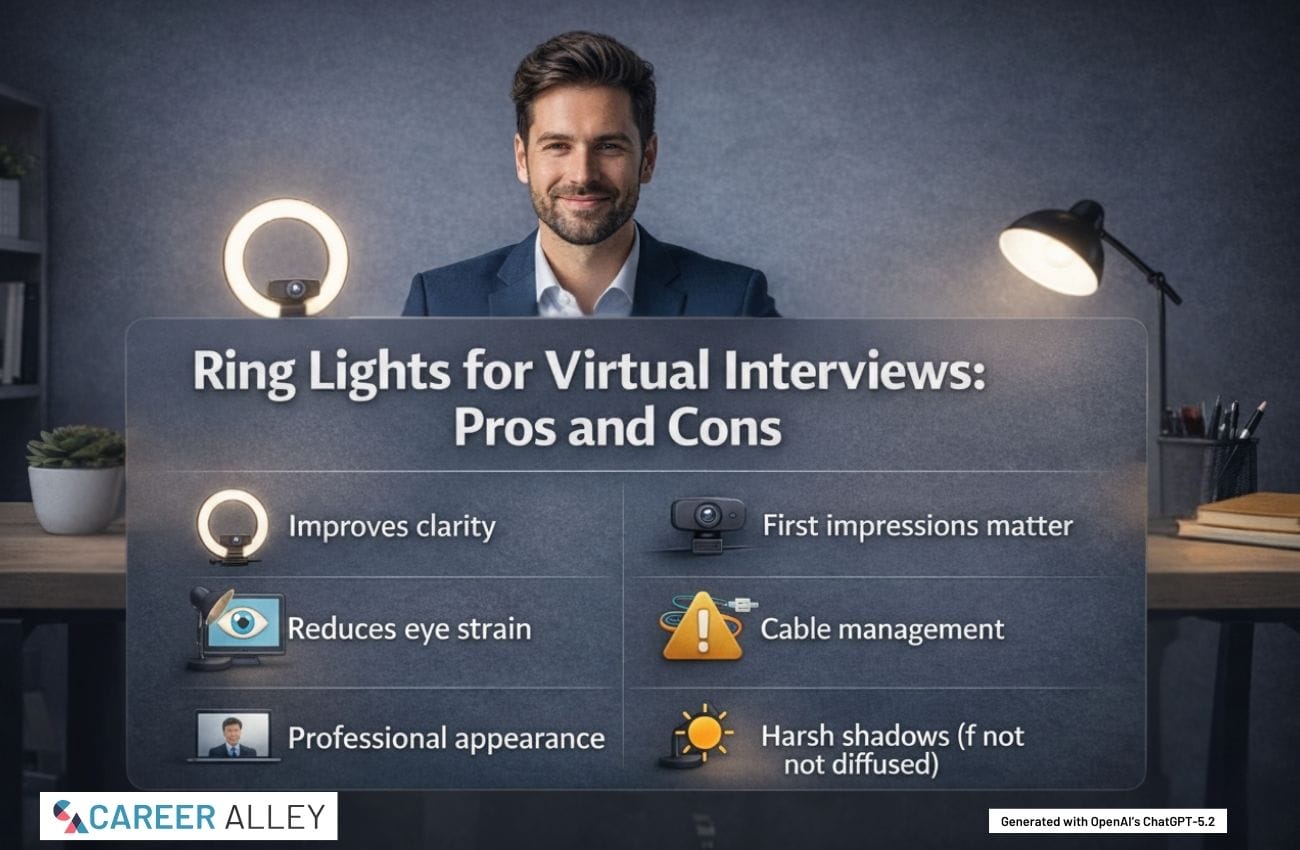
For an in-person interview, consider the workplace environment when selecting clothing. If you want to organize printed resumes, prepared questions, and your notes, a Lautus Designs zippered business portfolio is one optional accessory to consider; an ordinary folder works just as well for many candidates. For a video interview, test your camera, microphone, lighting, and internet connection beforehand. If your built-in camera is inadequate, an EMEET C960 1080p webcam is one external-camera option, but do not buy extra equipment when your existing setup works. Professional presentation should fit the employer and role rather than follow the same rules for every occupation.
For guidance on making a professional first impression, How to Dress for Success by Jasper Conran offers advice on personal style and professional presentation. Choose interview attire that reflects the employer’s workplace culture while maintaining a polished, professional appearance.
Answer the question being asked before adding supporting detail. If you need time to organize your response, a brief pause is preferable to a rushed or confusing answer.
When explaining your accomplishments, distinguish your individual contribution from the broader team’s achievements. Credit colleagues appropriately while clarifying your own responsibilities.
Ask Questions That Help You Evaluate the Employer
A
Prepare several questions in advance, but avoid asking something the interviewer has already explained unless you need clarification.
- Immediate Priorities: What would you consider the most important accomplishments during the first three months?
- Performance Expectations: How will success in this position be measured?
- Management Style: How does the manager typically provide feedback and support independent work?
- Team Collaboration: How does this position interact with other departments or colleagues?
- Future Development: What opportunities exist to develop additional skills and responsibilities?
If independent work matters to you, ask how decisions are made and how frequently employees meet with their managers. If work-life balance matters, ask how the organization handles competing priorities and unusually demanding periods. Specific questions generally produce more useful answers than broad requests to describe the culture.
For further examples, see CareerAlley’s guide to come prepared with thoughtful questions and the Indeed interview questions resource.
The interview should leave you better informed about the work, expectations, and organization. A strong performance is valuable, but accepting an unsuitable position can create problems long after the interview ends.
Follow Up and Learn From the Experience
Professional follow-up reinforces your interest and gives you another chance to demonstrate effective communication. When appropriate, send a concise thank-you message within approximately 24 hours, unless the employer has requested a different approach.
Thank the interviewer for the conversation, refer to a meaningful detail you discussed, and briefly reinforce a qualification that connects directly to the position.
For additional guidance on professional interview follow-up, Follow Up After the Interview: Beyond Thank You offers advice on maintaining communication with employers after an interview. CareerAlley’s guide to interview thank-you letters and emails provides additional practical tips for expressing appreciation, reinforcing your qualifications, and maintaining a professional impression.
Respect the timeline communicated by the interviewer. If that date passes without an update, a brief, courteous inquiry may be appropriate. Repeated messages rarely improve your position.
After the interview, take a few minutes to record which questions were challenging, which examples worked well, and what you learned about the employer. Keep these notes with your application records so you can improve your preparation before the next conversation.
Also consider whether the answers you received changed your interest in the role. Interview success involves both presenting your qualifications effectively and making an informed career decision.
The five-strategy preparation framework in this guide draws on an earlier CareerAlley contribution by Katherine Brumfield and emphasizes job-description analysis, self-assessment, employer research, motivation, and thoughtful questions.
Further Guidance & Tools
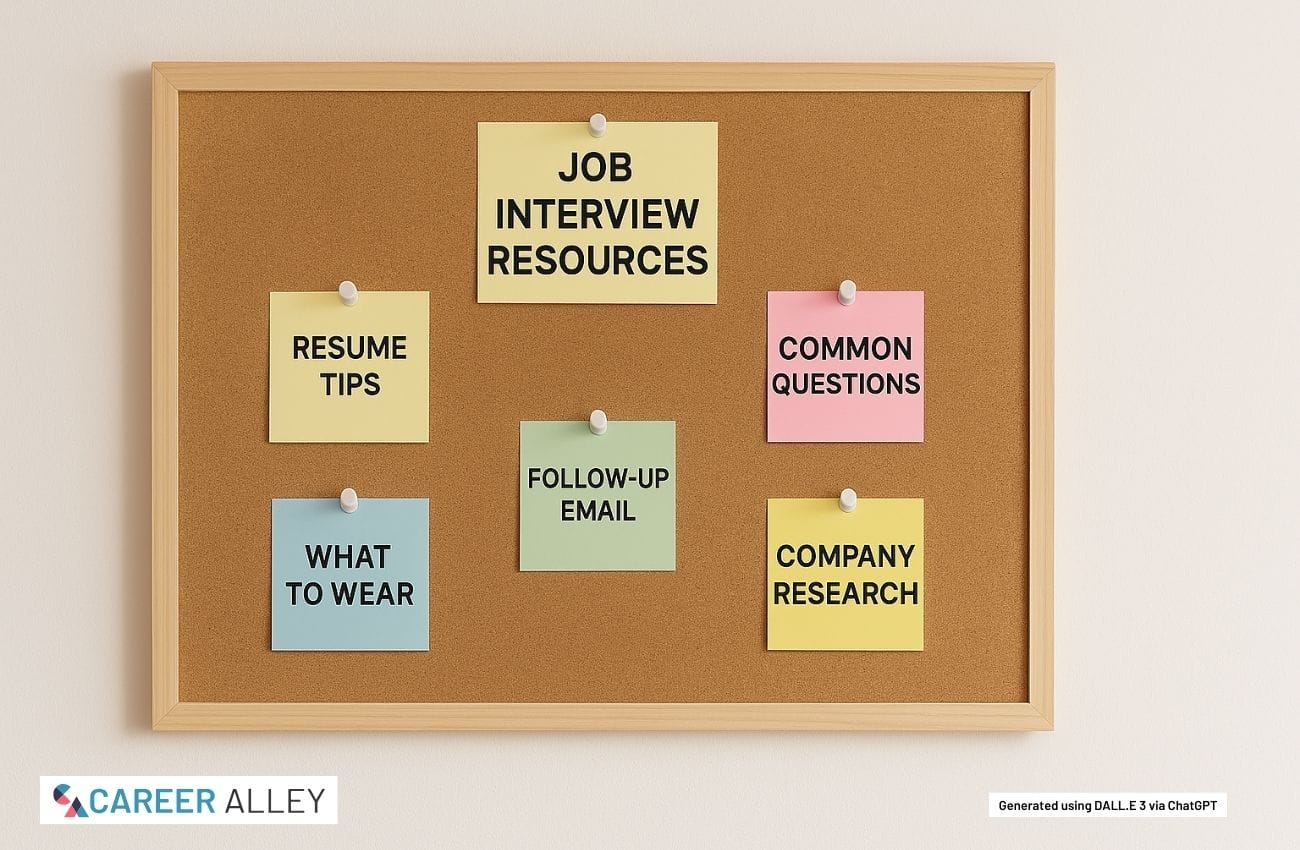
- Interview Readiness: CareerOneStop’s interview preparation guidance provides practical checklists and advice for preparing for different interview formats.
- Behavioral Questions: MIT’s STAR method worksheet helps candidates organize real accomplishments into structured behavioral interview responses.
- Occupational Research: O*NET OnLine helps job seekers investigate occupational tasks, skills, and work requirements before preparing interview examples.
- Interview Preparation: Review CareerOneStop interview tips for additional preparation and follow-up guidance.
- Interviewing and Employment: Consult EEOC guidance on hiring questions to understand important boundaries around potentially discriminatory
interview questions .
Next Steps
- Analyze Requirements: Review the job description and identify the five qualifications or responsibilities most important to the employer.
- Prepare Examples: Select three to five achievements that demonstrate relevant skills, then organize each example using a simple response structure.
- Research Thoroughly: Investigate the company’s recent activities, priorities, and business challenges, then develop a specific explanation of your interest.
- Practice Aloud: Rehearse common and role-specific questions, evaluate your clarity, and prepare several questions that help you assess the opportunity.
- Plan Follow-Up: Prepare a thank-you message framework and record the employer’s expected hiring timeline before the interview concludes.
Final Words
The strongest interview performance comes from understanding what the employer needs and communicating credible evidence that you can deliver it. Preparation gives you a foundation, but the conversation should remain natural and responsive to what you learn. Every interview also provides information about the employer and your own career priorities. Use that information to refine your approach and make better decisions about the opportunities you pursue.
Our AI Job Interview Coach is designed to help you train and excel in any job interview from the comfort of your home.



Mark Fiebert is a former finance executive who hired and managed dozens of professionals during his 30-plus-year career. He now shares expert job search, resume, and career advice on CareerAlley.com.
Discover more from CareerAlley
Subscribe to get the latest posts sent to your email.

