- Key Takeaways
- Understanding Stock Option Compensation in Today’s Job Market
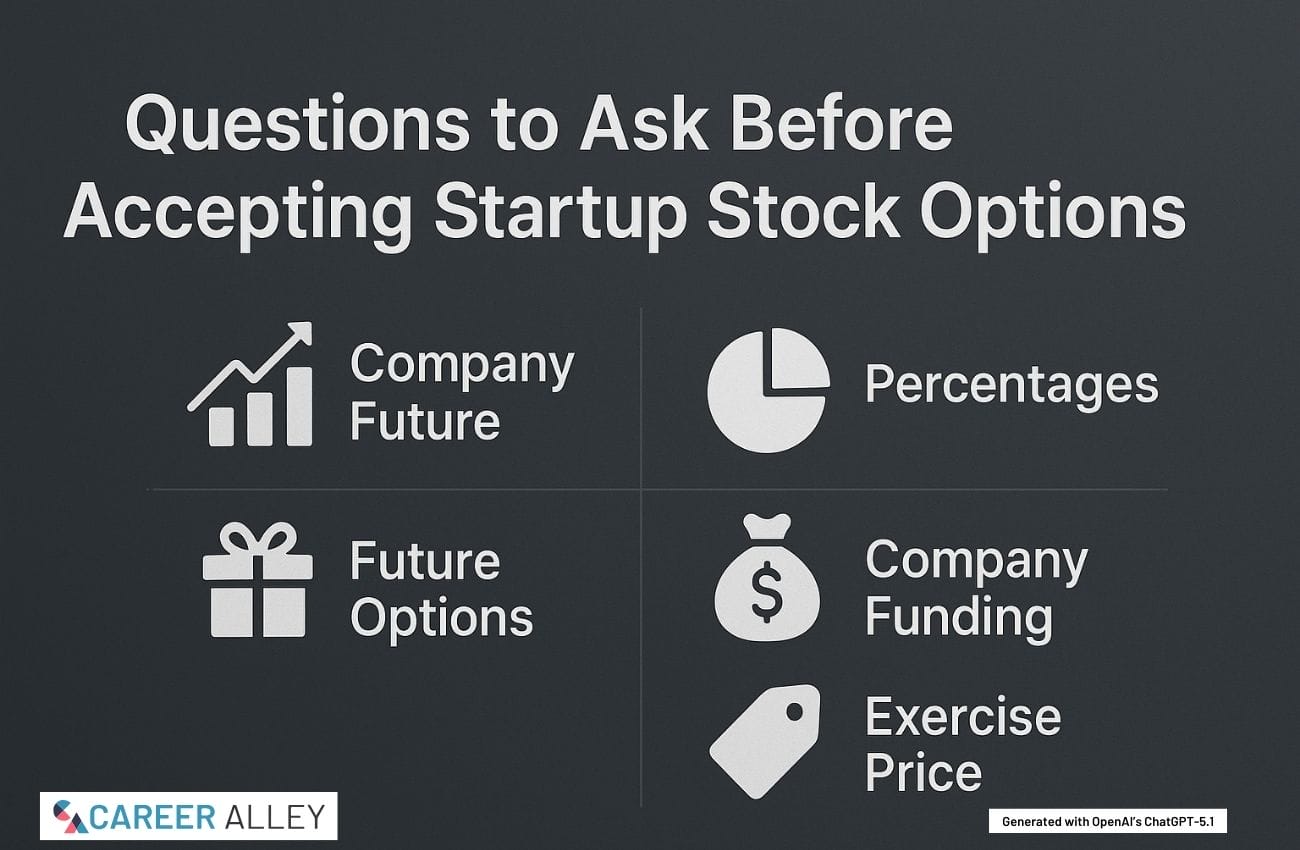
- Evaluate the Company’s Future Prospects
- Understand the Percentages, Not Just the Share Count
- Ask About Future Equity Grants
- Review the Company’s Funding and Ownership Structure
- Clarify the Exercise Price in Writing
- Further Guidance & Tools
- Next Steps
- Final Words
We may earn a commission if you click on a product link and make a purchase at no additional cost to you. For more information, please see our disclosure policy.
Last updated: December 4, 2025
Key Takeaways
- Equity Basics: Understanding how stock options work helps you evaluate offers realistically and protect yourself from compensation packages that may never produce meaningful value.
- Right Questions: Asking about dilution, funding, future grants, and exercise price reveals the company’s transparency and whether leadership has a credible long-term strategy.
- Risk Awareness: Stock options carry financial, tax, and liquidity risks, making it essential to examine employer assumptions, investor structures, and payout priorities before accepting an offer.
- Compensation Fit: Equity should complement—not replace—fair salary and benefits, and understanding its real worth helps you negotiate confidently and set realistic expectations.
- Informed Decisions: Evaluating company health, documentation quality, and vesting terms helps you avoid accepting equity when your chances of financial upside are limited.
Understanding Stock Option Compensation in Today’s Job Market
Startup culture has made stock option packages increasingly common, especially among companies that lack the cash to compete with traditional employers. While these offers often sound appealing, stock options are complex and can carry significant uncertainty. Candidates should approach them with a clear framework for evaluating risk, potential value, and employer expectations before accepting any equity-based compensation.
Evaluate the Company’s Future Prospects
Before considering any stock option package, confirm the company has a realistic long-term plan. Anyone can form a C corporation, but not every founder can demonstrate credible growth and disciplined execution.
- Ask leadership to share detailed business plans, including revenue model, target customers, and realistic growth milestones.
- Request market research or customer data that supports the company’s positioning, demand assumptions, and competitive advantage.
- Review financial projections, cash runway, and spending priorities to understand how long the company can realistically operate.
- Clarify how leadership measures success and what key performance indicators they track to evaluate business health.
- Treat vague answers, missing documentation, or resistance to basic questions as a signal to reconsider the equity offer.
Understand the Percentages, Not Just the Share Count
Receiving “10,000 shares” means nothing without understanding what percentage of the company those shares represent. Candidates should ask about fully diluted shares, future staffing plans, and the lifespan of the option pool. Dilution is inevitable, but understanding how quickly and to what extent it will occur is key to determining whether your stake has meaningful potential value.
Ask About Future Equity Grants
Future equity grants can significantly affect your long-term compensation, so confirm whether the company has a straightforward approach to awarding additional options as it grows.
- Ask if the company provides recurring equity grants to high-performing employees or key contributors.
- Clarify whether refresh grants are tied to tenure, performance reviews, role changes, or milestone achievements.
- Request information about how often leadership replenishes the option pool to support future equity awards.
- Evaluate whether the company’s long-term hiring and growth plans include structured equity incentives for retention.
- Be cautious if the employer avoids the topic entirely, as inconsistent grants may indicate financial uncertainty or unclear planning.
Review the Company’s Funding and Ownership Structure
While large funding rounds may seem reassuring, they can complicate your potential payout. Investors typically hold preferred stock, which gives them priority during an exit. Multiple investment rounds can further reduce what common stockholders—employees like you—receive. Understanding who gets paid first helps you set realistic expectations about your equity’s true value.
Clarify the Exercise Price in Writing
The exercise price determines what you will pay to purchase your options, and it must be clearly documented in both your Offer Letter and your Stock Option Agreement.
- Confirm the exact exercise price in writing before agreeing to any equity-based compensation package.
- Request a copy of the valuation or methodology used to establish the company’s current fair market value.
- Ensure the exercise price aligns with legal and tax requirements for the type of options being granted.
- Ask how future valuations may affect additional grants or potential tax obligations when exercising options.
- Treat any employer who postpones setting the exercise price as a serious red flag in early-stage compensation.
Further Guidance & Tools
- Equity Basics: Explore Charles Schwab’s stock options hub for clear explanations of employee stock options and how different structures work.
- Compensation Overview: Read Carta’s stock options guide to understand how grants, vesting, and strike prices shape the real value of your equity package.
- Tax Guidance: Use H&R Block’s stock options resource to see how exercising and selling options can affect your tax situation.
- IRS Rules: Review IRS Topic No. 427 for official guidance on how different kinds of employee stock options are treated for U.S. tax purposes.
Next Steps
- Ask the employer for written documentation outlining the exercise price, vesting schedule, and total fully diluted share count to understand the actual value of the equity offered.
- Research the company’s funding stage, investor profile, and financial runway to gauge the likelihood of future growth and potential equity appreciation.
- Review any preferred stock details available to learn how investor payouts may reduce or delay your compensation in the event of an exit or acquisition.
- Evaluate whether the proposed equity package fairly complements your cash compensation and aligns with the level of risk you are willing to accept.
- Consider speaking with a tax or financial professional to clarify how exercising options could affect your financial situation and long-term planning.
Final Words
Equity compensation can be a valuable opportunity, but only when grounded in transparent information and realistic expectations. By asking the right questions, analyzing company health, and understanding stock option mechanics, you minimize risk and make more confident career decisions. Approach equity thoughtfully to protect your future and ensure the rewards match the responsibilities.

You Need A Budget’s proven method that has helped hundreds of thousands of people break the paycheck to paycheck cycle, get out of debt, and live the life they want to live.


Mark Fiebert is a former finance executive who hired and managed dozens of professionals during his 30-plus-year career. He now shares expert job search, resume, and career advice on CareerAlley.com.