

- Key Takeaways
- Failing to Prepare for the Interview
- Giving Weak, Inaccurate, or Overly Long Answers
- Failing to Listen or Ask Useful Questions
- Damaging Your Professional Impression
- Making Mistakes With Attire and Interview Logistics
- Handling Compensation and Difficult Topics Poorly
- Failing to Follow Up or Learn From the Interview
- Further Guidance & Tools
- Next Steps
- Final Words
We may earn a commission if you click on a product link and make a purchase at no additional cost to you. For more information, please see our disclosure policy.
Last updated: November 12, 2026

Key Takeaways
- Preparation Matters: Research the employer, understand the position, and prepare relevant accomplishments before your interview instead of relying on spontaneous answers.
- Answer With Evidence: Avoid vague claims and lengthy explanations; describe specific situations, your actions, and the results you achieved.
- Demonstrate Professionalism: Arrive prepared, communicate respectfully, avoid criticizing former employers, and be mindful of how your behavior affects the conversation.
- Ask Better Questions: Use the interview to evaluate responsibilities, expectations, management practices, and opportunities rather than concentrating exclusively on impressing the interviewer.
- Follow Through: Prepare your technology and logistics beforehand, discuss compensation appropriately, and send a concise, personalized thank-you message afterward.
Common
The most damaging mistakes are often preventable: inadequate preparation, unfocused answers, poor listening, inaccurate claims, and avoidable distractions. These problems matter because interviews give employers an opportunity to evaluate how candidates communicate, make decisions, and respond to workplace situations.
One bad interview habit can cost you an otherwise perfect job opportunity. From weak answers to poor preparation, discover the mistakes employers notice and how to avoid them before your next interview. #JobInterviewClick To TweetA stronger interview approach means understanding the role, preparing evidence of your abilities, and treating the conversation as a chance to evaluate the employer as well. Here are the mistakes worth addressing before your next interview.
Failing to Prepare for the Interview
Insufficient preparation is one of the easiest interview mistakes to prevent. Candidates who cannot explain why they are interested in a position or how their experience meets its requirements may struggle to show they’re a good fit.
Start by researching the organization’s products, services, customers, recent developments, and stated priorities. CareerAlley’s guide to researching the company provides additional preparation guidance. Another common mistake is failing to research the company adequately before discussing what attracts you to the position.
Review the job advertisement carefully. As the FlexJobs discussion of understanding the job description illustrates, advertised requirements can help candidates identify the experience and abilities they should emphasize.
Preparation should include three practical tasks:
- Identify Priorities: Select three or four requirements that appear central to the position.
- Match Your Experience: Prepare examples demonstrating how you have used the relevant skills.
- Understand the Employer: Identify specific reasons the position and organization interest you.
CareerAlley’s 15 Tips for Improving
Several
Books addressing strong interview answers may help candidates prepare for particularly challenging questions. The objective, however, is to organize your own experiences rather than memorize someone else’s responses.
Interview preparation services are another option. CareerAlley’s interview questions resource provides access to coaching-related preparation, which may be useful when you want individualized feedback.
Giving Weak, Inaccurate, or Overly Long Answers
Interviewers generally need enough detail to evaluate your experience without losing sight of the original question. Vague, excessively long, or unrelated responses make that evaluation harder.
For behavioral questions, the STAR method provides a useful structure: Situation, Task, Action, and Result. Describe the circumstances, your responsibility, the steps you took, and the outcome. Emphasize your personal contribution rather than claiming credit for everything a team accomplished.
For example, instead of saying that you are excellent at solving problems, explain how you identified a recurring issue, evaluated alternatives, implemented a
CareerAlley’s advice on practicing concise, relevant answers can help you prepare responses that stay focused. Additional guidance on common
Books about the interview process can provide practice frameworks. A separate resource discussing failing to ask questions offers another perspective on the questions used during hiring.
The important distinction is between preparing answers and memorizing scripts. Prepared candidates understand which examples demonstrate their abilities and can adapt those examples to the specific question.
Avoid exaggerating your experience or qualifications. If you lack a particular skill, explain the related experience you do have and how you would approach learning the missing requirement. Claiming credentials, responsibilities, or accomplishments you cannot substantiate creates unnecessary risk.
Know
CareerAlley’s details of their resume resources offer additional resume-writing material. For candidates using automated resume optimization, tools such as your resume can help identify differences between application materials and job descriptions.
Resources about using keywords may also help applicants understand how to describe relevant experience. Accuracy and natural language should remain more important than inserting terminology that does not reflect your qualifications.
Failing to Listen or Ask Useful Questions
An interview should be a conversation, not a prepared presentation. Candidates who interrupt, dominate the discussion, or give minimal responses may prevent the interviewer from understanding their abilities.
Listen carefully, answer the question asked, and pause when necessary to organize your thoughts. If a question is unclear, request clarification rather than guessing at the intended meaning.
Not asking questions can also be a missed opportunity. Employers may interpret thoughtful questions as evidence of preparation, while candidates can use them to determine whether the role meets their expectations.
CareerAlley’s discussion of not asking questions explains why this matters. Consider preparing these questions:
- What would successful performance look like during the first six months?
- What challenges would the person in this position need to address first?
- How does the team communicate and coordinate competing priorities?
- What opportunities exist to develop skills relevant to this role?
Additional resources addressing failing to ask questions may help candidates prepare for both sides of the interview conversation.
From the employer’s perspective, structured interviews are designed to gather comparable information about job-related abilities. The U.S. Office of Personnel Management explains that interviewers may ask candidates about past experiences or hypothetical situations and evaluate responses against predetermined criteria.
Some books are written specifically for people conducting interviews. For example, a resource addressing recruiters and HR professionals may give applicants insight into how hiring conversations are approached.
Damaging Your Professional Impression
Professional conduct can influence how an interviewer evaluates your judgment and reliability. Unnecessary distractions, dismissive comments, and careless behavior may undermine otherwise strong answers.
One avoidable mistake is criticizing previous employers. Even if you experienced difficult working conditions, explain the circumstances factually and focus on what you learned or what you want in your next position.
BI Norwegian Business School discusses speaking negatively about previous employers among interview behaviors worth avoiding. CareerAlley’s article on speaking negatively about past employers provides related job-search guidance.
Body language also shapes an interviewer’s overall impression, though it should not be treated as a universal test of confidence or honesty. Appropriate behavior varies with culture, disability, communication style, and interview circumstances.
CareerAlley’s article explaining how body language plays a crucial role in interviews explores nonverbal communication. Books on consistent eye contact may offer additional perspectives, but no single posture, gesture, or eye-contact pattern guarantees a positive impression.
Instead, concentrate on listening, responding clearly, remaining attentive, and communicating respectfully. Avoid checking your phone, allowing unnecessary notifications, chewing gum during the discussion, or interrupting the interviewer.
The University of North Georgia recommends that candidates keep certain personal habits to themselves and remain focused. Its interview guidance also addresses behaviors candidates should manage during a job interview.
A resource on A
Research on first impressions may help explain how people interpret professional behavior. However, appearance and mannerisms should never replace evaluation of actual job-related qualifications.
Making Mistakes With Attire and Interview Logistics
Appropriate interview attire depends on the industry, organization, position, and interview format. Formal business clothing may suit some employers, while polished business casual may be appropriate elsewhere.
Instead of assuming every interview requires a suit, research the employer’s expectations. CareerAlley’s Tips to Dress the Part for the Interview offers further guidance. You can also consider advice on dressing inappropriately and choosing clothing that suits the setting.
Books on confirming the company’s dress code may provide additional preparation advice.
Another common mistake is overlooking travel and arrival arrangements. Confirm the interview location, directions, parking, security procedures, and expected arrival time. For in-person meetings, arriving early and checking in close to the scheduled appointment can strike a practical balance.
Guidance on time to get to the interview can also help candidates plan for delays and manage interview anxiety.
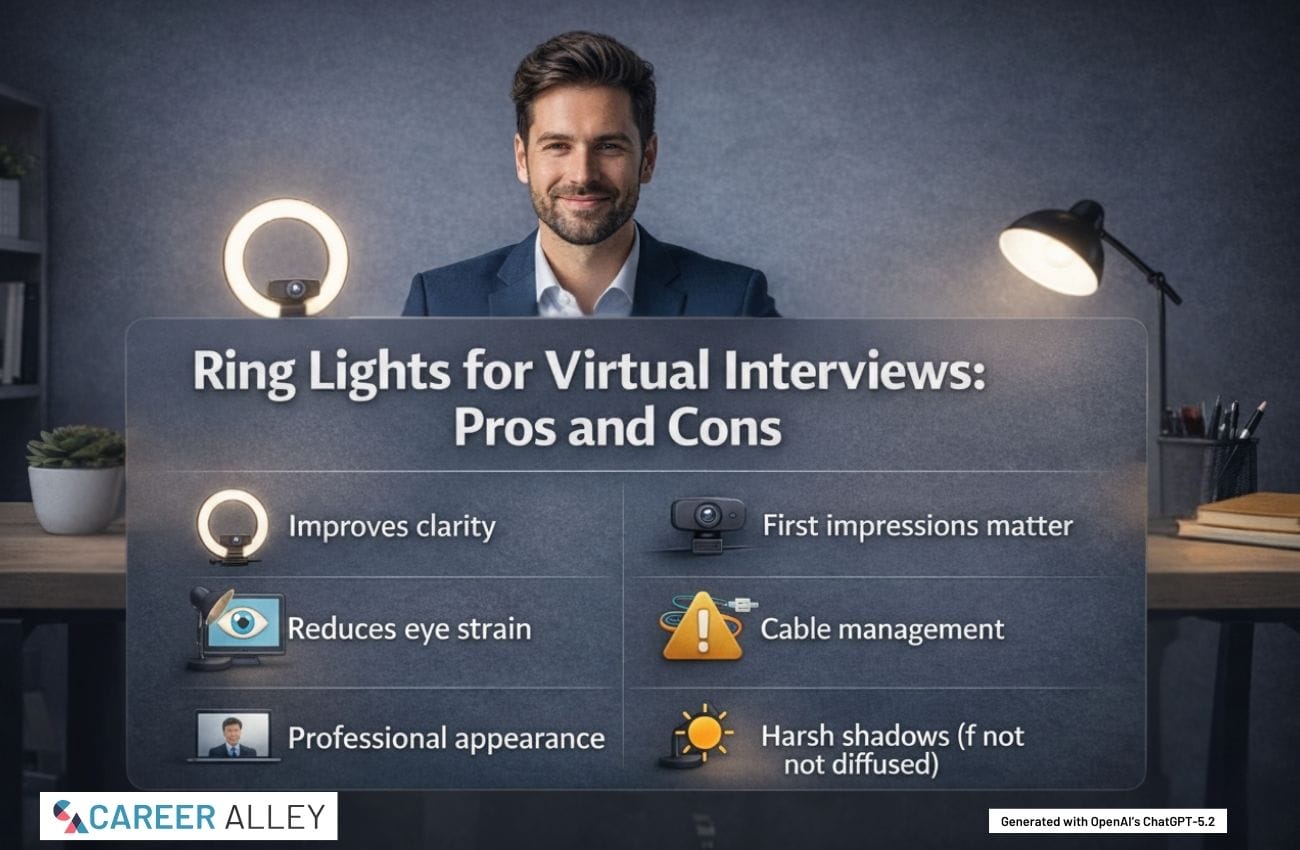
For virtual interviews, test the
Telephone interviews require particularly clear spoken communication. CareerAlley’s 10 Telephone Interview Mistakes You Don’t Want to Make covers challenges specific to that format.
Good time management means leaving enough time to prepare rather than rushing through important details right before the
Handling Compensation and Difficult Topics Poorly
Compensation is a legitimate part of evaluating employment, and candidates should not feel obligated to postpone every salary discussion until a final offer. The appropriate timing depends on the hiring process, the employer’s approach, applicable pay-transparency requirements, and the candidate’s circumstances.
Research the likely salary range for the job before interviewing. This makes it easier to respond if a recruiter asks about expectations early in the process.
For candidates preparing to negotiate, resources covering compensation may provide useful language for discussing offers professionally.
The mistake is not mentioning pay. It is approaching compensation without understanding the position, your own requirements, or the context of the discussion.
Other difficult subjects deserve equally careful handling. Be truthful about employment gaps, departures, availability, and experience. Keep explanations relevant, and don’t volunteer unnecessary personal details.
CareerAlley’s guidance on interviewing provides additional help with challenging questions. A book about your
Applicants seeking a broader perspective may find a recruiter’s material useful for understanding how employers evaluate applications and interviews.
Failing to Follow Up or Learn From the Interview
A thoughtful follow-up can reinforce your interest and provide a professional close to the conversation. It doesn’t guarantee an offer, and its importance varies by employer, but a brief thank-you message is generally appropriate when you have the interviewer’s contact information.
Send a message within a reasonable period, often the same day or the following business day. Thank the interviewer, mention a relevant discussion point, and briefly explain why the opportunity interests you.
CareerAlley’s resource on A thoughtful thank-you message provides additional guidance. You can also review advice on sending a thank-you note or
Books that discuss why many candidates fail to follow up may also offer example messages and additional perspectives on post-interview communication.
After the interview, record the questions you were asked, the examples you used, and any areas where your answers lacked clarity. This creates a practical basis for improvement even when the employer does not provide feedback.
If you receive a rejection, avoid assuming that one awkward answer caused the outcome. Hiring decisions may involve competing candidates, changing business requirements, budget considerations, and factors you cannot observe.
The useful response is to identify improvements you can control. That may mean refining a behavioral example, researching employers more effectively, strengthening a technical skill, or becoming more comfortable discussing compensation.
Further Guidance & Tools
- Structured Interviews: The U.S. Office of Personnel Management explains how employers use behavioral and situational questions to evaluate job-related competencies.
- Interview Preparation: The University of North Georgia offers practical guidance on preparation, communication, professionalism, and interview follow-up.
- Interview Research: Indeed Career Guide provides additional examples of common interview mistakes and ways candidates can prepare to avoid them.
Next Steps
- Review the Position: Identify three essential job requirements and prepare specific accomplishments demonstrating how your experience addresses each one.
- Practice Your Answers: Rehearse five common behavioral questions using concise examples that explain the situation, your actions, and the outcome.
- Prepare Questions: Write four thoughtful questions about responsibilities, performance expectations, team practices, and challenges you may encounter in the role.
- Check Logistics: Confirm the appointment time, location or
meeting link, appropriate attire, and technology requirements before your scheduled interview. - Plan Your Follow-Up: Prepare a concise thank-you message, then customize it with a meaningful discussion point after the interview concludes.
Final Words
Effective interviewing is less about delivering a perfect performance than giving employers accurate, useful evidence of your capabilities. Preparation helps you explain your experience, while careful listening and thoughtful questions make the conversation more productive for both parties. Professional habits support that effort without replacing genuine qualifications. Approach each interview as a specific business conversation, evaluate the opportunity on its merits, and use the experience to improve your next one.
No Mistakes Interviews will teach you how to:
- Prepare for the interview.
- Identify the company’s primary need.
- Assess your skills as they relate to that need.
- Sell yourself as the solution.




Mark Fiebert is a former finance executive who hired and managed dozens of professionals during his 30-plus-year career. He now shares expert job search, resume, and career advice on CareerAlley.com.
Discover more from CareerAlley
Subscribe to get the latest posts sent to your email.

