- Key Takeaways
- How ChatGPT Is Changing Writing Careers
- What ChatGPT Can and Cannot Do
- Where Writing Jobs Face The Most Pressure
- Where Human Writers Still Have An Edge
- How Writers Can Use AI Without Becoming Replaceable
- Skills Writers Should Build Now
- Freelance Writers Need A Stronger Position
- How Job Seekers Can Present AI Writing Skills
- Ethics, Trust, And Originality Matter More
- Further Guidance & Tools
- Next Steps
- Final Words
We may earn a commission if you click on a product link and make a purchase at no additional cost to you. For more information, please see our disclosure policy.
Last updated: May 5, 2026

By Mark Fiebert
Key Takeaways
- AI Changes The Work: AI tools like ChatGPT are reshaping writing careers by automating routine drafts, outlines, summaries, and low-differentiation content.
- Human Judgment Matters: Writers stay valuable by bringing strategy, voice, interviewing, research, accuracy, emotional nuance, and audience understanding to the work.
- Commodity Work Is Riskier: Generic SEO posts, basic product descriptions, and repetitive content are easier to automate than expert-led writing.
- AI Fluency Helps: Writers who use AI responsibly for research support, ideation, editing, and workflow efficiency can become more competitive.
- Proof Builds Trust: Strong portfolios, niche expertise, measurable results, and clear ethics help writers stand out in a crowded AI-assisted market.
How ChatGPT Is Changing Writing Careers
ChatGPT and other generative AI tools have moved from novelty to everyday workflow. For writers, that shift is both uncomfortable and useful. AI can produce drafts quickly, summarize source material, suggest outlines, rework tone, and help teams scale routine content. It can also flood the web with bland, interchangeable writing, making original thinking more valuable.
The practical question is no longer whether AI will affect writing careers. It already does. The better question is which parts of writing are becoming easier to automate, which skills still require human judgment, and how writers can reposition themselves before clients or employers define their value too narrowly.
Job search essentials curated to help you prepare, stay organized, improve your resume, and approach interviews with more confidence.

What ChatGPT Can and Cannot Do
Before deciding how ChatGPT could affect writers, it helps to understand the difference between text generation and professional writing. ChatGPT can create coherent copy from prompts, but it does not automatically know a client’s audience, brand risk, legal exposure, product truth, competitive positioning, or editorial standards.
That distinction matters. AI can help produce a first pass, but it can also invent details, flatten voice, miss context, overstate claims, and repeat generic advice. Skilled writers are still needed to verify facts, interview people, shape ideas, clarify messy information, build trust, and decide what should not be published.
Where Writing Jobs Face The Most Pressure
The writing work most exposed to automation is usually repetitive, low-context, and easy to standardize. Basic product descriptions, thin SEO content, generic blog posts, simple social captions, and first-draft summaries are increasingly handled through AI-assisted workflows. That does not mean every role disappears, but it does mean clients may expect faster turnaround times, lower costs, or greater strategic value from human writers.
The pressure is especially real for writers who sell only word count. If your work can be reduced to “write 800 words on this topic,” AI becomes a direct competitor. If your work includes audience insight, original reporting, subject expertise, conversion strategy, editorial judgment, and measurable business value, you are much harder to replace.

Explore CareerAlley’s curated Amazon picks for job search tools, resume help, interview prep, work essentials, and smart career-building resources.
Where Human Writers Still Have An Edge
AI is strongest when the assignment is broad, predictable, and based on existing patterns. Human writers are strongest when the assignment requires taste, credibility, empathy, persuasion, precision, and accountability. That is why strong writers should focus on work where the outcome depends on judgment, not just output.
- Interview-based articles, case studies, and customer stories that require real human sourcing
- Thought leadership that reflects a founder, executive, expert, or brand point of view
- Sales pages, landing pages, email sequences, and ads where conversion strategy matters
- Technical, legal, finance, health, or compliance-sensitive content that requires careful review
- Editorial strategy, content audits, positioning, messaging, and brand voice development
How Writers Can Use AI Without Becoming Replaceable
Writers should treat AI as a production assistant, not as the source of expertise. It can help brainstorm angles, compare outlines, simplify dense material, generate alternative headlines, identify gaps, and create rough drafts. The writer’s job is to decide what is true, useful, persuasive, original, and appropriate for the audience.
A smart workflow might use AI early for ideation and structure, then rely on the writer for research, examples, interviews, claims, voice, editing, and final judgment. The danger is not using AI. The danger is letting AI take your thinking out of the work.

This book, "The Impact of ChatGPT on Employment," explores the complex and multifaceted issue of how ChatGPT, a highly advanced language model, is impacting the job market and the economy.
Skills Writers Should Build Now
Writers who want durable careers should move beyond general content production. The most valuable skills sit closer to strategy, research, editing, conversion, and domain expertise. That means understanding why content exists, who it must persuade, what action it should drive, and how success will be measured.
- Research: Find credible sources, verify claims, and avoid publishing unsupported information.
- Editing: Improve structure, clarity, tone, accuracy, and usefulness beyond surface grammar.
- Strategy: Connect writing to search intent, customer needs, brand goals, and business outcomes.
- Prompting: Use AI tools clearly while checking every important claim and assumption.
- Specialization: Build expertise in industries where accuracy and trust matter.
Freelance Writers Need A Stronger Position
Freelancers face a sharper version of the same challenge because clients can compare human rates against AI-assisted production. Competing on price alone is a losing game. A stronger position is to sell judgment, speed with quality control, subject expertise, editorial systems, and content that supports revenue, trust, or authority.
That may mean offering content strategy, audits, ghostwriting, case studies, newsletters, conversion copy, editing packages, or AI-assisted content cleanup. The goal is to be the person who makes content credible and useful, not just the person who fills a blank page.
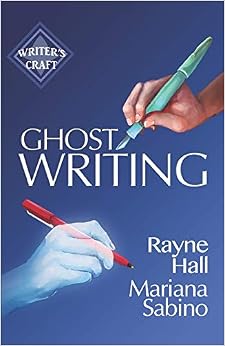
Ghostwriting: The Business of Writing for Other Authors offers a practical, insider’s guide to building a successful career writing books for clients behind the scenes.
How Job Seekers Can Present AI Writing Skills
If you are applying for writing, marketing, communications, or content roles, AI fluency can help when it is framed correctly. Employers do not need vague claims that you “use ChatGPT.” They need to know how you use tools responsibly to improve quality, speed, consistency, and decision-making.
On a resume or portfolio, show examples: content briefs you developed, articles you edited for accuracy and voice, campaigns that improved engagement, or workflows that reduced turnaround time without sacrificing quality. Pair AI skills with the need for human writers, because the strongest candidates can combine automation with editorial judgment.
Ethics, Trust, And Originality Matter More
As AI-generated content becomes easier to produce, trust becomes a career advantage. Writers should be careful with disclosure expectations, the risk of plagiarism, copyright questions, confidential information, and unsupported claims. Never paste sensitive client data into tools unless the employer or client’s policy allows it.
Originality also matters. A writer who brings interviews, personal expertise, proprietary examples, customer insight, and real analysis creates work that AI cannot easily duplicate. The same is true for critical thinking, which is now one of the clearest dividing lines between replaceable content production and valuable professional writing.

We're Working Together To Work Better and Make Sure No Project is Out Of Reach. From Marketing to Design to Development and More, Get Everything You Need For Your Biz . All-in-One Platform. Top Quality Guaranteed. Super Fast Delivery.
Further Guidance & Tools
- OpenAI Help: Review ChatGPT usage basics to understand the tool’s capabilities, limits, and practical workflow considerations.
- Copyright Office: Use AI copyright guidance to follow current U.S. developments around authorship, ownership, and AI-generated material.
- BLS Outlook: Check writer career data for employment outlook, job duties, and professional context.
- WEF Jobs: Read future skills research to understand how automation is changing work across industries.
- Google Search: Follow helpful content guidance to create people-first writing that avoids thin, automated content.
Next Steps
- Audit Work: Identify which writing services you offer that are routine, generic, or vulnerable to AI-assisted replacement.
- Build Proof: Create portfolio samples that show research, strategy, editing judgment, interviews, conversion thinking, or niche expertise.
- Use AI: Test AI for outlines, idea generation, and editing support while keeping final judgment and verification human.
- Move Up: Shift from selling word count to selling outcomes such as clarity, trust, leads, authority, or audience engagement.
- Set Rules: Create a personal AI policy for client data, fact-checking, disclosure, originality, and final review.

A multifunctional desk organizer that raises your monitor for better ergonomics while keeping everything within reach, with a built-in phone/tablet holder, customizable compartments, and side caddies for extra storage.
Final Words
ChatGPT is changing writing careers, but it is not the end of professional writing. It is the end of relying on generic output as a career strategy. Writers who adapt can use AI to work faster while becoming more valuable through judgment, expertise, voice, research, ethics, and strategy. The safest path is not to compete with AI at its weakest price point, but to build the skills and proof that make your work harder to automate and easier to trust.

AI is reshaping major industries by improving accuracy, efficiency, and cost savings through faster diagnostics, fraud detection, inventory optimization, predictive maintenance, and automation.

Mark Fiebert is a former finance executive who hired and managed dozens of professionals during his 30-plus-year career. He now shares expert job search, resume, and career advice on CareerAlley.com.