

- Key Takeaways
- What Makes Professional Writing Valuable?
- They Solve Problems Before They Write
- They Write With Practical Clarity
- They Understand The Business Behind The Writing
- Writing Careers Offer Different Ways To Earn
- Technical Writing Rewards Subject Knowledge
- Communication Careers Extend Beyond Writing Titles
- They Build Evidence That They Can Deliver
- They Use AI Without Surrendering Judgment
- They Research Before They Assert
- They Rewrite Without Ego
- They Build A Repeatable Writing Process
- Freelance Or Salaried Writing?
- How To Increase Your Value As A Writer
- Further Guidance & Tools
- Next Steps
- Final Words
We may earn a commission if you click on a product link and make a purchase at no additional cost to you. For more information, please see our disclosure policy.
Last updated: October 6, 2026

Key Takeaways
- Value Beats Style: Professional writers earn opportunities by solving reader and business problems, not simply by producing polished sentences or clever prose.
- Proof Matters: Strong portfolios demonstrate range, subject knowledge, clear thinking, and measurable outcomes that employers and clients can evaluate before hiring.
- Specialization Pays: Technical knowledge, industry expertise, conversion skills, research ability, or strategic communication can make a writer harder to replace.
- AI Changes Expectations: Writers who combine AI-assisted efficiency with judgment, verification, original insight, and disciplined editing can provide substantially more value than generic content.
- Multiple Paths Exist: Writing skills can support salaried careers, freelance work, consulting, technical communication, marketing, ghostwriting, public relations, and independent publishing.
Strong writing can still lead to paid work, but writing ability by itself is rarely enough. Employers and clients increasingly need writers who understand audiences, conduct reliable research, work efficiently, adapt to different formats, use AI responsibly, and connect their work to a business or communication objective.
That distinction matters because producing competent prose has become easier. The valuable writer is increasingly the person who can decide what to write, identify what the reader actually needs, find and verify the right information, choose an effective structure, and improve the final result through editing and judgment.
Exceptional writers therefore distinguish themselves less through elaborate language than through clarity, usefulness, reliability, and the ability to produce work that serves a defined purpose.
What Makes Professional Writing Valuable?
Professional writing creates value when it helps someone understand, decide, act, buy, apply, trust, learn, or complete a task. That can happen in a blog article, white paper, technical manual, landing page, newsletter, executive presentation, client proposal, resume, report, or
The form changes, but the underlying question does not: what does this piece of writing need to accomplish?
A writer producing website content may need to attract qualified search traffic while answering the reader’s question. A copywriter may need to clarify an offer and reduce uncertainty. A technical writer may need to turn complex instructions into something customers can actually follow. A corporate communications writer may need to explain a sensitive organizational decision accurately and consistently.
The writer who understands that purpose is more valuable than one who treats every assignment as an exercise in producing attractive sentences.
They Solve Problems Before They Write
Strong writers begin by diagnosing the assignment. They identify the audience, what that audience already knows, what information is missing, what objections or confusion may arise, and what the reader should be able to do after finishing the piece.
This is one of the clearest differences between writing as a craft and writing as professional work. A weak draft often reflects what the writer wanted to say. A strong draft reflects what the reader needed to understand.
That means making decisions before you write the first paragraph. Which information belongs near the beginning? Which claim requires evidence? Which details are useful but secondary? What terminology needs explanation? What can safely be omitted?
Writers who develop this habit become faster because they spend less time rescuing drafts built on weak assumptions.
They Write With Practical Clarity
Clear writing is not simplistic writing. It is writing that minimizes unnecessary effort for the reader. Skilled writers use direct sentences when ideas are complicated, specific language when a claim could be vague, and examples when abstraction would otherwise slow comprehension.
This matters whether you are writing articles, reports, proposals, resumes,
Clarity also requires restraint. More detail does not automatically make a piece more useful. Professional writers know when additional explanation improves understanding and when it simply creates friction.
They Understand The Business Behind The Writing
Writers who want to earn income from their skills need to understand how their work contributes to a larger objective. Clients and employers may care about brand consistency, audience growth, qualified leads, product adoption, customer support, employee communication, search visibility, fundraising, sales, retention, or regulatory clarity.
You do not need to become a full-time marketer to understand these connections. You do need to know what success looks like for the person paying for the work.
A newsletter may be judged partly by readership and retention. A landing page may be evaluated by conversions. A technical document may reduce support requests. A recruiting article may attract stronger applicants. A proposal may help a company win business.
This is where writing becomes commercially useful. The stronger your understanding of the desired outcome, the easier it is to decide on structure, tone, evidence, and calls to action.
Writing Careers Offer Different Ways To Earn
Writing is not one career. These skills can lead to several professional paths, and the best choice depends on what you enjoy writing, what expertise you can develop, and whether you prefer employment, freelance work, or independent business ownership.
The U.S. Bureau of Labor Statistics reported a median annual wage of $76,910 for writers and authors in May 2025. Employment in the occupation is projected to show little or no change from 2025 through 2035, although BLS still projects about 11,900 openings annually on average, primarily because workers leave the occupation or workforce.
Those figures cover a broad occupational category and should not be treated as a prediction of what an individual writer will earn. Compensation can differ sharply by specialty, employment arrangement, experience, industry, location, and ability to attract clients.
- Content Writer: Produces articles, website copy, newsletters, case studies, guides, and other materials designed to educate or engage a defined audience.
- Copywriter: Writes persuasive marketing material such as landing pages, advertisements, emails, product pages, campaigns, and sales-oriented website copy.
- Technical Writer: Explains complex products, systems, scientific subjects, procedures, or software for users who need accurate and usable documentation.
- Communications Writer: Creates organizational messaging, executive communications, press materials, employee communications, reports, speeches, and public-facing content.
- Ghostwriter: Produces articles, books, newsletters, speeches, or other work published under another person’s or organization’s name.
- Freelance Writer: Works independently for multiple clients and may combine several specialties rather than holding one defined writing position.
Technical Writing Rewards Subject Knowledge
Technical writing demonstrates why subject expertise can materially strengthen a writing career. Technical writers translate complicated information into instructions, guides, documentation, articles, and support materials that other people can understand and use.
According to the U.S. Bureau of Labor Statistics, technical writers earned a median annual wage of $90,390 in May 2025. Employment is projected to grow 1% from 2025 through 2035, with about 3,200 openings projected annually on average.
BLS notes that technical writers typically need a bachelor’s degree and that knowledge of a technical field such as science or engineering can be beneficial. The broader lesson applies well beyond technical documentation: writers who combine strong communication with hard-to-acquire knowledge can compete on expertise rather than words alone.
That expertise might involve finance, healthcare, cybersecurity, software, engineering, human resources, law, insurance, education, or another specialized field.
Communication Careers Extend Beyond Writing Titles
Some of the best opportunities for strong writers don’t include the word “writer” in the job title. Public relations, marketing, communications, content strategy, fundraising, employee communications, and brand roles may all depend heavily on professional writing.
For example, the Bureau of Labor Statistics reported median annual pay of $74,750 for public relations specialists in May 2025. The occupation is projected to grow 2% from 2025 through 2035, with about 23,000 openings annually on average.
For job seekers, this means searching only for “writer” positions can unnecessarily limit the market. Instead, look for jobs where writing is one of the primary ways the employee creates value.
They Build Evidence That They Can Deliver
A writing portfolio should do more than show you can write good sentences. It should make it easier for an employer or client to imagine hiring you.
Choose samples that show the type of work you want to be paid to produce. Someone pursuing technical writing should not rely entirely on lifestyle blog posts. A prospective copywriter needs stronger proof than academic essays. A business writer should show the ability to explain practical topics accurately and with clear structure.
When appropriate, add context around the sample:
- Audience: Identify who the piece was intended to reach and what that audience needed.
- Objective: Explain whether the assignment was meant to educate, persuade, generate leads, improve usability, or support another outcome.
- Your Role: Clarify whether you handled research, interviews, strategy, writing, editing, optimization, or the entire project.
- Result: Include legitimate performance information when available, such as traffic, conversions, engagement, reduced support requests, or client adoption.
If you are early in your career, self-directed samples can still demonstrate ability. Create realistic projects for the niche you want rather than waiting until someone pays you to produce your first relevant piece.
They Use AI Without Surrendering Judgment
AI tools can accelerate parts of the writing process. They can help brainstorm angles, develop outlines, summarize supplied information, identify missing questions, produce alternatives, and assist with editing.
They can also generate confident inaccuracies, generic language, repetitive structures, invented details, and polished prose that says very little. That makes human judgment more important, not less.
The Bureau of Labor Statistics specifically notes that increased use of AI for writing is expected to dampen demand for writers and authors, while technical writers may also become more productive through AI tools. That is an important career signal: competing primarily on the ability to produce basic text is becoming a weaker strategy.
Writers can respond by moving toward higher-value work. Verify facts. Develop subject expertise. Interview people. Interpret evidence. Improve arguments. Make editorial decisions. Understand business goals. Add examples based on legitimate source material. Know what should not be included.
The durable advantage is not refusing to use AI. It is producing a better final result because you know where automation helps and where experienced judgment still matters.
They Research Before They Assert
Credible professional writing depends on reliable inputs. Strong writers distinguish between what sounds plausible and what they can support.
Research discipline includes going beyond search-result summaries, identifying original sources, checking dates, understanding whether data applies to the population being discussed, and recognizing when a source is expressing opinion rather than establishing fact.
Writers also need the confidence to remove a claim when they can’t support it. Filling a gap with a confident sentence is easier than acknowledging uncertainty, but it can also quickly damage credibility.
Reading strong work helps too. Writers improve when they study how effective articles are organized, where evidence appears, how they simplify complex subjects without becoming inaccurate, and how the writer keeps the reader oriented throughout the piece.
They Rewrite Without Ego
No writer consistently produces finished professional work in one pass. Drafting creates material. Revision turns that material into something another person will publish, approve, or pay for.
Strong editing goes beyond correcting grammar. It asks whether the opening establishes value quickly enough, whether ideas appear in the right order, whether evidence actually supports the conclusions, whether sections repeat each other, and whether the reader has enough information to act.
Useful professional writing tools can help with proofreading, readability, organization, and workflow, but they work best when the writer still makes the substantive editorial decisions.
They Build A Repeatable Writing Process
Professional writers cannot depend on inspiration arriving on schedule. A repeatable process makes quality more predictable and makes deadlines easier to manage.
- Clarify Purpose: Define the audience, problem, desired outcome, required evidence, and action the reader should understand or feel ready to take.
- Research First: Gather reliable sources and identify factual gaps before drafting around assumptions you may later need to remove.
- Outline Structure: Arrange major ideas before writing so the piece follows the reader’s needs instead of the order ideas occurred to you.
- Draft Efficiently: Develop the argument without trying to perfect every sentence while the structure is still changing.
- Edit Ruthlessly: Cut repetition, qualify unsupported claims, improve transitions, replace vague advice, and make each section earn its place.
- Proof Last: Check grammar, spelling, names, links, formatting, facts, and final readability after substantive revisions.
Freelance Or Salaried Writing?
Neither path is inherently better. The right choice depends on how much stability, independence, selling, administrative work, and income variability you are comfortable managing.
A salaried position can provide predictable income, benefits, access to subject-matter experts, established workflows, and deeper knowledge of one organization or industry. The tradeoff is less control over assignments, schedules, editorial direction, and sometimes where or how you work.
Freelancing offers more control over clients, workload, specialization, and pricing, but writers also handle prospecting, proposals, contracts, invoicing, client communication, scheduling, and periods when work is less predictable.
A freelance writer also needs to think like a business owner. The question is no longer only whether you can write. It is whether you can identify a valuable service, find buyers for it, price the work intelligently, deliver consistently, and retain good clients.
Many writers eventually combine the models through full-time employment plus selective freelance projects, contract positions, consulting, or independent publishing.
How To Increase Your Value As A Writer
The strongest long-term strategy is to become useful in ways that are harder to commoditize. That usually means combining writing ability with another capability.
- Develop Expertise: Learn an industry or subject deeply enough to understand terminology, audiences, problems, and the evidence needed to write credibly.
- Understand Outcomes: Learn how the organization evaluates the work, whether through usability, conversions, traffic, engagement, sales, comprehension, or another legitimate measure.
- Improve Research: Become better at locating primary sources, evaluating evidence, interviewing knowledgeable people, and identifying unsupported claims.
- Learn Strategy: Understand how individual pieces connect to broader editorial, marketing, communication, customer, or organizational objectives.
- Use Technology: Become efficient with AI-assisted workflows, collaboration platforms, content systems, editing tools, and other technology used in your target market.
- Build Relationships: Reliability, responsiveness, good judgment, and the ability to accept feedback can matter as much for repeat work as sentence-level talent.
Valuable writing ultimately helps someone make a clearer choice, understand a complicated subject, accomplish a task, trust a message, or move toward an important objective. That is true in career content, marketing, technical documentation,
Further Guidance & Tools
- Career Outlook: Use the BLS Writers and Authors profile to compare current pay, employment projections, work settings, and typical preparation.
- Content Quality: Review Google’s people-first content guidance for practical questions about usefulness, originality, sourcing, trust, and reader satisfaction.
- Revision Skills: Use Purdue OWL’s clarity guidance to strengthen professional writing through clearer wording, organization, emphasis, and revision.
Next Steps
- Choose a Path: Identify two writing roles that match your interests, subject knowledge, preferred work environment, and tolerance for freelance income variability.
- Study Postings: Review current job listings or client projects and record the skills, formats, industries, and tools that repeatedly appear.
- Build Proof: Create or improve three portfolio samples that closely resemble the professional writing you want employers or clients to hire you for.
- Add Expertise: Strengthen one complementary skill such as technical knowledge, research, conversion writing, analytics, interviewing, editing, or content strategy.
- Track Results: Record legitimate outcomes from published work so future applications and proposals demonstrate value instead of relying only on writing samples.
Final Words
Writing can still support a rewarding career or independent income stream, but the market increasingly rewards people who bring more than fluent prose. Build expertise, understand the purpose behind each assignment, prove you can solve real communication problems, and learn to use new technology without outsourcing your judgment to it. The writers most likely to remain valuable are those who clarify complex information, produce trustworthy work, adapt to different business needs, and consistently give readers something worth their time.
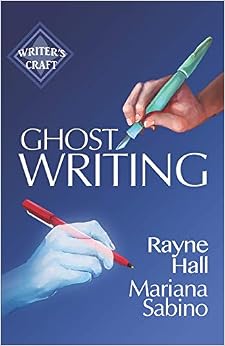
Ghostwriting: The Business of Writing for Other Authors offers a practical, insider’s guide to building a successful career writing books for clients behind the scenes.





Mark Fiebert is a former finance executive who hired and managed dozens of professionals during his 30-plus-year career. He now shares expert job search, resume, and career advice on CareerAlley.com.

