We may earn a commission if you click on a product link and make a purchase at no additional cost to you. For more information, please see our disclosure policy.
Last updated: March 5, 2026
Healthcare and the world surrounding it are undergoing a radical transformation, driven by tomorrow’s technological advances and the present shift in how specialists view their own careers.
The rising popularity of flexible work models is driven by the growing demands on healthcare facilities, while nurses strive to maintain a healthy work-life balance and well-being.
Flexible Nursing Is Gaining Momentum
Desire for flexible nursing work is a clear response to the priorities set by today’s healthcare specialists, who now lean in favor of work autonomy over a rigid structure. Professionals seek roles that respect their personal life, family commitments, and aspirations for further education.
Flexible nursing takes on several practical forms, including:
- Local contracts: Similar to travel nursing, these contracts focus on temporary placements within a commutable region, offering stability without long-term employment ties.
- Per diem or PRN shift work: Filling individual shifts as needed, often through an online staffing platform like Nursa or Snapcare, offers nurses the possibility of a flexible work schedule.
- Travel nursing: Taking temporary, fixed-term contracts (usually 8-13 weeks) in facilities across the country allows for a combination of work and exploration.
- Float pools: Part-time or
Providing nurses with the opportunity to define their own career paths ensures their overall well-being while maximizing their potential earnings.
The ideal guide to finding out everything a potential candidate needs to know, Becoming a Nurse provides a thorough, up-to-date overview on the nursing profession


The Spectrum of Flexible Nursing
Flexible scheduling can be achieved through a diverse range of staffing models designed to accommodate the varied needs of professionals and individuals, ultimately reducing nurse burnout and helping healthcare facilities manage staffing challenges.
Per diem or PRN staffing
Providing the maximum level of schedule flexibility, per diem nursing allows nurses to pick up individual shifts as they become available, granting them autonomy over their schedules.
Utilizing healthcare staffing platforms for self-scheduling allows individuals to select when and where they work, often while receiving premium pay rates. Per diem staffing platforms like Nursa enable nurses to instantly browse a wide range of available local shifts and request those that match their preferences. While this model provides unparalleled work-life balance, nurses must be prepared to forgo employer-provided benefits and quickly adapt to different facility policies.
Provides a comprehensive, evidence-based approach to maternal, newborn, and pediatric nursing. It covers essential concepts, clinical applications, and family-centered care to support safe and effective nursing practice.

Part-time & float pools
For nurses who seek flexibility without sacrificing employee benefits and stability, part-time roles and internal float pools are ideal.
Part-time nurses typically commit to a reduced set of hours per week (under 30 hours) or opt for shorter shifts (4 to 6 hours), which effectively reduces the likelihood of fatigue and work burnout.
Float pool nurses are employed by the system and tend to cover multiple units, blending a variety of gig work with the stability of a full-time paycheck and benefits. While this offers high skill diversification and better pay than standard staff positions, float pool assignments often require extreme flexibility and responsiveness to facility needs.
Travel, contract, and remote nursing
Different staffing models also include travel and contract nursing, which provides the same flexibility and additional geographic freedom. Nurses may take fixed and generally high-paying assignments to fill critical gaps across various regions.
The medical frontier has expanded immensely, with remote/telehealth nursing roles becoming increasingly accessible. These positions focus on non-bedside duties, such as patient monitoring and virtual case management, and often adhere to standard business hours. Reducing commute or any physical demands enables a path towards an excellent work-life balance and long-term career sustainability.
Have you ever thought about becoming a registered nurse but were unsure if a career in nursing is good for you? Do you want to become a registered nurse but are not sure if you have what it takes?

Consider This Before Choosing a Flexible Nursing Career
Transitioning to a flexible nursing work schedule will require careful planning to ensure a smooth and successful
Before fully embracing this path, nurses should evaluate several key factors to maximize their benefits and minimize career risks.
Trade-offs: Stability vs. freedom
Nursing flexibility is a process that involves implementing both stability and autonomous practices, rather than optimizing for one over the other:
- Benefits & income stability: Per diem nursing generally offers premium pay rates on an hourly basis; however, trade-offs often include a lack of employer-subsidized health insurance, retirement contributions, and paid time off (PTO). Nurses must independently plan and manage their expenses, as income may fluctuate based on the number of available shifts and their willingness to pick up work.
- Onboarding & orientation: Unlike staff positions with extended orientations, flexible roles, particularly gig nursing assignments, usually have minimal onboarding. Facilities assume a high level of competence, benefiting experienced nurses but posing challenges for those with less than 2 years of clinical experience or those transitioning to a new specialty.
CRNA school is extremely difficult, but for those who are determined to become CRNAs, it can be done. The CRNA program is very intensive, as it's a graduate-level program. Try to get any advantage you can to make your life easier. This book does exactly that.

How facility types affect flexibility
Schedule flexibility greatly depends on the class of work available and may vary significantly based on the setting:
- Hospitals offer the widest variety of shifts to address most urgent staffing challenges in healthcare, in exchange for higher premium pay rates. Medical centers often utilize large internal float pools and are the primary source of travel contracts.
- Skilled nursing facilities (SNFs) provide a consistent, though often high-volume, flow of shifts. They frequently rely on per diem nursing to fill immediate gaps, and the work generally requires a broad skill set focused on long-term patient stability.
- Home health/telehealth allows for excellent work-life balance with options for remote work or highly individualized block scheduling. However, the volume and pay rates for these specialized roles may not be as high or as instant as those provided with acute care.
Credentialing, skills, certifications & adaptability
Becoming a successful flexible nurse requires being exceptionally organized and competent:
- Required skills: Flexible work demands high adaptability and excellent organizational skills. You must be comfortable navigating different EMR systems, patient populations, and departmental workflows, often within the same week.
- Certifications: Maintaining up-to-date credentials is non-negotiable. Facilities often require specific certifications (ACLS, PALS, etc.), particularly when addressing nursing shortages in specialized units with limited staff.
Based on more than ten years' field research, Beyond Caring is filled with eyewitness accounts and personal stories demonstrating how nurses turn the awesome into the routine.

Financial planning & benefits
Before shifting to a flexible model, it is important to study the benefits that may or may not be provided with a flexible job:
- Insurance: Per diem jobs typically don’t cover health insurance, dental, or vision plans. However, nurses can pay for private insurance with the higher hourly rates that per diem nursing provides.
- Retirement: Per diem nurses should set up a retirement plan (a self-employed 401(k) or SEP IRA) and commit to regular contributions, as they will not have employer matching.
- Taxes: Independent contractors (often the case in gig nursing) are solely responsible for an estimated quarterly income tax and self-employment taxes. Consultation with a tax professional is often recommended.
Flexible Nursing Puts You in Command of Your Career
Embracing flexible nursing work gives you more control over your schedule, helping reduce nurse burnout and address staffing challenges in healthcare. Moving towards nursing flexibility is more than just a
Additional Resources
-
 $13.80Learn More
These customizable, snap-on stethoscope ID tags come in bright designs, fit most tubing sizes, and offer a durable, lightweight way to personalize and easily identify your stethoscope at work.
We earn a commission if you click this link and make a purchase at no additional cost to you.
10/22/2026 08:38 pm GMT -
 $40.45Learn More
This sturdy, water resistant stethoscope case features a soft protective interior, personalized ID card, essential diagnostic tools, and a compact design for secure, portable medical storage.
We earn a commission if you click this link and make a purchase at no additional cost to you.
10/23/2026 01:39 am GMT -
 $16.99Learn More
This water resistant, multi compartment nurse fanny pack features adjustable straps, durable construction, reflective detailing, and organized storage for essential medical tools, making it a practical and versatile gift for healthcare professionals.
We earn a commission if you click this link and make a purchase at no additional cost to you.
10/22/2026 08:39 pm GMT -
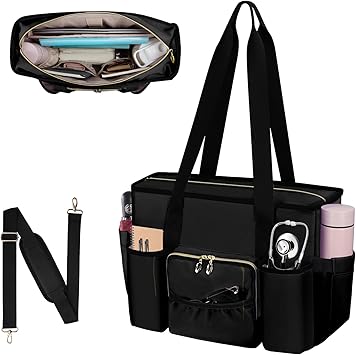
$29.99$27.99Learn MoreThis spacious, travel friendly nursing tote features a 15.6 inch laptop compartment, multiple organized pockets, reinforced waterproof design, and versatile carrying options for work, school, or clinical use.
We earn a commission if you click this link and make a purchase at no additional cost to you.
10/22/2026 08:39 pm GMT -

$189.99$158.92Learn MoreThis book is intended for someone curious to learn more about a career in healthcare, but not certain if it is right for them, or if the industry would be a good fit for them.
We earn a commission if you click this link and make a purchase at no additional cost to you.
10/22/2026 02:29 pm GMT -
 $25.99Learn More
This durable, waterproof aluminum clipboard case offers secure internal storage, a smooth writing surface, and compact portability for organized use in offices, schools, hospitals, and other professional settings.
We earn a commission if you click this link and make a purchase at no additional cost to you.
10/22/2026 08:34 pm GMT -
 $35.99Learn More
Rechargeable Headlamp, 99000 Lumens Super Bright LED Head Lamp with 3 Modes, 90° Adjustable Head Lights for Forehead, 45H Long Runtime & IPX6 Waterproof HeadLamps for Camping Hunting Hiking
We earn a commission if you click this link and make a purchase at no additional cost to you.
10/22/2026 02:40 am GMT -
 $60.49Learn More
This portable, professional diagnostic kit includes a stethoscope, blood pressure monitor, otoscope, and essential exam tools, all crafted from durable materials and housed in secure carrying cases for reliable on the go use.
We earn a commission if you click this link and make a purchase at no additional cost to you.
10/22/2026 08:39 pm GMT -
 $31.99Learn More
This expanded 108 card nursing flashcard set delivers up to date clinical references in durable waterproof PVC with a protective case and lifetime warranty, making it a reliable companion for study and clinical rounds.
We earn a commission if you click this link and make a purchase at no additional cost to you.
10/22/2026 11:29 am GMT -
 $29.69Learn More
This comprehensive therapy kit includes multiple goniometers for joint measurement, specialized spinal and finger tools, reflex hammers for neurological assessment, measuring tapes with BMI calculator, and bonus mobility aids, providing accurate, ISOM-standard instruments for professional and home rehabilitation use.
We earn a commission if you click this link and make a purchase at no additional cost to you.
10/22/2026 10:34 pm GMT -

$24.00$21.33Learn MoreSo, You Want to Be a Physician offers first-hand examples from aspiring medical students the author has mentored, including actual interview questions, personal statements, and practical advice on how to master the art of the interview.
We earn a commission if you click this link and make a purchase at no additional cost to you.
10/22/2026 07:28 pm GMT
This book offers practical guidance and income strategies for nurses and healthcare professionals seeking flexible, remote work opportunities outside traditional clinical settings.


Mark Fiebert is a former finance executive who hired and managed dozens of professionals during his 30-plus-year career. He now shares expert job search, resume, and career advice on CareerAlley.com.