- Key Takeaways
- Understand what clients actually buy
- Prioritize compliance before you chase growth
- Build menus around margins, not just creativity
- Improve the client experience at every touchpoint
- Use systems that make growth easier, not harder
- Choose a niche you can execute well
- Further Guidance & Tools
- Next Steps
- Final Words
We may earn a commission if you click on a product link and make a purchase at no additional cost to you. For more information, please see our disclosure policy.
Last updated: April 12, 2026
By Mark Fiebert
Key Takeaways
- Operational discipline: Successful catering companies win with reliable systems, clear communication, and consistent execution, not just with creative menus or attractive food presentation.
- Compliance first: Food safety, permits, sanitation, and staff training are foundational business requirements that protect customers, reputation, and long-term growth potential.
- Profit awareness: Portion control, menu design, labor planning, and accurate pricing matter because busy calendars do not automatically translate into healthy margins.
- Client experience: Professional service, fast responses, polished setup, and smooth event-day delivery shape referrals and repeat bookings as much as flavor does.
- Focused growth: The strongest operators build a clear niche, simplify what they sell well, and avoid overcomplicating operations with endless customization.
A catering business can be a smart path for people who want to build income through hospitality, events, and food service, but it is also one of those businesses where talent alone is not enough. Great food helps you get noticed. Strong systems, dependable service, clean execution, and disciplined pricing are what keep the business profitable. That is the gap in many older articles on this topic. They focus on cooking and presentation but overlook the operational side, which now matters just as much.
If you are evaluating catering as a business or trying to improve an existing operation, the real question is not simply how to impress guests. It is about delivering a reliable experience, protecting margins, meeting compliance requirements, and earning repeat business. That is why learning the fundamentals of catering still matters, especially for anyone building a business within the broader hospitality industry.
Understand what clients actually buy
Clients are not only paying for food. They are paying for confidence. They want a caterer who responds quickly, clearly confirms details, shows up prepared, handles changes without drama, and delivers an event that feels organized from start to finish. That means professionalism is still essential, but it should be defined more broadly than uniforms and table manners. It includes proposals, contracts, timelines, invoicing, punctuality, and follow-up.
For CareerAlley readers, that matters because catering is not just a food topic. It is a small-business topic. It sits at the intersection of customer service, operations, sales, and entrepreneurship. Anyone starting or growing your business needs to think like an operator, not only like a cook.
Prioritize compliance before you chase growth
Food businesses have more regulatory exposure than many new owners expect. A caterer may be preparing, transporting, staging, and serving food across changing environments, which increases the need for discipline. The right permits, local approvals, sanitation practices, documentation, and safe handling procedures are not optional details to clean up later. They are part of the business model from day one.
That is why training belongs near the top of the priority list. Completing a state-approved food handler course can help reinforce baseline standards, but the bigger issue is building habits that hold up during busy events. A catering company can survive a menu tweak or a staffing hiccup. It is far less likely to recover quickly from a food safety failure.
Build menus around margins, not just creativity
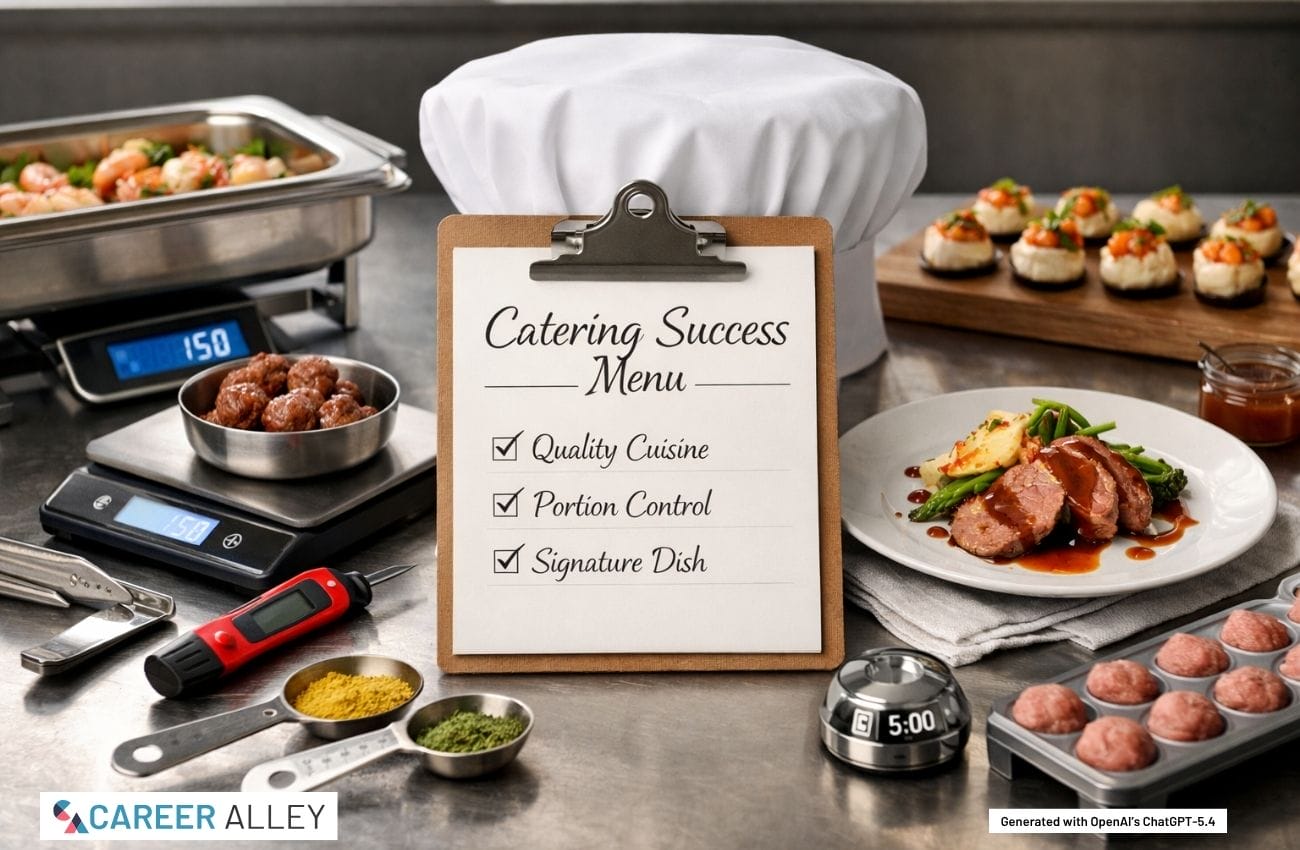
Older advice often tells caterers to create a signature dish, and there is some truth to that. Memorable offerings can help differentiate a brand. But a stronger modern approach is to build a focused menu that sells well, travels well, and produces consistent results. The best menu item is not always the flashiest one. It is often the one that clients value, staff can execute repeatedly, and the business can price profitably.
That is where portion control becomes a business issue rather than a kitchen detail. Standard recipes, measured serving tools, prep sheets, and careful inventory habits help reduce waste and protect consistency. If portions vary wildly, food costs drift, and the client experience becomes less predictable. That is how a seemingly busy catering company ends up working hard without keeping enough of what it earns.
Improve the client experience at every touchpoint
Presentation still matters, but the modern version of presentation is broader than plating. It includes buffet flow, labeling, packaging, cleanliness, setup timing, delivery organization, and how staff interact with guests. For drop-off catering, a neatly packed, clearly labeled order can feel more professional than an elaborate display that arrives late or incomplete. For full-service events, layout and pacing matter almost as much as appearance.
Strong client experience usually comes from repeatable habits, not improvisation. The most reliable operators tend to do a few things well every time:
- Response speed: Answer inquiries quickly and confirm details in writing before assumptions create expensive mistakes.
- Clear scope: Spell out staffing, rentals, setup, cleanup, service timing, and extra fees before the event is booked.
- Consistent branding: Use the same standard of polish across uniforms, menus, packaging, and on-site presentation.
- Post-event follow-up: Ask for feedback, thank the client, and make it easy for happy customers to book again.
Use systems that make growth easier, not harder
Automation in catering should not be limited to specialty kitchen machinery. For many operators, the bigger gains come from digital systems that reduce friction: lead tracking, estimates, contracts, prep schedules, staffing checklists, inventory control, and payment workflows. These tools help owners avoid common growth traps such as forgotten details, underpriced jobs, last-minute scrambling, and inconsistent communication.
Just as important, systems help protect your time. Many small operators stay stuck because every event depends on memory, texts, and scattered notes. That works until the calendar fills up. A catering business becomes more durable when the process is documented, repeatable, and less dependent on one person holding everything together.
Choose a niche you can execute well
One of the easiest ways to weaken a catering business is to say yes to everything. Corporate breakfasts, weddings, private dinners, school functions, office lunches, drop-off platters, cocktail events, and holiday parties all require different strengths. Trying to serve every segment equally well can create unnecessary complexity. A better strategy is to pick the formats you can execute consistently and build your reputation there first.
Niche focus also sharpens marketing. It is easier to win business when prospects know exactly what you are great at. That could mean dependable corporate catering, polished backyard events, dietary-conscious office lunches, or elevated small gatherings. Clarity beats breadth. In a crowded market, being known for something specific is usually more effective than being vaguely available for anything.
Further Guidance & Tools
- FDA guidance: Review food business startup guidance to understand how federal, state, and local requirements can affect a catering operation.
- SBA permits: Use the SBA’s licenses and permits overview to map the approvals your business may need before launch or expansion.
- Industry trends: The National Restaurant Association’s off-premises trends report helps frame how convenience and ordering habits continue to shape demand.
- SCORE help: Explore food service resources for mentoring and practical small-business advice on planning, costs, and growth.
- Pricing guide: Toast’s catering pricing resource is useful for thinking through cost-based pricing and margin protection.
Next Steps
- Audit offers: Review your current menu and remove items that create excessive labor, waste, or inconsistency without supporting strong pricing.
- Map compliance: List every permit, training requirement, insurance need, and local approval tied to your location and service model.
- Standardize pricing: Build pricing from food, labor, transport, setup, and cleanup costs instead of guessing based on competitors alone.
- Document workflow: Create repeatable checklists for inquiry response, event prep, service execution, and post-event follow-up to reduce errors.
- Pick a niche: Decide which event types you want to own, then sharpen messaging and operations around that specific client need.
Final Words
A catering business still has real opportunity, but it is not a casual side hustle once clients and events start stacking up. The operators who last are the ones who treat catering like a disciplined business, not just a creative outlet. If your systems are solid, your pricing is honest, your service is professional, and your execution is consistent, you give yourself a much better chance of building a reputation that drives repeat work and steady growth.

Become a full-time foodie with this step-by-step guide to entering the professional world of cooking, baking, and running a culinary business.


Mark Fiebert is a former finance executive who hired and managed dozens of professionals during his 30-plus-year career. He now shares expert job search, resume, and career advice on CareerAlley.com.