We may earn a commission if you click on a product link and make a purchase at no additional cost to you. For more information, please see our disclosure policy.
Last updated: January 12, 2026
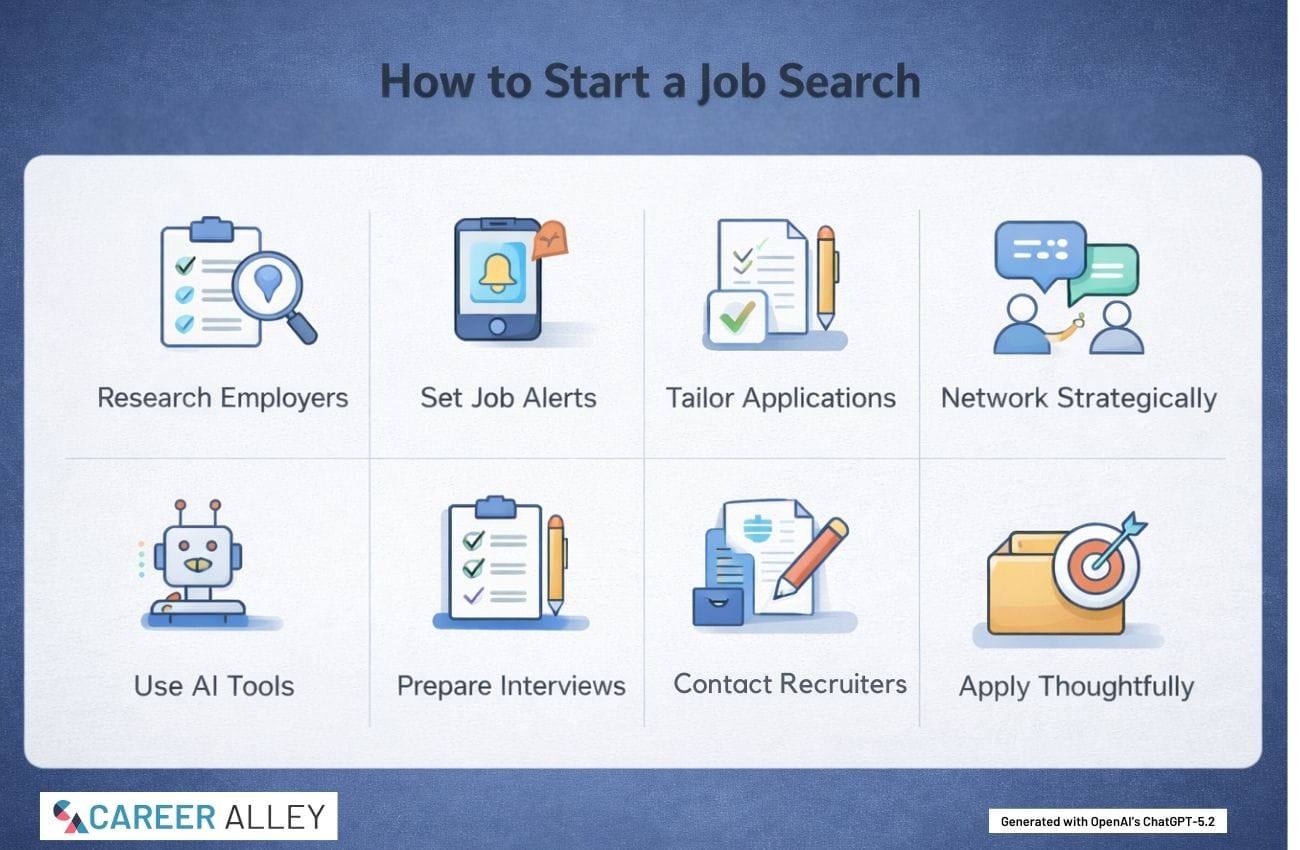
Key Takeaways
- Clarify direction: Defining your career goals early helps you focus on roles and industries that support long-term growth rather than short-term convenience.
- Location matters: Deciding where and how you want to work narrows your
search and prevents wasted effort on roles that don’t fit your lifestyle. - Culture fit counts: Understanding company culture improves job satisfaction and reduces the risk of landing in an environment where you can’t thrive.
- Know your number: Establishing a realistic salary range ensures financial stability and confidence when evaluating offers or negotiating compensation.
- Show relevant
skills : Highlighting the right skills on your resume strengthens your candidacy and signals immediate value to potential employers.
Starting a Job Search
Searching for a new job often feels overwhelming, especially when you’re unsure where to begin. With countless roles, industries, and employers competing for attention, it’s easy to apply broadly without a clear
A more effective strategy is to slow down and ask a few focused questions before submitting applications. These questions help clarify priorities, reduce noise, and ensure your energy goes toward opportunities aligned with your goals. By grounding your


Defining Career Goals
Your career goals shape every decision you make during a job
Think beyond job titles and consider the responsibilities, industries, and learning opportunities that matter most to you. Being specific allows you to filter roles more effectively and focus your
Choosing Where to Work
Location plays a bigger role in job satisfaction than many candidates expect. Do you prefer the pace and opportunities of a major city, or the balance and familiarity of a small town? Are you open to relocating, or do personal commitments make that impractical? Answering these questions early streamlines your
Remote and hybrid roles also deserve careful consideration. For many professionals,

Getting the advantage in today's job market is tough, so making yourself stand out in the job marketplace is more important than ever. From writing a good resume and locating the best search engines to what to do when you get an interview.
Evaluating Company Culture
Company culture directly impacts your daily experience, motivation, and long-term engagement. Two roles with identical responsibilities can feel completely different depending on
Whether you’re considering a traditional corporate environment, a fast-moving startup, or a tightly knit
Understanding Salary Needs
Before applying for roles, it’s critical to understand how much you need to earn to support your lifestyle and obligations. Your ideal salary range depends on location, family needs,
Take time to research average salaries across regions and roles. Entering negotiations informed gives you leverage and confidence, and it helps you avoid accepting offers that won’t realistically cover your

Highlighting the Right Skills
Employers scan resumes quickly, looking for evidence that a candidate can solve their immediate problems. That’s why it’s essential to identify which
Update your resume to emphasize relevant experience and measurable results. If you notice gaps, consider targeted
Define Your Target Role
A focused job

Whether you're a seasoned professional in search of a career change or a beginner just entering the working world, you want to make the right choices from the beginning.
Build Your Search Filters
Once you know your direction, create a simple set of filters to quickly decide what’s worth your time. Location and work style matter more than most people admit, and company culture can make the same job feel either energizing or exhausting. Use the checklist below to define your non-negotiables, then apply it consistently so your applications and interviews stay aligned with the life you actually want.
- Work Location: Decide whether you want in-office, hybrid, or
remote work , and name any commute or relocation limits upfront. - Culture Signals: Identify values you want in a
team , like autonomy,collaboration , transparency, or strong feedback habits. - Pay Range: Set a realistic
salary floor and preferred range so you can screen roles fast and negotiate without second-guessing. - Career Research: Use O*NET Online to compare roles, required
skills , and typical tasks before committing to a job title.
Show Skills That Matter
After you’ve narrowed your target roles, make

Explore your creativity with classes in illustration, photography, design, and more. Get unlimited access to classes on illustration, photography, design, film, music, and more.
Further Guidance & Tools
- Job
Search Strategy: Use Indeed Career Guide to structure yoursearch and understand modernhiring expectations. - Salary Research: Use Glassdoor Salaries to compare compensation by role, location, and experience level.
- Skill Development: Use Coursera to build in-demand
skills aligned with your target roles. - Career Planning: Use O*NET Online to explore career paths, skill requirements, and growth outlooks.
Next Steps
- Clarify Goals: Write a short statement defining the role, industry, and growth opportunities you want before submitting additional applications.
- Refine Location: Decide which locations or work arrangements support your lifestyle and remove roles that don’t meet those criteria.
- Audit Resume: Review
your resume to ensure keyskills and results align clearly with the roles you’re targeting. - Research Employers: Spend time evaluating company culture,
leadership style, and employee experiences before applying or interviewing. - Set
Salary Range: Establish a realistic compensation range so you can assess offers confidently and negotiate from an informed position.

Improve your chances in job interviews by optimizing your resume. Our partners specialize in resume writing, reviewing, and tailoring to specific job requirements, ensuring job seekers stand out to potential employers.
Final Words
A successful job

Use the latest technology to target potential employers and secure the first interview--no matter your experience, education, or network--with these revised and updated tools and recommendations.

Mark Fiebert is a former finance executive who hired and managed dozens of professionals during his 30-plus-year career. He now shares expert job search, resume, and career advice on CareerAlley.com.