- Key Takeaways
- Understanding the Purpose of an Elevator Speech
- Why You Need an Elevator Speech:
- What Your Elevator Speech Should Include:
- Creating and Using Your Elevator Speech
- Essential Ingredients of a Compelling Elevator Speech
- Practicing and Using Your Elevator Speech Confidently
- Further Guidance & Tools
- Next Steps
- Final Words
We may earn a commission if you click on a product link and make a purchase at no additional cost to you. For more information, please see our disclosure policy.
Last updated: November 23, 2025
Key Takeaways
- Clear introduction: A concise elevator speech gives you a clear, memorable way to explain who you are, what you do, and why you create value.
- Stronger connections: Using a prepared pitch at networking events, job fairs, and casual conversations helps you make faster, stronger connections with
hiring managers and decision-makers. - Focused targeting: Defining your target roles, industries, and ideal employers before crafting your elevator speech keeps your message focused and aligned with your real
job search goals. - Proof of impact: Including one or two specific accomplishments, ideally with numbers or clear outcomes, shows how your
skills translate into concrete results that matter to employers. - Confident delivery: Regular practice with friends, mentors, or career coaches helps your elevator speech sound natural, confident, and flexible instead of robotic or overly rehearsed.
Understanding the Purpose of an Elevator Speech
If you’ve been job hunting for any length of time, you’ve probably heard of the “elevator speech“. If not, your first question may be, “What is an elevator speech? An elevator speech (sometimes called an elevator pitch) is a brief, focused statement that helps you make the most of every first impression. An elevator speech gives you a prepared and practiced quick presentation to people (whether in an elevator or not!) about who you are, what you do, and why they would want to hire you.
In effect, your elevator speech is your short marketing speech (your

Why You Need an Elevator Speech:
Having and using an elevator speech helps you make quicker, stronger connections with whoever you are trying to connect with. It allows you to describe who you are and what opportunities interest you. If the person you are giving your “pitch to” is a
Additionally, having a prepared pitch will help you stand out and show that you are focused on your career. This can be very helpful at social events and business events. Having a short, concise personal elevator speech will help you make a great impression.
- It provides a concise answer to “what do you do” when it really counts.
- It provides a potential networking contact with the information they need to decide whether to recommend or give a job lead.
- Explains to a
hiring manager why they should hire you. - Defines “your brand” (you as the product).
- It helps you summarize many years of experience into a short, powerful opening introduction.
The actual length of the speech varies depending on who you speak with and what you read (30 seconds, 90 seconds, 3 minutes). I think the length is less important than the content (although 3 minutes would be a very long elevator ride). Suggestions for style and content vary as much as those for length. Regardless of length or format, it is an essential part of your

What do you say when they ask you the inevitable question “What do you do?” If your 30-second answer is boring, cringe-worthy or forgettable, the rest of your preparation is worthless.

What Your Elevator Speech Should Include:
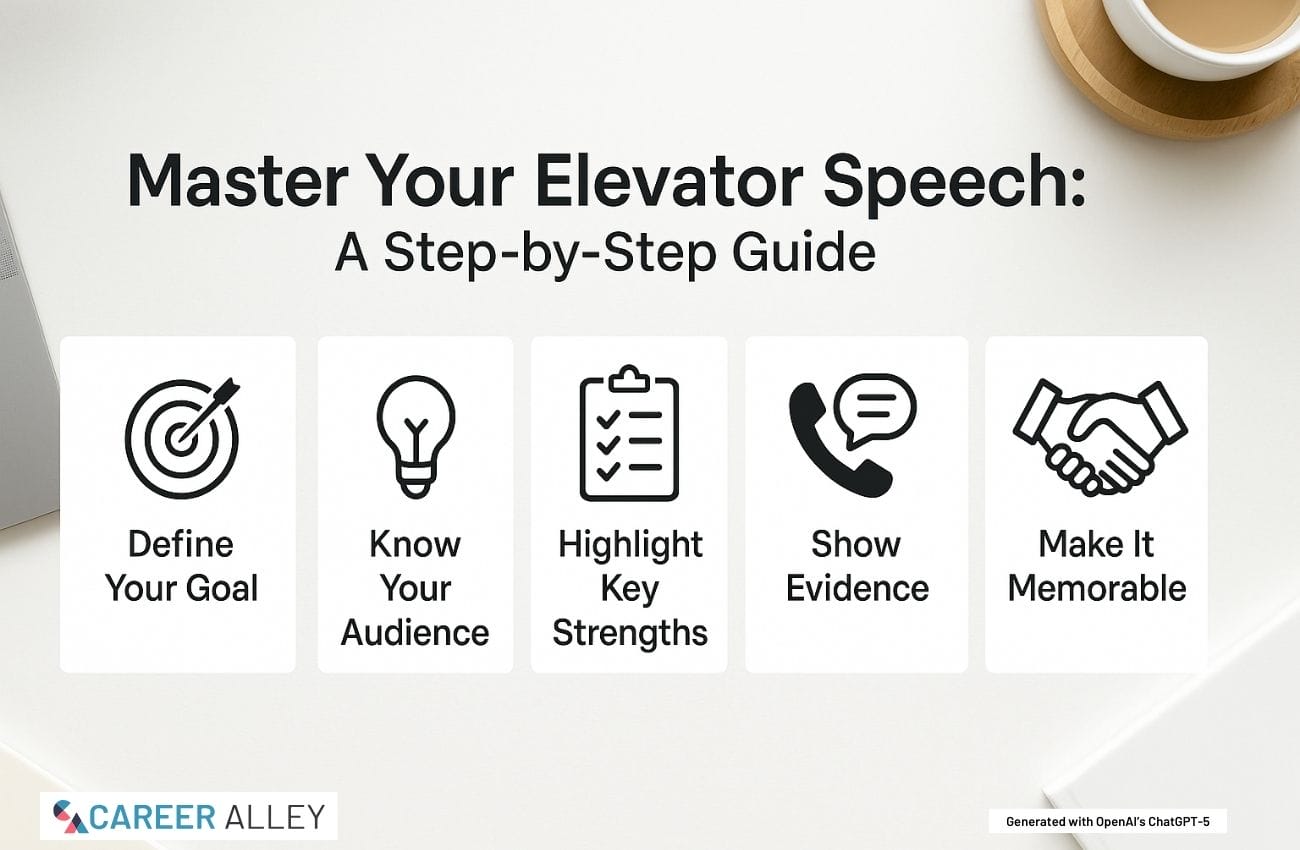
- Define your target “market” (recruiters,
hiring managers, people inyour network , etc.). - Define the core of your experience (why a
hiring manager should consider you for the position). - Include your top 3 accomplishments in your career (include the cost-benefit
savings , etc.). - Define the purpose (what are you trying to achieve).
- Include a “wow” factor, keep them interested, and listening to you.
Above all else, practice makes perfect. Recruit a friend or relative to listen to your speech and have them provide constructive comments.
Creating and Using Your Elevator Speech
- Keep it simple. Don’t try to go into your life story. On the other hand, you don’t want to be unfocused or have unclear thoughts in your speech. Pause and give the person an opportunity to respond.
- Practice makes perfect. Prepare and practice your speech. Use friends, family, your mentor, and coworkers to help you refine your speech.
- Be specific. Don’t generalize, give examples. A goal that is too specific isn’t helpful, and you want to be able to use your speech in different settings. Mention the industry or job role that you have in mind.
- Share your relevant
skills and goals. Who are you? What are you best at? Why are you the best? - Have a business card handy (don’t have one? Get one).

Essential Ingredients of a Compelling Elevator Speech
When crafting your elevator speech, think of it as a brief marketing message about you as a professional. Start by clarifying who you want to reach, which roles you are pursuing, and what problems you are excited to solve. Then translate your background into one or two sharp themes that tie your experience together. Choosing numbers, results, or concrete examples gives your pitch weight and moves it beyond vague adjectives, so listeners can quickly see how you create value.
- Defined audience: State who you help or want to work with, such as specific functions, industries, or types of teams so that listeners can picture the context immediately.
- Focused value: Summarize the problems you solve or results you deliver in plain language, avoiding jargon that might confuse people outside your current company or field.
- Proof points: Reference one or two measurable achievements, like revenue growth, cost
savings , or project outcomes, to demonstrate that yourskills translate into concrete impact. - Practice template: Draft several versions of your pitch using an online worksheet or checklist, such as this resource on developing your elevator pitch, before refining your favorite version.
Practicing and Using Your Elevator Speech Confidently
Even a brilliantly written elevator speech falls flat if you only rehearse it in your head. Reading it aloud reveals clumsy phrases, awkward transitions, and sections that sound unnatural in real conversation. Practicing with a friend, mentor, or career

Our AI Job Interview Coach is designed to help you train and excel in any job interview from the comfort of your home.
Further Guidance & Tools
- Pitch examples: Review creative elevator pitch examples on Asana to see different formats you can adapt for interviews, networking, and client
meetings . - Step-by-step guide: Use Jobscan’s elevator pitch guide to walk through brainstorming, drafting, and refining a focused pitch for
job search and networking. - Student worksheet: Explore Princeton’s resource on developing your elevator pitch for prompts that help you
organize strengths , goals, and key talking points. - Speaking tips: Read Harvard’s advice on giving a powerful elevator pitch to improve your delivery, hook, and overall communication style.
- Job seeker focus: Visit JobStars for targeted tips that help job seekers turn experience into concise, outcome-focused introduction statements.
Next Steps
- List three roles or industries you are targeting and write a single sentence about the problems you want to help those employers solve.
- Draft a thirty-second elevator speech that introduces who you are, your current focus, and one concrete achievement that demonstrates measurable impact.
- Practice delivering your pitch aloud several times, then adjust any phrases that sound stiff or confusing so the message feels natural in conversation.
- Ask a trusted friend or mentor to listen to your elevator speech, share honest feedback, and suggest where you might clarify or shorten key points.
- Create a shorter version of your pitch for quick introductions and a more extended version for networking events so you can adapt smoothly to different situations.

This book provides diverse job seekers with the essential resources and techniques to develop a career plan, conduct a successful job search, and succeed in a diverse workplace.
Final Words
A thoughtful elevator speech turns awkward introductions into clear, confident moments that highlight your value and direction. By defining your audience, choosing focused examples, and practicing until it feels natural, you create a flexible message you can use anywhere. Use it to open doors, start meaningful conversations, and steadily position yourself for the roles and opportunities you truly want.

Mark Fiebert is a former finance executive who hired and managed dozens of professionals during his 30-plus-year career. He now shares expert job search, resume, and career advice on CareerAlley.com.