We may earn a commission if you click on a product link and make a purchase at no additional cost to you. For more information, please see our disclosure policy.
Last updated: April 5, 2026

Key Takeaways
- Assess Relocation Fit: Evaluate culture, cost of living, legal realities, and lifestyle changes before accepting relocation opportunities.
- Understand Citizenship Rules: Long-term moves may require visas, residency permits, or multi-year citizenship pathways.
- Calculate Financial Impact: Compare salary gains against housing, transportation, taxes, and everyday living expenses.
- Visit Before Committing: Take the time to explore your potential destination and validate the neighborhoods, commute options, and quality of life.
- Plan for Transition Success: Utilize employer programs, onboarding support, and community research to ensure a seamless transition.
Relocating for work can feel like stepping into a new world. For some, it’s a chance to advance professionally, explore a new culture, or capitalize on a significant career opportunity. For others, the stress of unfamiliar laws, neighborhoods, and routines can overshadow the excitement. The reality sits somewhere in the middle: relocation is a career inflection point, and preparation separates success from frustration.
Weigh The Real Impact Of Relocation
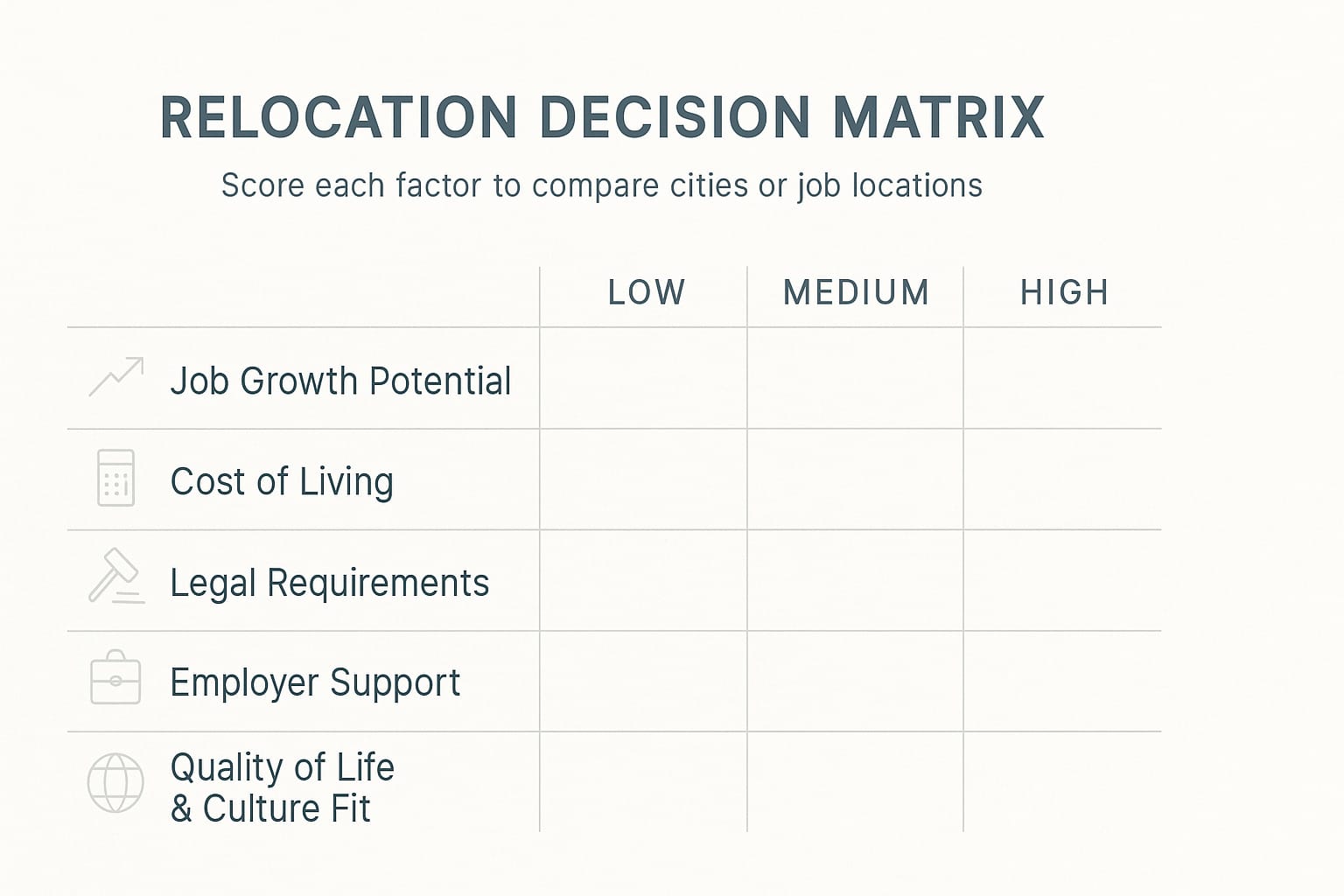
Forced or unexpected relocation rarely feels ideal. Yet not all moves are equal. A promotion can make a transition worthwhile, even if it means navigating new social circles and community norms. Relocating may take you across state lines or across continents, and each scenario presents its own unique challenges. International moves layer in government agencies, new legal systems, and different cultural expectations. Think of relocation as a full-scale life decision, not just a commute change.
- Review relocation benefits and employer support.
- Estimate cost-of-living changes before accepting.
- Consider local lifestyle differences and routines
- Identify community support and social options
Navigating Residency And Citizenship Requirements
Moving abroad introduces new visa rules, government paperwork, and often requires months of documentation preparation. Even in English-speaking countries like the UK or Ireland, you will face new cultural expectations and systems. Relocating to a new place with a different language raises the complexity: banking, healthcare enrollment, transportation, and grocery shopping suddenly require new vocabulary and habits. Equipped with the right plan, though, you’ll navigate these shifts more smoothly.
Long-term assignments may require formal residency. Some countries offer fast-track programs, such as Canada’s Express Entry PR for skilled workers, which accelerates the permanent residency process. However, residency is different from citizenship. Earning full citizenship may require years of presence, specific job contribution, or proof of economic value. The earlier you understand your destination’s rules, the easier it becomes to plan your timeline.
Valuable questions to ask yourself:
- Will I need a visa, residency permit, or work sponsorship?
- Is the relocation temporary or long-term?
- Does the destination offer fast-track residency options?
- How long would it take to obtain citizenship if I pursue it?
If your relocation is short-term, strategy shifts. Temporary assignments often prioritize flexible housing, short-term visa paths, and quick adaptation. Longer stays call for deeper planning and language investment.
Unlock the world: Thrive as an expat without overthinking your move, even if you’re only just beginning to imagine a life abroad!


Validate Location Fit Before You Move
Do not rely solely on brochures, HR briefings, or assumptions. Visit your destination if you can. Walk through neighborhoods, understand traffic patterns, and get a sense of the pace of life. Every city has its own cost curve and personality. For example, big cities tend to be less expensive than U.S. hubs like New York, where daily living costs can be significantly higher. But the comparison shifts once you remember that Manhattan is not representative of the entire U.S.
- Test commute routes and neighborhood safety
- Check grocery, fuel, and rental prices
- Visit local shops and healthcare providers
- Compare salary gains against real spending needs
Your raise might look impressive until housing and daily costs erase it. Conversely, relocating to a lower-cost region could significantly increase your financial flexibility. Conduct a thorough budget review before signing any documents.
Plan Your Move For Long-Term Stability
Even domestic relocations require a strategy. When moving internationally, you must contend with residency requirements, currency fluctuations, healthcare enrollment, and unfamiliar bureaucracy. Some countries require proof of funds, criminal background checks, or job contracts as prerequisites for approval. If relocation benefits include visa sponsorship or legal support, take advantage of them; these services can significantly reduce the friction in the process.
If everything aligns — career growth, cultural fit, financial gain, and residency feasibility — the move may elevate your life and future opportunities. If elements don’t fit, reconsider or negotiate. You are not obligated to uproot your life for a role that doesn’t support your long-term goals.
Written by an American expat who lived in Italy and is still living in France, this book gives you the right questions to ask about moving abroad. Better yet, it also gives you the answers.

Leverage Employer-Sponsored Relocation Support
Many companies offer relocation packages, but employees often underutilize them because they fail to request specific details. During my own corporate relocation from New York to London, HR initially offered housing and shipping only. After requesting clarification, I secured tax assistance, neighborhood tours, and temporary corporate housing — benefits that were never mentioned upfront. Treat relocation like a negotiation, not a simple assignment.
Request a written breakdown of support options, including travel allowances, moving services, cultural training, temporary housing, tax equalization, dependent support, and legal assistance. Global mobility teams exist for a reason — use them fully.
Relocation Readiness Checklist
Work through this checklist before accepting a relocation offer to avoid surprises and protect your financial and lifestyle stability.
- Verify Cost Differences: Compare taxes, rent, utilities, and healthcare costs to confirm salary covers lifestyle shifts.
- Plan Banking & Credit: Set up local banking access and understand how your credit history transfers — or doesn’t.
- Evaluate Quality of Life: Check commute time, safety, schools, healthcare, and availability of the expat community.
- Confirm Legal Deadlines: Be aware of visa expiration dates, renewal timelines, and required documentation before relocating.
"Moving Gracefully: A Guide to Relocating Yourself & Your Family" by Carol Miller Fradkin provides practical strategies for a smooth and stress-free relocation process.

Further Guidance & Tools
- Visa & Immigration Info: Research international rules using government visa guidance
- Global Cost Comparison: Compare living costs with city-to-city calculators
- International Relocation Help: Explore relocation expertise via expat support platforms
- Work Abroad Rules: Review employer visa options through official work authorization resources
- Language & Career Prep: Build local fluency with language training tools
Next Steps
- Research City Costs: Compare expenses for three potential neighborhoods this week and calculate the impact on your monthly budget.
- Check Visa Requirements: Review official residency and work permit rules for your target country within 48 hours.
- Schedule A Preview Visit: Plan a 3-day scouting trip within 60 days to validate neighborhoods and commute routes.
- Confirm Employer Support: Request written relocation benefits this week, including moving costs, legal support, and housing help.
- Plan Financial Buffer: Build a 3-month relocation cushion by the end of the month to handle move-in and transition costs.
This book is a must-read career guide and stress management self-help book for anyone who wants to grow and emerge from this challenging era stronger and more motivated than ever.

Final Words
Relocation can either unlock new professional chapters or introduce unnecessary stress if you move without clarity. Treat the opportunity like a long-term investment decision. Understand the culture, costs, legal requirements, and neighborhood fit before signing paperwork or packing a box. When a relocation aligns with your personal and career goals, it becomes more than a move — it becomes momentum. Start early, plan thoroughly, and give yourself space to thrive in your new environment.
Unlock the world: Thrive as an expat without overthinking your move, even if you’re only just beginning to imagine a life abroad!





Mark Fiebert is a former finance executive who hired and managed dozens of professionals during his 30-plus-year career. He now shares expert job search, resume, and career advice on CareerAlley.com.