We may earn a commission if you click on a product link and make a purchase at no additional cost to you. For more information, please see our disclosure policy.
Last updated: January 6, 2026
Key Takeaways
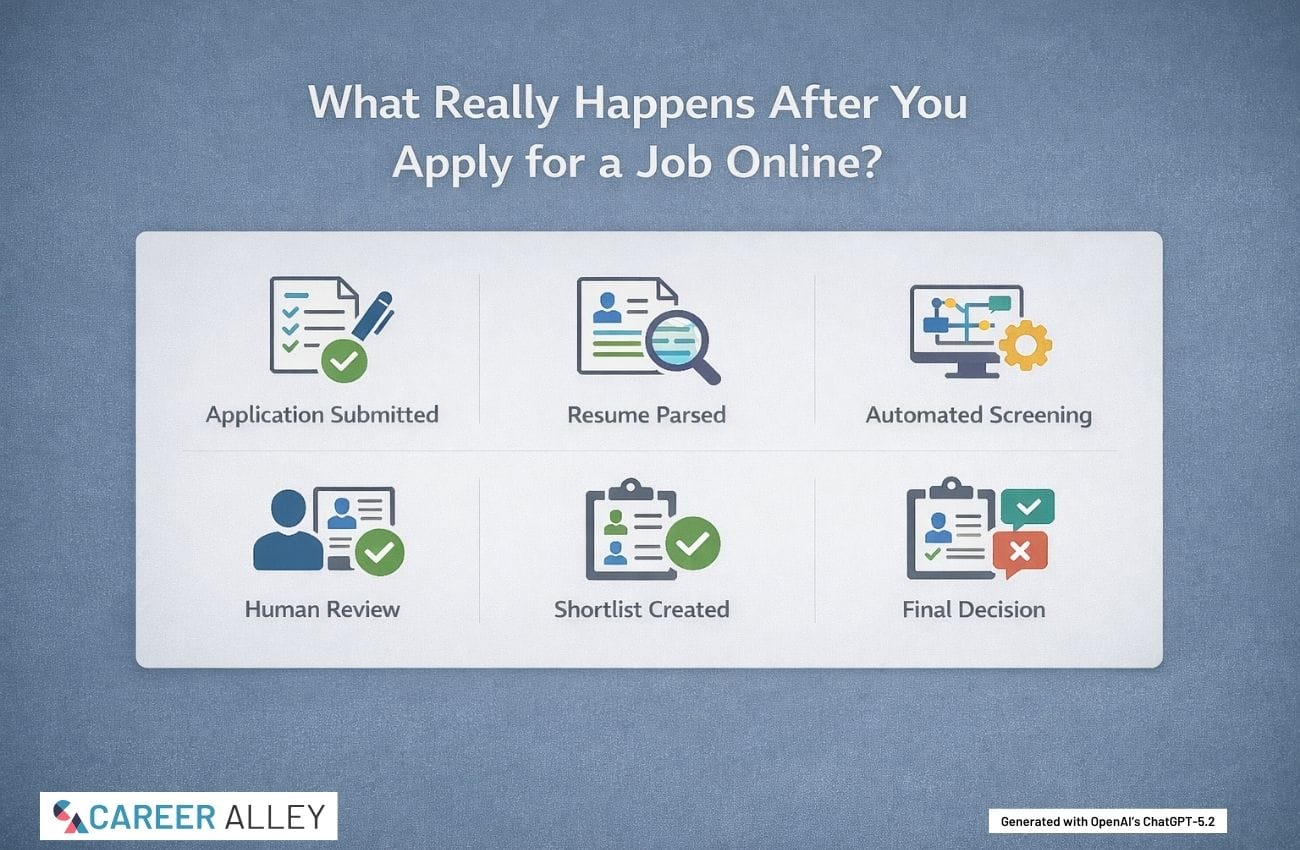
- Hidden workflow: Online applications typically pass through parsing, filtering, and ranking steps long before a recruiter ever sees your name.
- Early filters: Knockout questions and basic eligibility checks can remove qualified candidates instantly, often without any notification or explanation.
- Fast human scans: When a person reviews
your resume , they usually scan for fit signals in seconds, not minutes. - Batch decisions:
Hiring teams often build shortlists early and may stop reviewing new applicants once interviews are already in motion. - Control points: Clean formatting, role alignment, and applying early while applications are actively being reviewed improve visibility and response rates.
Submission Confirmation Reality
When you click Apply, the first “response” you get is usually a receipt, not a review. The system records your submission, attaches it to a specific job requisition, and places it in a queue with others. The confirmation
From the employer side, the goal of online intake is consistency and scale. A single posting can generate a flood of applicants in hours, and most

The skills everyone needs to create job opportunities, motivate their job searches, and enter the world of work are thoroughly analyzed and explained in Resume, Application, and Interview Skills.

How Resumes Get Read
Before a recruiter can scan your resume, software often converts it into structured data. This process is commonly called parsing. Instead of “reading” like a person, the system identifies fields such as employer names, job titles, dates,
Clean formatting helps your experience survive this translation step. Simple headings, consistent date formats, and single-column layouts reduce errors. Highly designed resumes with columns, tables, icons, or text boxes may look impressive to humans but can confuse parsing systems. If you want reliability, optimize for clarity first and visual flair second.
Knockout Questions First
Many employers use knockout questions to enforce minimum requirements early. These are the yes-or-no questions that can stop your application immediately, such as work authorization, willingness to relocate, ability to work required shifts, possession of a license, or minimum years of experience. It can feel harsh, but it is often the fastest way for a company to prevent unqualified submissions from flooding the recruiter’s queue.
- Eligibility Checks: Work authorization, required credentials, and availability requirements can trigger an automatic stop even if
your resume is strong. - Location Rules: Some postings filter by commuting radius, time zone, or region, and remote roles may still have geographic limits.
- Compensation Fit: If the application asks for salary expectations, mismatches can quietly reduce visibility or remove you from consideration.
- Answer Precision: Treat questions literally and avoid guessing; inconsistent answers can contradict
your resume and flag your application for exclusion.

Michael A. Harrison uses all the skills he has developed through years of recruiting the right people to demonstrate how you can learn the strategies that will secure you the position.
Keyword Matching Reality
After basic requirements, many systems evaluate relevance. This is where “keywords” enter the story, but not in the simplistic way people often describe. Most hiring workflows look for alignment between your resume and the role’s needs: job title similarity, tool familiarity, domain language, and evidence that you have done comparable work. The goal is less about copying a job description and more about confirming you are in the right neighborhood.
The practical takeaway is to write like the job market speaks. If a role emphasizes budgeting, stakeholder management, Salesforce, SQL, or vendor negotiations,
Ranking and Sorting Systems
In many workflows, applications are not simply accepted or rejected. They are ranked. Some systems assign a match score based on stated requirements, experience patterns, and
This is one reason job seekers see confusing results: you can be qualified and still land below a cutoff line created by volume. If a recruiter only reviews the top set of candidates in the first batch, being ranked slightly lower can translate into silence, not because you are unqualified, but because the process is capacity-driven.

The Job Search Navigator is a comprehensive guide to finding a new job in today's evolving career marketplace.
First Human Triage
If your application reaches a person, the first review is typically a triage scan. Recruiters often look for quick fit indicators: job titles, progression, tenure, industry alignment, and a few proof points that suggest you can do the work. This is not a deep reading of every bullet. It is a fast decision about whether you belong in the next pool.
To perform well here, you will need to carry the message. Put the most relevant title or positioning near the top. Make accomplishments easy to find. Use numbers where possible, but avoid forced metrics that appear fabricated. If your value is clear in seconds, you are more likely to make the shortlist even in high-volume situations.
Shortlists and Batch Review
Hiring often moves in batches. Recruiters gather a workable shortlist, share it with a
- Early Wave Advantage: The first group of applicants often gets the most thorough review because the recruiter is building the initial shortlist.
- Pipeline Momentum: Once interviews are scheduled, the goal becomes decision-making, and new applicants may not be reviewed unless the shortlist fails.
- Role Changes: Job requirements can shift midstream, causing candidates who were initially relevant to be deprioritized without formal updates.
- Internal Candidates: Internal mobility can fill a role while external applications remain open, leaving many applicants in limbo.

Packed with inside advice and secrets about what companies look for when hiring in today's competitive job market.
Why Silence Is Common
Silence after applying is usually structural, not personal. Many employers receive more applications than they can respond to, and not every system is configured to send status updates. Some companies avoid detailed rejections to reduce administrative burden or legal risk. Others have no workflow for closing out candidates who did not make the shortlist, especially when recruiters are juggling many open roles.
The hard truth is that “no response” often means your application was not prioritized at that time. It does not necessarily mean you were judged harshly. In many cases, a human never reviewed your materials. Understanding that reality helps you avoid overinterpreting silence as a verdict on your career.
Referrals Change Visibility
Referrals are not magic, but they do change routing. A referral can act as a trust signal that moves your application into a different review path or raises its priority. Even when it does not bypass screening entirely, it can make your name more likely to be seen by a person earlier in the process. That is why “apply and then get a referral” often performs better than relying on either tactic alone.
If you want a practical starting point before you apply broadly, use job readiness questions to clarify what you want, what you can offer, and how you will position yourself. Clear positioning makes networking and referral requests more specific and far more effective.

This concise guide prepares you to ace your job interview with expert tips, confidence-boosting strategies, and a curated appendix of essential job-seeking resources.
What You Can Control
You cannot control whether a recruiter is overloaded or whether a company pauses a role. You can control whether
Think in terms of process leverage. Apply earlier in the posting lifecycle, tailor for roles that truly match, and keep your formatting simple enough to parse cleanly. Then add one human element: a referral, a brief note, or a targeted connection request that demonstrates your understanding of the role. The goal is not to “game” the
Further Guidance & Tools
- ATS Basics: Use SHRM’s ATS overview to understand how employer systems sort applications and why qualified candidates can be missed.
- Skills Mapping: Review several target roles, note the recurring
skills and tools, and alignyour resume language to match those requirements where they genuinely apply. - Structured Interviews: Use Google re:Work to understand how employers evaluate candidates consistently and how to prepare for standard, repeatable question formats.
- AI
Hiring Context: Use EEOC AI guidance to learn why employers are cautious with automated screening and why oversight matters. - Risk Framework: Use NIST AI RMF to understand how organizations think about trustworthy AI, which influences screening transparency and governance.

A Practical Guide to Finding a Job is a helpful resource for anyone searching for a new job. Covering all aspects of the job search process including self-assessment, determination of work desires and dreams.
Next Steps
- Clean Format: Rebuild
your resume in a single-column layout with consistent headings so parsing systems capture your experience accurately. - Tailor Target: For each role, mirror three to five authentic skill terms from the posting in your bullets and summary.
- Apply Early: Submit within the first three days when possible, before shortlists form and interview
scheduling begins. - Answer Carefully: Review knockout questions twice and ensure every answer matches
your resume , location reality, and availability constraints. - Add Human Signal: Identify one contact per target company and request a short referral conversation that is specific to the role.
Final Words
Online applications are designed for scale, not for transparency, which is why the process can feel impersonal and confusing. Once you understand the typical workflow, the silence makes more sense and becomes easier to manage. Your best strategy is to make

Get 10X more Job Interviews with JobCopilot. Automatically apply to jobs from 50,000+ companies worldwide

Mark Fiebert is a former finance executive who hired and managed dozens of professionals during his 30-plus-year career. He now shares expert job search, resume, and career advice on CareerAlley.com.