- Key Takeaways
- Can Retail Trading Really Become A Career?
- Set Realistic Expectations First
- Learn Before You Depend On Trading Income
- Choose Your Market Carefully
- Understand The Changing Day-Trading Rules
- Choose Trading Tools Without Buying A Shortcut
- Develop A Trading Strategy You Can Test
- Use Paper Trading As A Test, Not Proof
- Know When You Are Not Ready To Trade Full Time
- Do Not Overlook Taxes And Recordkeeping
- Further Guidance & Tools
- Next Steps
- Final Words
We may earn a commission if you click on a product link and make a purchase at no additional cost to you. For more information, please see our disclosure policy.
Last updated: October 2, 2026

Key Takeaways
- Career reality: Retail trading can become a full-time pursuit, but inconsistent income, substantial risk, capital requirements, and competition make it unlike a conventional career.
- Prove results: Build a documented trading record before relying on trading income, preferably across different market conditions rather than one unusually favorable period.
- Protect capital: Risk management, position sizing, cash reserves, and disciplined execution matter at least as much as finding potentially profitable trades.
- Know the rules: Brokerage requirements, margin rules, taxes, and account restrictions can materially affect active traders and should be understood before committing capital.
- Transition gradually: Paper trading and part-time trading can help test your strategy before you give up dependable employment income or benefits.
Retail trading is easier to access than it once was, but turning that access into a sustainable career is much harder. Opening a brokerage account and placing trades may take minutes. Producing enough consistent profit to replace a salary, benefits, retirement contributions, and other employment income is a different challenge entirely.
Retail investors have become an important part of financial markets. During the surge in individual trading activity earlier this decade, Seeking Alpha reported research estimating retail activity at 25% of the market share. That historical figure should not be treated as a current market-share estimate, but it illustrates how significantly individual participation expanded.
If you are thinking about turning trading into your primary occupation, approach the decision as a career and business question rather than as a shortcut to financial independence. You need a repeatable process, sufficient capital, a realistic understanding of losses, and evidence that your approach works before depending on it for household income.
Retail trading can look like freedom until income volatility, taxes, margin rules, and losses become part of the job. Before quitting your paycheck, see what a sustainable trading career really demands first. #TradingClick To TweetCan Retail Trading Really Become A Career?
It can, but trading for your own account is fundamentally different from becoming an employee in finance. No guaranteed paycheck, paid vacation, employer health coverage, retirement match, promotion structure, or predictable annual income. Your earnings depend on your capital, strategy, execution, expenses, taxes, market conditions, and ability to control losses.
That distinction makes trading very different from pursuing a traditional career involving stock investments. Someone who enjoys markets might ultimately prefer employment in investment research, financial analysis, asset management, risk management, brokerage services, or another financial occupation rather than depending entirely on personal trading profits.
The goal should not initially be to replace your salary. First determine whether you can follow a trading process consistently and produce results that survive realistic costs and unfavorable periods. A disciplined, organized approach to research, recordkeeping, and review becomes especially important when trading moves beyond an occasional activity.
Set Realistic Expectations First
The most important early decision is defining what you expect trading to accomplish. Generating supplemental income, developing a serious part-time activity, and replacing a full-time salary are three very different objectives.
Full-time trading also changes the consequences of losing money. A part-time trader with employment income may be able to stop trading, reassess a strategy, and wait for better conditions. Someone who depends on trading profits for monthly expenses may feel pressure to trade when opportunities are poor, increase position sizes, or try to recover losses quickly.
Keep household finances separate from trading capital. Emergency savings, retirement assets, mortgage money, education funds, and cash required for everyday expenses should not become a reserve for speculative trading. FINRA warns that day trading generally is not appropriate for people with limited resources, limited trading experience, or low risk tolerance and that traders should be prepared to lose the funds committed to day trading.
Learn Before You Depend On Trading Income
Trading requires more than knowing how to place an order. You need to understand the products you trade, order types, volatility, liquidity, transaction costs, position sizing, margin, and the circumstances that invalidate a trade.
There is also a major difference between technical and fundamental analysis. Technical traders may study charts, volume, trends, support and resistance, momentum, and price actions. Fundamental analysis focuses more heavily on a company’s financial condition, earnings, business model, competitive position, valuation, and economic environment.
You do not need to use every analytical method. You do need to understand why you are entering a position, what would cause you to exit it, how much you are willing to lose, and whether you can evaluate your process objectively afterward.
Keep a trading journal that records the reason for each trade, entry and exit points, position size, risk, outcome, and whether you followed your own rules. Over time, the journal can reveal whether results come from a repeatable advantage, favorable market conditions, excessive risk, or simple luck.
Choose Your Market Carefully
Stocks are only one trading market. Depending on your knowledge and risk tolerance, you might encounter equities, exchange-traded funds, options, futures, currencies, and other products. Each has different mechanics and risks.
CareerAlley also covers forex, but entering another market simply because it appears active or accessible is not a sound strategy. Understand how the product works before risking capital.
Leverage deserves particular caution. Borrowing money or using leveraged products can magnify gains, but it can also magnify losses and create obligations that exceed the amount you expected to risk. The Securities and Exchange Commission warns that leveraged day trading can lead to rapid and substantial losses.
Understand The Changing Day-Trading Rules
Active traders should confirm their broker’s current rules rather than relying on older articles or assumptions. Historically, U.S. pattern day traders using margin accounts were commonly required to maintain at least $25,000 in equity.
That landscape is changing. FINRA adopted new intraday margin requirements effective June 4, 2026, replacing the traditional pattern-day-trader framework for firms that transition to the new system. Brokerage firms have a permitted transition period through October 20, 2027, so one firm may still apply the older requirements while another has moved to the newer intraday system. Contact your brokerage firm before planning a strategy around a particular account minimum or trading frequency.
Brokerage firms can also impose requirements that are stricter than regulatory minimums. Account type, available buying power, settlement rules, margin policies, options approval, and trading restrictions should therefore be checked directly with the firm you use.
Choose Trading Tools Without Buying A Shortcut
Professional financial firms have long depended on specialized data and research systems. Bloomberg Terminal is remembered by traders is not enough context on its own, but the historical importance of professional trading technology is discussed in Bloomberg Terminal is remembered by traders coverage from The New York Times.
Retail traders now have access to sophisticated charting, real-time information, screeners, news feeds, and brokerage platforms without institutional-level systems. That access helps, but more information doesn’t automatically create an advantage.
Options alert service platforms and other commercial research products can generate ideas or provide analysis. Treat them as inputs rather than instructions. Before paying for any service, understand its methodology, costs, conflicts, track record, and whether its time horizon actually matches your strategy.
A useful trading setup should help you make better decisions, document trades, manage risk, and execute reliably. Adding subscriptions, monitors, indicators, or alerts without a tested process usually adds complexity, not discipline.
Develop A Trading Strategy You Can Test
A trading strategy should explain when you enter, when you exit, how much capital you commit, how you control losses, and when you do nothing. Without those rules, it’s hard to distinguish disciplined trading from impulsive decision-making.
Your strategy also needs to fit your circumstances. Someone who can monitor markets throughout the day may use a different approach than someone with a full-time job. Capital, time, temperament, trading costs, and risk tolerance all affect what is realistic.
Do not judge a strategy only by its winning percentage. A method can generate frequent winners and still lose money if occasional losses are disproportionately large. Track both profits and losses, average gains and losses, drawdowns, trading frequency, and whether you consistently followed the strategy.
Use Paper Trading As A Test, Not Proof
Paper trading lets you practice buying and selling without risking real money. It can help you learn a platform, test order types, develop a routine, and see how a strategy would have behaved.
However, simulated success doesn’t prove the same strategy will succeed with real money. Emotions, execution, liquidity, slippage, and the psychological impact of actual gains and losses can change your behavior.
Use paper trading as an initial screening process. Once you understand the mechanics, a cautious transition to small real positions can provide a more realistic test. The objective is not to make significant money quickly. The goal is to see whether you can execute the process consistently while limiting the cost of mistakes.
Know When You Are Not Ready To Trade Full Time
Don’t leave dependable employment simply because you have had several profitable weeks or months. Strong markets can make weak strategies look better than they are, while a strategy that works in one environment may perform poorly when volatility, interest rates, sector leadership, or investor sentiment changes.
Before considering full-time trading, you should be able to answer several practical questions:
- Do you have a meaningful record of real trades, not simulated results?
- Have you traded successfully through more than one type of market environment?
- Are living expenses and emergency savings separate from trading capital?
- Can you explain your strategy, risk limits, and conditions for stopping?
- Have you calculated health insurance, taxes, retirement savings, software, data, and other costs previously covered by employment?
- Can your household tolerate a prolonged period with little or no trading income?
If those answers are uncertain, keeping trading as a side activity is usually more prudent than forcing it to become your primary income source. Being able to walk away from an unattractive trade can be an advantage.
Do Not Overlook Taxes And Recordkeeping
Calling yourself a trader does not automatically make you a trader for federal tax purposes. The Internal Revenue Service distinguishes investors from people whose securities activity qualifies as a trading business. Among other considerations, the IRS looks at whether the activity is substantial and conducted with continuity and regularity. :The distinction can affect how gains, losses, expenses, and certain elections are treated. Traders may also encounter wash-sale rules, capital-loss limitations, estimated taxes, and the Section 475(f) mark-to-market election. Because elections and deadlines can have significant consequences, tax treatment should be reviewed with current IRS guidance or an appropriate tax professional before assuming that full-time trading will be taxed like a conventional business. :
Further Guidance & Tools
- Trading Rules: Review FINRA’s intraday margin guidance for the current transition from pattern-day-trader rules to the new margin framework.
- Risk Guidance: Read the SEC’s day-trading risk overview before deciding how much capital you can reasonably expose to short-term trading.
- Tax Rules: Use IRS Topic 429 to understand how federal tax rules distinguish investors from qualifying traders in securities.
Next Steps
- Define goals: Decide whether you’re trading for education, supplemental income, a serious side activity, or a potential full-time occupation.
- Learn first: Study your chosen market, order types, account rules, risk controls, taxation, and brokerage policies before committing significant money.
- Test strategy: Paper trade first, then use small real positions while documenting results, mistakes, drawdowns, and adherence to your rules.
- Build evidence: Evaluate results across different market conditions before treating short-term profitability as evidence that your approach can support you.
- Plan transition: Preserve emergency savings, benefits, and dependable income until your finances and trading record justify considering a larger commitment.
Final Words
Trading can provide independence and flexibility, but those benefits come with income uncertainty and the possibility of substantial losses. Treating it as a potential career means applying more scrutiny, not less, than you would to a conventional job change. Build skills while the financial consequences are manageable, document your results, understand the rules that apply to your account, and separate enthusiasm for markets from evidence that trading can reliably support your financial obligations.
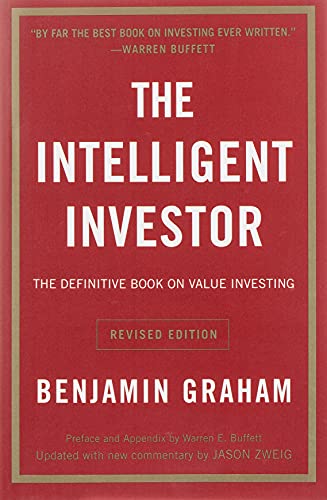
Vital and indispensable, this HarperBusiness Essentials edition of The Intelligent Investor is the most important book you will ever read on how to reach your financial goals.


Mark Fiebert is a former finance executive who hired and managed dozens of professionals during his 30-plus-year career. He now shares expert job search, resume, and career advice on CareerAlley.com.