We may earn a commission if you click on a product link and make a purchase at no additional cost to you. For more information, please see our disclosure policy.
Last updated: January 2, 2026
Key Takeaways
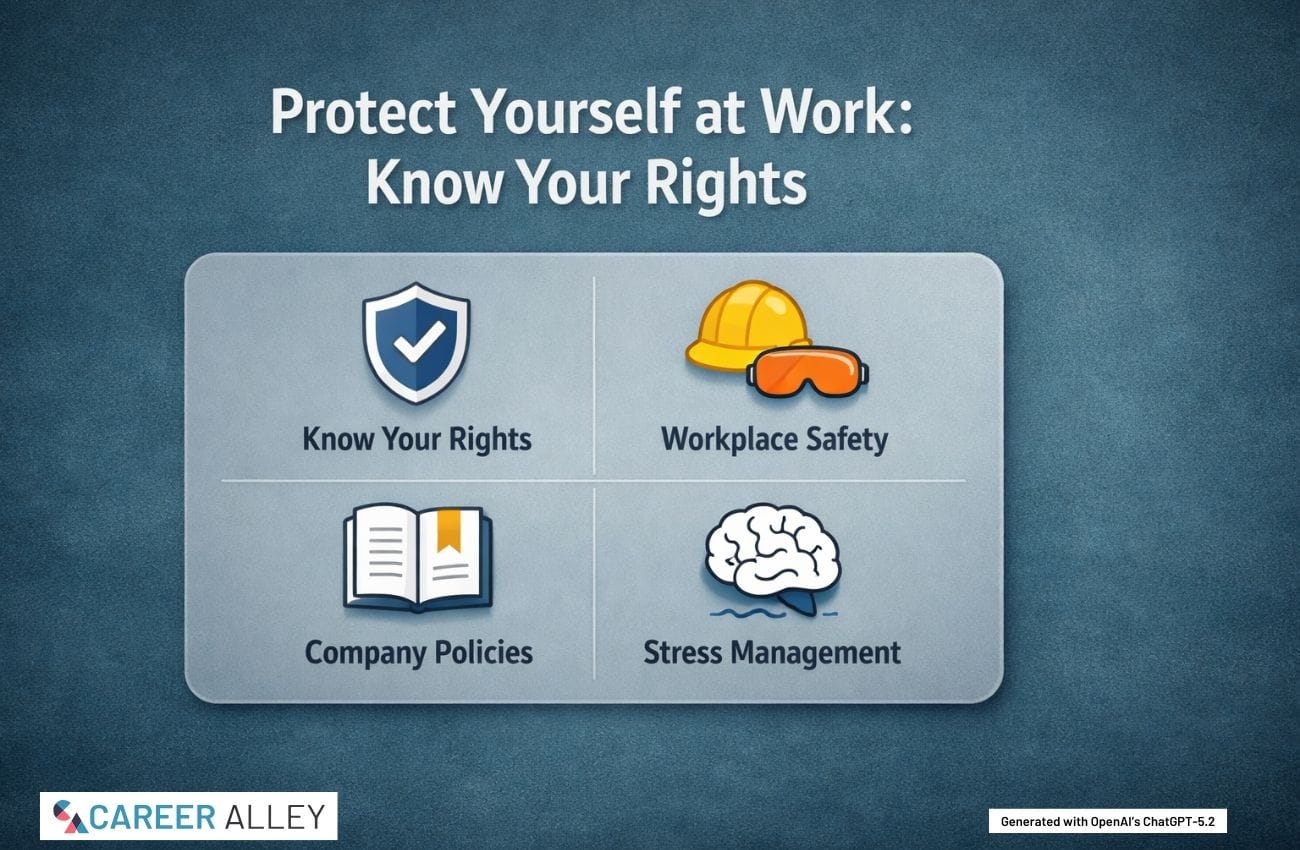
- Employee Self-Advocacy: Protecting yourself at work requires understanding your rights, acting proactively, and recognizing when to seek support before problems escalate.
- Workplace Safety: Injury prevention depends on shared responsibility, proper
training , and consistent use of safety equipment provided by your employer. - Legal Awareness: Knowing basic employment laws helps you identify unfair treatment early and take informed action when necessary.
- Professional Conduct: Maintaining professionalism reduces workplace conflict and strengthens your position if disputes or misunderstandings arise.
- Mental Wellbeing: Managing stress and mental health is essential for safety, performance, and long-term career sustainability.
Protecting Yourself at Work
Every employee should be able to look out for themselves in the workplace. While your role is to provide value to your employer, you also have a responsibility to protect your own interests. Employers are legally obligated to provide a safe and fair working environment, but that does not eliminate the need for personal awareness and proactive behavior. Understanding how to safeguard your health, rights, and reputation at work can help you avoid negative situations and respond effectively when issues arise.
Being proactive means paying attention to policies, recognizing warning signs early, and knowing when to escalate concerns. Employees who take ownership of their workplace wellbeing are better positioned to prevent problems and advocate for themselves if challenges occur.


Prevent Injury and Illness
Workplace safety is a shared responsibility. Employers must provide a safe environment,
If you are injured or become ill due to your job, knowing how to respond is just as important as prevention. I’d like you to seek medical attention quickly, and documenting the incident protects both your health and your rights. In more complex cases, you may need legal guidance to ensure fair treatment and compensation. You can protect your rights with a workers’ compensation attorney when navigating claims, disputes, or denied benefits related to workplace injuries.
Understanding Employment Rights
Knowing your rights as an employee is one of the strongest forms of self-protection. When you understand what is legally required of your employer, it becomes easier to recognize unfair treatment, unsafe practices, or violations of labor laws. While you do not need to be an expert in employment law, having a working knowledge of core protections can make a significant difference.
Resources from government agencies and reputable organizations can help you stay informed. Knowing your rights around wages, hours, discrimination, and workplace conditions empowers you to ask informed questions and seek help when something feels wrong.

Your Rights in the Workplace is an invaluable reference for every employee. You'll find answers here if you have questions about your paycheck, discrimination, layoffs, or benefits. Get the facts on:
- drug and other workplace testing
- sexual harassment
- And more
Employee Handbook Awareness
In addition to understanding general employment law, you should be familiar with your employer’s internal policies. The employee handbook outlines expectations, workplace standards, and procedures for addressing concerns. Reviewing it carefully can help you avoid unintentional mistakes and better understand how decisions are made within your organization.
Staying current is equally essential, as policies can change over time. Reviewing updates to your employee handbook ensures you always have accurate information about workplace rules, benefits, and disciplinary processes.

This book raises awareness on incidents of harassment and gives tips on handling this illicit conduct in the workplace.
Professional Workplace Conduct
Professionalism is one of the most effective ways to protect yourself at work. While it is natural to build relationships and enjoy camaraderie with colleagues, maintaining appropriate boundaries helps prevent misunderstandings and conflicts. How you communicate, respond to feedback, and manage disagreements can significantly influence how others perceive you.
Handling conflicts calmly and respectfully not only reduces tension but also strengthens your credibility. If issues escalate, a consistent record of professional behavior can be invaluable when discussing concerns with management or human resources.
Safety Equipment and Training
Once safety expectations are clearly communicated, the next step is to ensure employees have the right equipment to perform their jobs safely. From protective eyewear and helmets to specialized footwear, proper equipment reduces risk and demonstrates an employer’s commitment to employee well-being.
Ongoing

The definitive guide to working with -- and surviving -- bullies, creeps, jerks, tyrants, tormentors, despots, backstabbers, egomaniacs, and all the other assholes who do their best to destroy you at work.
Managing Workplace Stress
Mental health is often overlooked in workplace safety. High stress levels can impair focus, judgment, and reaction time, increasing the likelihood of mistakes or injuries. Recognizing when stress is affecting your performance is an essential step toward protecting yourself.
Developing healthy coping strategies can make a meaningful difference. Learning how to work on your stress level gradually helps reduce anxiety, improve concentration, and support long-term wellbeing. Small, consistent changes often have the greatest impact over time.
Further Guidance & Tools
- Workers’ Rights: Review official guidance from the U.S. Department of Labor to understand wage, hour, and workplace protection standards.
- Safety Standards: Explore OSHA resources to learn best practices for maintaining safe and compliant work environments.
- Conflict Resolution: Use frameworks from SHRM to improve communication and handle workplace disputes professionally.
- Mental Health Support: Access tools from NIMH to better understand stress, anxiety, and workplace mental health strategies.
- Career Protection: Read guidance from CareerOneStop on navigating workplace challenges and protecting your
career path .

Discrimination and harassment can poison the work environment, undermine employee morale, and lead to costly investigations and lawsuits.
Next Steps
- Review Policies: Read your employee handbook this week and note any sections related to safety, conduct, and dispute resolution.
- Assess Safety: Identify one potential safety risk in your role and report it through the appropriate internal process.
- Learn Rights: Spend 20 minutes reviewing fundamental employment rights relevant to your location and industry.
- Reduce Stress: Choose one stress-management technique to practice consistently over the next two weeks.
Final Words
Protecting yourself at work is an ongoing process that combines awareness, professionalism, and proactive decision-making. By understanding your rights, prioritizing safety, managing stress, and maintaining high standards of conduct, you create a stronger foundation for long-term career success. These efforts not only reduce risk but also empower you to navigate challenges with confidence and clarity.
Keep yourself safe at work by taking steps to protect your own interests in everything that you do.

Nearly 50,000 people lose their jobs EVERY DAY. Are you one of them? Have you recently lost your job? Are you worried about what’s going to happen with your career next? Are you battling emotional issues such as self-doubt and anxiety? Before you burn down the building, read this first.

Mark Fiebert is a former finance executive who hired and managed dozens of professionals during his 30-plus-year career. He now shares expert job search, resume, and career advice on CareerAlley.com.