

- Key Takeaways
- High-Paying Careers Without a Four-Year Degree
- Air Traffic Controller
- Commercial Pilot
- Elevator And Escalator Installer Or Repairer
- Transportation, Storage, And Distribution Manager
- Power Plant Operator, Distributor, Or Dispatcher
- Electrical Power-Line Installer And Repairer
- Other Career Options Worth Considering
- Flight Attendant
- Massage Therapist
- Personal Trainer
- Pastry Chef
- Professional Photographer
- How To Compare High-Paying Careers Without College
- How To Qualify Without A Bachelor's Degree
- Common Mistakes When Choosing A Career Based On Salary
- Further Guidance & Tools
- Next Steps
- Final Words
We may earn a commission if you click on a product link and make a purchase at no additional cost to you. For more information, please see our disclosure policy.
Last updated: November 15, 2026

Key Takeaways
- Strong Earning Potential: Several careers offer median annual pay exceeding $90,000 without requiring a traditional four-year college degree.
- Training Still Matters: High-paying occupations frequently require apprenticeships, technical education, licensing, extensive experience, or employer-sponsored training instead of college.
- Entry Barriers Vary: Air traffic control, commercial aviation, and specialized technical positions offer substantial compensation but require demanding qualifications.
- Consider Career Progression: Some occupations offer modest starting wages but provide opportunities to increase earnings through specialization, advancement, or business ownership.
- Compare Total Costs: Evaluate training costs, time to qualification, working conditions, and local job opportunities before choosing a
career path .
A four-year college degree is not the only route to a well-paying career. Some occupations offer six-figure earning potential through apprenticeships, technical training, professional licenses, or substantial experience rather than a traditional university education.
However, finding a high-paying job without a college degree requires distinguishing between occupations that are accessible to beginners and those that demand years of preparation. A position with a six-figure median salary may involve competitive hiring, physically demanding work, significant training expenses, or responsibility for public safety.
The U.S. Bureau of Labor Statistics (BLS) reported a median annual wage of $50,980 across all occupations in May 2025. Several careers that do not typically require a bachelor’s degree offer substantially higher median pay.
Understanding those opportunities means comparing more than salaries. The following career paths illustrate the earning potential, qualifications, working conditions, and advancement possibilities available to people pursuing alternatives to four-year college degrees.
High-Paying Careers Without a Four-Year Degree
Some of the strongest earning opportunities are found in aviation, utilities, transportation management, and specialized equipment installation. These occupations generally require considerably more preparation than their minimum educational qualifications might suggest.
The salary figures below are national median annual wages reported by the BLS for May 2025. A median means half of workers in that occupation earned more and half earned less. These figures are not starting salaries or guaranteed earnings.
Air Traffic Controller
Median annual pay: $148,080
Air traffic controllers coordinate aircraft movement on the ground and in the air, maintaining safe distances between planes and helping pilots navigate complex airspace.
Air traffic control offers some of the highest median earnings among occupations that do not universally require a bachelor’s degree. However, it is not an easy career to enter.
The Federal Aviation Administration (FAA) has specific eligibility, training, medical, security, and hiring requirements. Depending on the applicable hiring pathway, candidates may qualify through certain educational programs, progressively responsible work experience, or a combination of qualifications.
Successful candidates undergo rigorous training, and compensation increases as they progress through qualification stages. For readers researching controller procedures, JO 7110.65 Air Traffic Control: (FAA ATC/ATO Handbook) is supplementary reference material; verify all operational standards against the FAA’s current official publications rather than relying on a commercial print edition.
Important considerations: Controllers must maintain concentration for extended periods, make decisions under pressure, and often work rotating shifts. Entry can be highly competitive, and FAA eligibility requirements should be verified before investing in specialized education.
Commercial Pilot
Median annual pay: $123,220
Commercial pilots operate aircraft for charter transportation, aerial surveying, emergency medical services, and other commercial activities.
Unlike many airline pilot positions, which commonly require a bachelor’s degree, commercial pilot positions generally do not require one. However, pilots must meet FAA certification, medical, flight-training, and experience requirements for their work.
Flight training can be expensive. Students often must pay for aircraft rental, instruction, exams, and the flight hours needed to qualify for specific certificates and ratings. Depending on the flight school’s requirements, student pilots may also need equipment such as the KORE P1 Aviation Headset for Student Pilots and a Flight Bag for Pilots to organize their training materials. Check headset compatibility and your instructor’s equipment recommendations before buying.
Commercial aviation is consequently better understood as a specialized professional career than a quick alternative to college.
Important considerations: Before beginning training, compare the total cost of obtaining relevant certificates with realistic early-career salaries. Confirm medical eligibility and research the kinds of flying jobs available to pilots with limited experience.
Elevator And Escalator Installer Or Repairer
Median annual pay: $109,910
Elevator and escalator installers and repairers assemble, maintain, troubleshoot, and repair equipment that moves people within buildings and transportation facilities.
According to the BLS, workers typically enter with a high school diploma or equivalent and learn through an apprenticeship. Most states require licensing.
Apprentices generally earn wages while learning, making the occupation attractive to people who want to develop specialized technical skills without paying for a four-year degree.
However, the work combines mechanical expertise, knowledge of electrical systems, physical strength, and strict safety procedures.
Experienced technicians may troubleshoot sophisticated electronic controls, perform major equipment repairs, and respond to emergency service calls.
Important considerations: Apprenticeship opportunities can be limited and competitive. Work may involve confined spaces, considerable heights, heavy equipment, emergency calls, and physically demanding conditions. Starting apprentice wages are substantially lower than the occupation’s overall median.
Transportation, Storage, And Distribution Manager
Median annual pay: $107,230
Transportation, storage, and distribution managers oversee the movement, storage, and delivery of goods. Their responsibilities can include warehouse operations, inventory controls, logistics, staffing, safety compliance, and transportation planning.
This career highlights an important distinction: a job may not require a bachelor’s degree but still demand substantial professional experience.
People commonly advance into management after working in warehouses, logistics operations, distribution centers, transportation, or supply chain functions.
Skills in scheduling, inventory management systems, operational reporting, budgeting, and employee supervision can strengthen advancement prospects.
Employers may also value demonstrated results, such as improving delivery accuracy, controlling costs, managing teams, or reducing operational disruptions.
Important considerations: A management salary should not be confused with an entry-level logistics salary. This career is especially relevant to workers willing to gain operational experience before advancing into supervisory and management responsibilities.
Power Plant Operator, Distributor, Or Dispatcher
Median annual pay: $105,080
Power plant operators, distributors, and dispatchers monitor and control systems that generate and distribute electricity.
The work requires attention to equipment performance, operating procedures, safety standards, and system conditions. Some employees operate generating facilities, while others help manage electricity flow through distribution networks.
These occupations commonly require a high school diploma or equivalent followed by extensive technical and on-the-job training. Nuclear power reactor operators must also satisfy applicable licensing requirements.
The BLS projects an overall employment decline for this occupational group from 2025 to 2035, although replacement openings are expected as workers retire or leave their positions.
Important considerations: Strong compensation does not necessarily mean plentiful entry-level openings. Research specific employers, training pipelines, rotating-shift requirements, and local opportunities before pursuing this field.
Electrical Power-Line Installer And Repairer
Median annual pay: $95,320
Electrical power-line installers and repairers install, maintain, and repair the infrastructure that delivers electricity to homes, businesses, and communities.
Workers typically need a high school diploma or equivalent, technical instruction, and substantial on-the-job training. Apprenticeships are common.
According to the BLS, employment for electrical power-line installers and repairers is projected to grow 10% between 2025 and 2035.
This career can appeal to people who enjoy outdoor work, mechanical problem-solving, and working as part of a technical crew.
However, it also involves some of the most significant physical hazards among the careers discussed here. Workers may climb poles or towers, work near high-voltage electricity, and respond to storms or infrastructure emergencies.
Important considerations: Long hours, travel, emergency assignments, weather exposure, and demanding physical requirements may affect whether this career is suitable. Compare utility employers, contractors, union apprenticeship opportunities, and safety training requirements.
Other Career Options Worth Considering
Not every worthwhile career without a college degree provides a six-figure median salary. Some positions offer easier entry, opportunities for self-employment, or compensation growth tied to specialized skills and experience.
These careers may be particularly attractive to people who value flexibility, creative work, or direct customer relationships.
Flight Attendant
Median annual pay: $63,580
Flight attendants are responsible primarily for passenger safety, cabin procedures, emergency preparedness, and customer service.
Airlines typically provide employer-sponsored training, and applicants generally do not need a four-year degree. Customer service experience, communication skills, and the ability to respond calmly to emergencies are valuable qualifications.
Flight attendants may travel extensively, work irregular hours, and spend significant time away from home. For readers interested in international cabin-crew positions, How to Become a Flight Attendant for Airlines in the Middle East provides additional career-specific reading. Airline employees may qualify for travel benefits, although specific privileges depend on employer policies.
International airline positions may have different
Important considerations: Seniority can influence schedules, assignments, and earnings. New employees may have less control over where and when they work.
Massage Therapist
Median annual pay: $58,450
Massage therapists provide services intended to relieve muscle tension, address certain physical complaints, and support client wellness.
Many states regulate massage therapy, and education, examinations, licensing, and continuing education requirements vary by jurisdiction.
Qualified massage therapists may work in wellness centers, healthcare-related practices, spas, or independent businesses. A Massage Therapist’s Guide to Business examines business considerations relevant to professional practice.
Massage therapy should not be confused with physical or occupational therapy, which are separate regulated professions with different educational requirements.
Experienced massage therapists may develop specialized services or build private client practices. Self-employment can offer greater flexibility, but business owners also handle marketing, scheduling, insurance, overhead, and client retention.
Important considerations: Many therapists work part-time or by appointment. Compare training and licensing costs with realistic billable hours rather than assuming every practitioner earns the national median.
Personal Trainer
Median annual pay for fitness trainers and instructors: $47,160
Personal trainers design exercise programs, instruct clients, track progress, and encourage safe, consistent physical activity. The book How to Become a Personal Trainer offers an introduction for readers considering this occupation.
A four-year college degree is generally unnecessary for many fitness training positions, although employers often prefer recognized professional certifications. Specialty roles may require additional qualifications.
Training can take place at fitness clubs, recreational facilities, private studios, or clients’ homes. Experienced trainers sometimes establish independent businesses or offer specialized coaching services.
Successful trainers need more than an interest in exercise. Communication, client retention, scheduling, sales, and an understanding of appropriate professional boundaries all influence career prospects.
Important considerations: Compensation varies substantially with location, employer, hours worked, and client volume. Independent trainers must account for unpaid administrative time, insurance, marketing, and business expenses.
Pastry Chef
Pastry chefs and specialized bakers prepare desserts, breads, and other baked goods for restaurants, hotels, catering businesses, bakeries, and food-service operations.
Formal culinary education can be useful but is not always necessary. Many people develop their skills through entry-level kitchen positions, apprenticeships, employer training, and practical experience. The J.K. Adams French Tapered Rolling Pin is one example of a hands-on pastry tool for developing dough-handling technique.
Pastry chefs need precision, creativity, consistency, food-safety knowledge, and the ability to work efficiently under production deadlines. Readers exploring professional pastry techniques can consult Pastry Chef Notebook Companion.
Professionals may eventually advance to executive pastry positions, specialize in premium products, or open independent bakeries. However, these opportunities generally require experience, operational knowledge, and commercial judgment.
Presentation also matters, particularly for specialty desserts and custom orders, but it cannot replace baking expertise or food-handling standards.
Important considerations: This is not typically among the highest-paying entry-level careers. Long hours, early shifts, weekend work, and physically demanding production environments are common considerations.
Professional Photographer
Photography offers another career route where demonstrated skills and a strong portfolio may matter more than a four-year degree.
Professional photographers may specialize in portraits, commercial products, events, real estate, advertising, or editorial assignments. For deeper study of photographic techniques, The Complete Photographer: Become Expert in Every Style, from Travel to Fashion surveys multiple photographic styles.
Digital editing, lighting, composition, client communication, and business development are central professional skills.
Photography also demonstrates why earnings must be evaluated carefully. Independent photographers may charge substantial fees for individual assignments, but gross revenue is not the same as personal income.
Expenses can include cameras, lenses, editing software, insurance, travel, advertising, and equipment replacement. For outdoor and event assignments, the Altura Photo Professional Waterproof Camera Rain Cover is an example of equipment that can help protect compatible camera gear in wet conditions. Time spent marketing and editing is not always directly billable.
To evaluate the profession realistically:
- Develop a portfolio focused on a specific commercial or creative specialty.
- Research demand and pricing in your geographic market.
- Estimate equipment expenses before making substantial purchases.
- Learn contracts, usage rights, client communication, and basic business
accounting . - Test your ability to earn repeat assignments before relying on photography as your primary income.
Important considerations: Photography can become a sustainable business, but earnings are variable. A portfolio, paying clients, and consistent demand provide better evidence of career readiness than equipment ownership alone.
How To Compare High-Paying Careers Without College
The highest reported median salary is not necessarily the best career choice. A useful comparison examines the time, money, effort, and risks required to reach a sustainable level of earnings.
Before committing to a particular occupation, evaluate five factors.
- Education and Training: Determine whether entry requires paid apprenticeship training, a certificate, a license, an associate degree, or extensive employer-sponsored instruction.
- Starting Versus Experienced Pay: Research the wages offered to beginners in your area rather than relying exclusively on national occupational medians.
- Employment Availability: Compare local job openings, the number of employers, qualification requirements, and whether relocation would be necessary.
- Working Conditions: Consider physical demands, safety exposure, travel, overnight shifts, overtime, and unpredictable schedules.
- Advancement Potential: Identify whether higher earnings depend on seniority, certifications, specialized expertise, promotion, or independent business ownership.
For example, a paid apprenticeship in elevator maintenance may offer a clearer financial route than an expensive flight-training program for someone with limited savings. Conversely, an individual already working in warehousing may find that advancement into logistics management provides a more practical route to higher earnings than starting an entirely new occupation.
The strongest decision considers both your current circumstances and the specific pathway to becoming qualified.
How To Qualify Without A Bachelor’s Degree
Employers do not necessarily view the absence of a college degree as a disadvantage when candidates possess the required technical qualifications, licenses, experience, and evidence of competence.
However, skills-based hiring does not eliminate mandatory credentials. A commercial pilot still needs the applicable FAA certification, an elevator mechanic may need a state license, and an apprentice may have to complete a formal training program.
Several approaches can help prospective workers prepare.
- Registered Apprenticeships: Explore programs that combine supervised employment, technical instruction, and progressively increasing wages. For applicants to participating electrical apprenticeships that require the IBEW aptitude assessment, JobTestPrep IBEW Aptitude Test Prep offers targeted practice. This is not a universal requirement for power-line or elevator apprenticeships.
- Technical Schools: Compare accredited programs, employer relationships, equipment access, graduation rates, and actual employment outcomes.
- Employer Training: Investigate employers that provide structured training, tuition assistance, or advancement pathways for existing employees.
- Professional Certifications: Determine which certifications are required, preferred, or useful for progression in a specific occupation.
- Documented Experience: Maintain records of completed projects, equipment proficiency, safety training, measurable results, and supervisory responsibilities.
CareerAlley’s guide to skilled trades that pay well without a degree offers a closer comparison of barbering, commercial truck driving, welding, and HVAC careers.
Verify any occupation’s current salary and entry requirements independently before purchasing training or making a career decision.
Common Mistakes When Choosing A Career Based On Salary
The most expensive career-planning errors often come from misunderstanding what a published salary actually represents.
Confusing Median Pay With Starting Pay: The median includes workers at different experience levels. Beginning wages can be substantially lower, particularly in occupations requiring apprenticeships or lengthy qualification periods.
Ignoring Training Expenses: A career may look attractive until you consider the cost of education, certification, equipment, transportation, and time away from paid employment.
Overlooking Geographic Differences: A nationally attractive occupation may have limited openings locally. Regional wages and living expenses can also change the financial comparison.
Assuming A Degree Is Never Required: An occupation’s typical entry-level education does not guarantee that every employer will accept applicants without a bachelor’s degree. Certain positions, specialties, and advancement tracks may have additional requirements.
Underestimating Working Conditions: High compensation may reflect specialized skills, risk, responsibility, inconvenient schedules, or demanding physical work. Those trade-offs should be considered before committing to training.
Confusing Business Revenue With Income: Self-employed professionals need to subtract operating expenses, account for unpaid time, and plan for taxes before comparing earnings with employee salaries.
A realistic career choice balances achievable income with the time and resources necessary to reach it.
Further Guidance & Tools
- Occupational Outlook Handbook: Use the Bureau of Labor Statistics career profiles to compare wages, education requirements, job duties, and employment projections.
- Apprenticeship Opportunities: Explore the U.S. Department of Labor apprenticeship resources to investigate paid training programs and potential employer-sponsored opportunities.
- Occupation Research: Review O*NET OnLine for detailed information about occupational skills, work activities, tools, and qualification expectations.
Next Steps
- Build A Shortlist: Select three occupations that match your interests, physical capabilities, experience, and realistic income goals.
- Verify Earnings: Compare national wage statistics with current entry-level job advertisements and local compensation expectations for each occupation.
- Calculate Costs: Estimate required training, licensing, equipment, transportation, and lost earnings before choosing a career preparation program.
- Investigate Employers: Contact local employers, apprenticeship sponsors, or training providers to confirm entry requirements and available opportunities.
- Develop Qualifications: Create a practical preparation plan covering essential skills, required credentials, application materials, and relevant work experience.
Final Words
A high-paying career without a four-year degree is achievable, but the route is rarely as simple as selecting an occupation from a salary ranking. The strongest opportunities usually reward technical competence, demonstrated responsibility, experience, or specialized training. Before investing in a new career, identify what employers actually require and how long it typically takes to reach competitive earnings.
A realistic plan should connect your current qualifications with a credible entry route, manageable training costs, and opportunities for advancement. Choosing a profession that fits your abilities and circumstances is more valuable than chasing an impressive salary that may take years to reach.
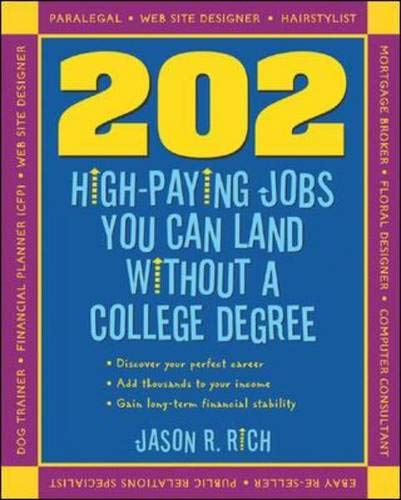
You have something in common with Bill Gates, Michael Dell and Ted Turner: none of them graduated from college. If they can make it, you can too!
Don't settle for a minimum-way job because you're not a college graduate. Try one of these 202 high-paying options. They're more than jobs—they're careers.


Mark Fiebert is a former finance executive who hired and managed dozens of professionals during his 30-plus-year career. He now shares expert job search, resume, and career advice on CareerAlley.com.
Discover more from CareerAlley
Subscribe to get the latest posts sent to your email.

