

- Key Takeaways
- Balancing Career Success and Family Responsibilities
- Establish Priorities and Manage Your Time
- Create Family Routines That Allow Flexibility
- Managing Career Demands as a Single Parent
- Communicate Expectations and Establish Boundaries
- Prevent Burnout and Protect Family Relationships
- Continue Developing Your Career
- Build a Sustainable Long-Term Plan
- Further Guidance & Tools
- Next Steps
- Final Words
We may earn a commission if you click on a product link and make a purchase at no additional cost to you. For more information, please see our disclosure policy.
Last updated: November 6, 2026
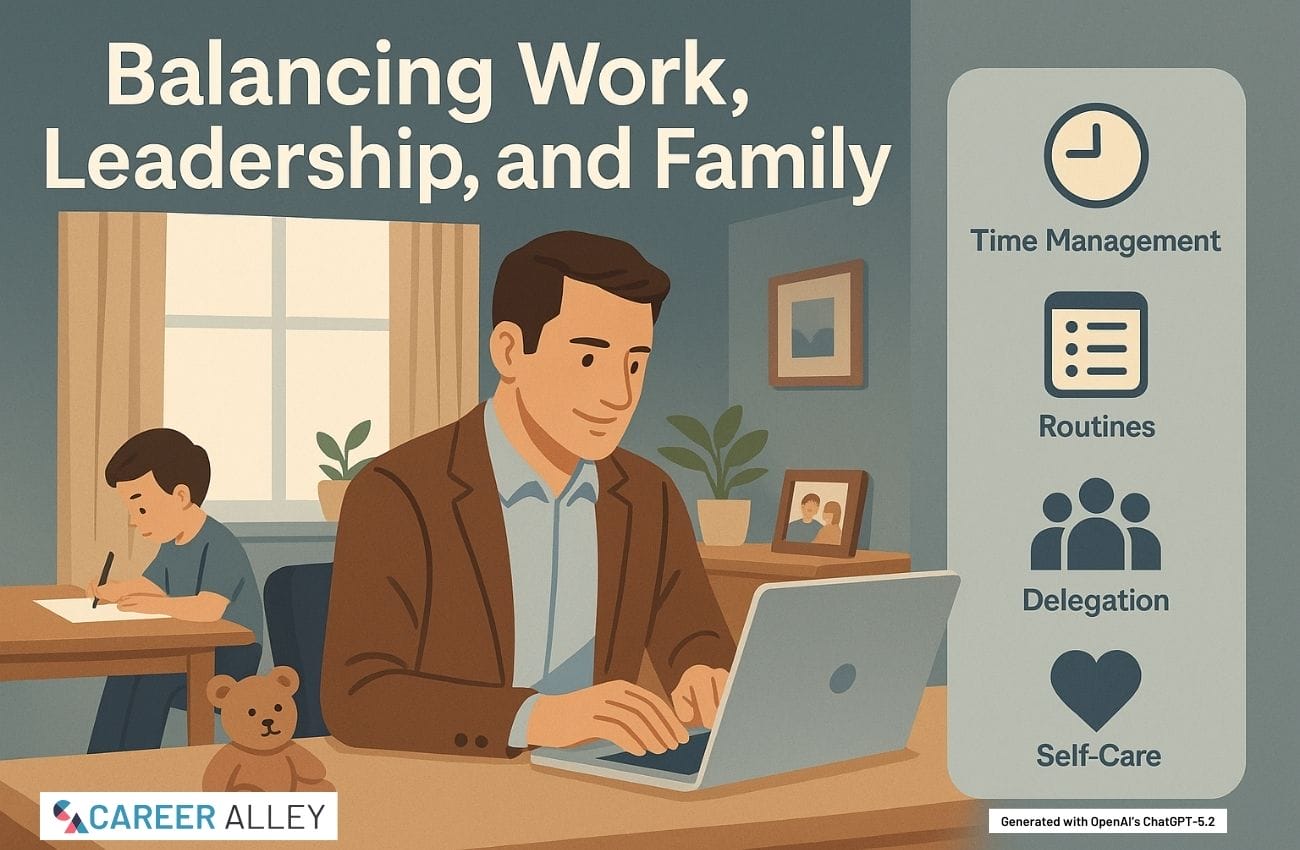
Key Takeaways
- Realistic Priorities: Working parents need to identify their most important professional and family commitments rather than trying to meet every demand equally.
- Flexible Planning: Predictable routines, practical scheduling tools, and backup arrangements help families manage work responsibilities without relying on perfect daily conditions.
- Single-Parent Challenges: Parents managing childcare independently need additional attention to financial stability, dependable support, employer flexibility, and emergency planning.
- Career Development: Parenthood does not require abandoning professional ambitions, but advancement should account for working hours, childcare costs, and available support.
- Sustainable Balance: Clear boundaries, appropriate delegation, and sufficient recovery time help prevent burnout while supporting reliable work performance and family relationships.
Balancing Career Success and Family Responsibilities
Balancing work and parenting requires more than good
Balancing work responsibilities while raising a family is both rewarding and demanding. The goal should not be to divide every hour equally between work and home. Instead, parents need practical systems that protect important commitments while providing room for unexpected situations.
A sustainable approach combines clear priorities, predictable routines, reasonable employer expectations, and dependable support. Parents also need to recognize that what works during one stage of family life may require adjustment as children grow or professional responsibilities change.
Establish Priorities and Manage Your Time
Working parents benefit from distinguishing genuinely important responsibilities from tasks that can wait, be simplified, or be delegated. Effective time management starts with identifying what requires personal attention rather than filling every available hour with activity.
At the beginning of each week, review work deadlines, childcare arrangements, school activities, appointments, and household obligations. Identify potential conflicts before they become emergencies. A shared calendar can help families coordinate responsibilities, while individual planning tools can help maintain focus during work hours.
Structured approaches such as thoughtful time management can help parents separate urgent responsibilities from tasks that are important but less time-sensitive. The objective is to make better decisions about available time, not create another complicated system to maintain.
For parents coordinating several calendars, productivity systems may help organize competing tasks. A simpler calendar or written weekly plan can work just as well when responsibilities are predictable.
Create Family Routines That Allow Flexibility
Consistent routines reduce the number of decisions families must make each day. Regular morning preparations, meals, homework periods, and bedtimes can create stability for children while helping parents protect time for professional responsibilities.
However, effective routines must accommodate real life. A work meeting may run late, a child may get sick, or transportation arrangements may fall through. Build flexibility into schedules rather than assuming every commitment will happen exactly as planned.
- Morning Preparation: Organize school materials, meals, and work essentials the evening before to reduce unnecessary morning pressure.
- Schedule Buffers: Leave reasonable gaps between appointments, school pickups, and professional commitments whenever possible.
- Family Check-Ins: Review upcoming activities and responsibilities together so everyone understands the week’s expectations.
- Task Coordination: Assign age-appropriate household responsibilities and clarify which adult handles each recurring obligation.
- Backup Arrangements: Identify alternatives for childcare, transportation, and unexpected schedule conflicts before you need them.
For additional structure, a time blocking guide can help parents reserve focused periods for work and family obligations. Avoid scheduling every minute, though; unallocated time often makes a demanding week manageable.
Managing Career Demands as a Single Parent
Single parents often face different constraints because they may carry primary responsibility for childcare, household management, and financial support without another adult consistently available to share the workload. Advice that assumes a partner can handle school pickups or evening responsibilities may not be realistic.
Career decisions should account for dependable childcare, predictable working hours, commuting requirements, employer flexibility, and income stability. A higher-paying position may not be the better choice if unpredictable shifts, extensive travel, or expensive childcare eliminate much of the financial benefit.
Before accepting a new role, evaluate the full arrangement, not just the salary. Consider healthcare benefits, paid leave, schedule expectations, childcare availability, and whether additional work hours will create substantial new expenses.
Support networks are equally important. Friends, relatives, trusted neighbors, community programs, and professional childcare providers may help cover emergencies. A useful resource for managing these responsibilities is single parents literature focused on balancing professional expectations and independent parenting responsibilities.
Financial planning also deserves attention. Money management tips for single parents include maintaining a realistic household budget, preparing for irregular expenses, and building emergency savings when circumstances permit.
Parents with limited childcare budgets should also investigate available assistance rather than assuming every program has the same eligibility rules. Government childcare subsidies, Head Start programs, and state-supported preschool options may reduce costs for qualifying families.
Communicate Expectations and Establish Boundaries
Clear communication helps prevent misunderstandings between employees, managers, and family members. Parents should understand their employer’s expectations regarding working hours, availability, travel, and urgent requests. When conflicts occur, proposing specific alternatives is often more productive than asking generally for flexibility.
For example, an employee might propose starting earlier to accommodate school pickup, adjusting meeting windows, or working remotely on designated days when the role permits it. Such arrangements depend on the employer, job responsibilities, and operational requirements; flexibility is not guaranteed.
At home, boundaries matter just as much. Family members should understand which responsibilities require uninterrupted attention and when parents are available. Sharing household responsibilities can also develop useful leadership skills through communication, planning, and accountability.
Parents should also understand their workplace leave policies. The federal Family and Medical Leave Act provides qualifying employees of covered employers with job-protected leave for certain family and medical reasons, subject to eligibility requirements. State laws or employer policies may provide additional protections. Ordinary childcare scheduling problems do not automatically qualify for protected leave.
Prevent Burnout and Protect Family Relationships
Trying to meet every professional and family expectation without adequate recovery can lead to exhaustion and declining performance. Parents need realistic limits on commitments, especially during periods involving demanding workloads, school changes, or family health concerns.
Protecting personal well-being does not require elaborate routines. Regular movement, sufficient sleep, social support, and brief recovery periods can make demanding schedules more sustainable. Some parents find that mindfulness techniques help them manage stress and regain focus.
Family time also benefits from realistic expectations. Parents do not need to organize elaborate activities constantly. Shared meals, conversations, reading, and predictable moments of attention can create meaningful connections without increasing financial or scheduling pressure.
When obligations exceed available time, saying no becomes necessary. Declining a voluntary commitment, postponing a nonessential project, or asking for help can protect important responsibilities. Persistent exhaustion or distress may also signal the need for additional professional or community support.
Continue Developing Your Career
Parenthood can change career priorities without eliminating long-term professional ambitions. Some parents may want promotion opportunities, while others prioritize income stability, predictable schedules, or roles that require less travel. These choices should reflect individual circumstances rather than assumptions about what a successful working parent should pursue.
Career development can include professional certifications, employer-sponsored training, targeted online courses, networking, and project experience. Ongoing education and skill development may support advancement or help workers transition toward more suitable opportunities.
Before paying for training, compare its cost and time requirements with the likely professional benefit. A short course that addresses a specific skill gap may be more practical than a lengthy program with uncertain career returns.
Parents considering a job change should also explore flexible hours and the real scheduling demands of prospective roles.
When making a significant career decision, compare compensation, benefits, advancement opportunities, job security, childcare expenses, commute time, and schedule predictability together. The strongest option is one that remains manageable beyond the first few weeks.
Build a Sustainable Long-Term Plan
Family and professional responsibilities change over time. Childcare needs may decline as children grow, while education expenses and extracurricular commitments increase. Similarly, promotions or employment changes can add demands that require adjustments at home.
Review your arrangements periodically rather than waiting for a crisis. Identify which routines are effective, which responsibilities create recurring stress, and whether existing support remains dependable. Small adjustments often solve problems before they become serious disruptions.
Where appropriate, improve the systems behind daily work rather than simply increasing effort. Structured time management frameworks can help organize responsibilities, although no single method works equally well for every family.
Successful long-term planning means preserving options. Maintaining professional relationships, updating skills, monitoring household finances, and understanding available workplace benefits can provide greater flexibility when circumstances change.
Further Guidance & Tools
- Childcare Assistance: Childcare.gov explains financial assistance programs and options for families seeking affordable care.
- Workplace Leave: U.S. Department of Labor explains eligibility requirements and employee protections under the Family and Medical Leave Act.
- Career Research: O*NET OnLine helps parents evaluate occupations, work activities, skills, and career requirements.
Next Steps
- Review Commitments: Identify your most demanding work and family obligations, then decide what requires personal attention and what can change.
- Check Support: Confirm dependable childcare arrangements, emergency contacts, and available assistance programs before making major changes to your work schedule.
- Discuss Flexibility: Review your employer’s scheduling expectations and propose specific adjustments that can support family responsibilities without compromising essential job duties.
- Evaluate Opportunities: Compare compensation, benefits, childcare expenses, travel requirements, and career advancement before pursuing a promotion or accepting a new position.
- Review Progress: Revisit your family and career arrangements monthly, adjusting routines and responsibilities when circumstances or priorities change significantly.
Final Words
Balancing a career and family life is not about achieving a perfect schedule or handling every responsibility independently. It is about creating arrangements that remain workable when professional demands, childcare needs, or personal circumstances change. Parents who establish realistic priorities, communicate expectations, maintain dependable support, and invest selectively in professional growth can build rewarding careers while protecting important family relationships. The most effective strategy will evolve over time, and recognizing when to adjust it is key to long-term success.
Prove Mastery Through Hands-On Projects
Our open-ended projects are modeled after real-world workplace scenarios, and require in-depth critical thinking and creative solutions.
Succeed with Personalized Feedback
Every project receives personalized feedback from industry experts, and our mentors are available to answer questions whenever you're feeling stuck.






Mark Fiebert is a former finance executive who hired and managed dozens of professionals during his 30-plus-year career. He now shares expert job search, resume, and career advice on CareerAlley.com.
Discover more from CareerAlley
Subscribe to get the latest posts sent to your email.

