We may earn a commission if you click on a product link and make a purchase at no additional cost to you. For more information, please see our disclosure policy.
Last updated: December 18, 2025
Key Takeaways
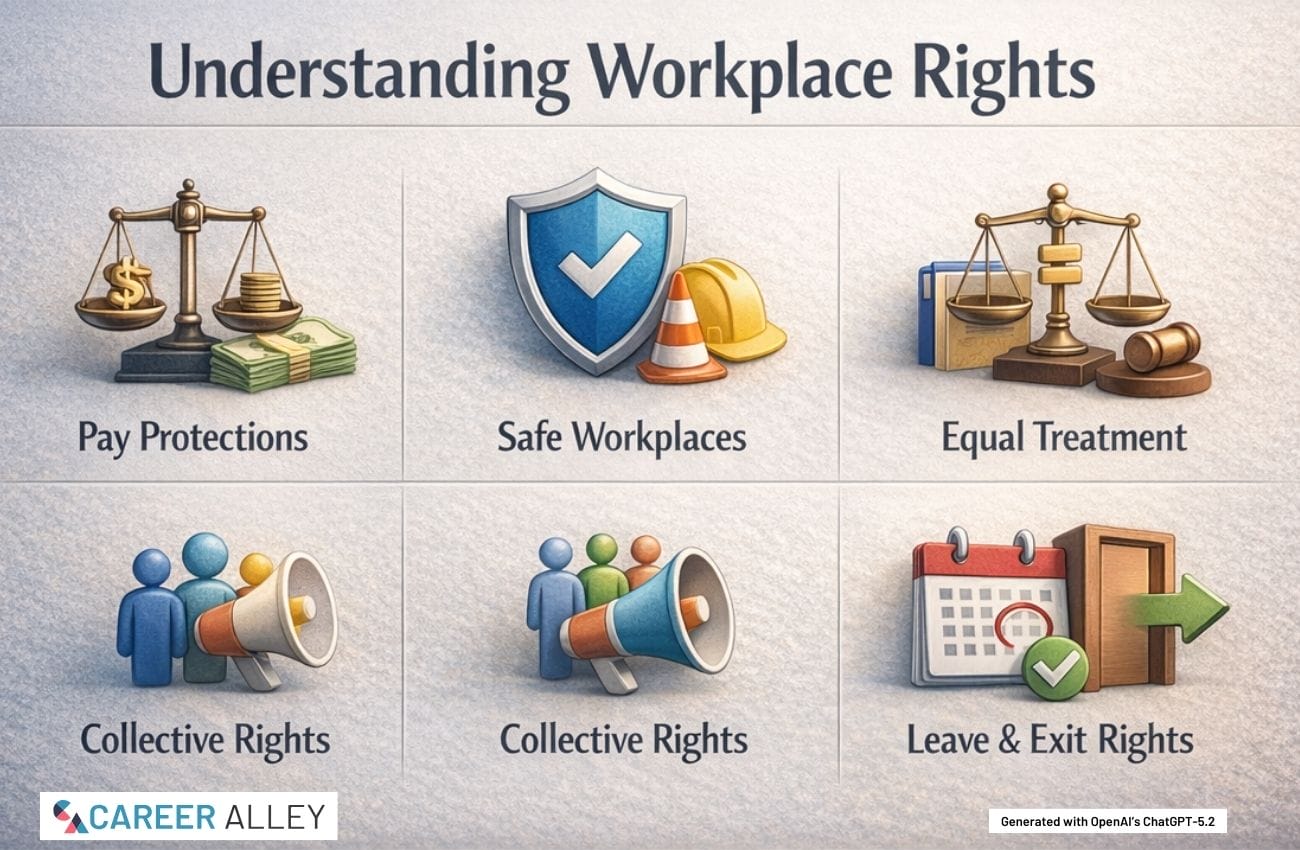
- Pay Protections: Understanding wage laws, overtime rules, and lawful deductions helps you identify payroll issues early and respond with confidence.
- Safe Workplaces: Employees have rights to physical and psychological safety, proper
training , and protection from retaliation when reporting hazards. - Equal Treatment: Anti-discrimination and harassment laws apply across
hiring , pay, promotions, discipline, and termination decisions. - Collective Rights: The right to
organize allows employees to advocate together for fair conditions without employer retaliation. - Leave And Exit: Family leave, benefits access, and termination rules shape how you manage life events and career transitions.
Understanding Workplace Rights
Understanding your employment rights is essential in today’s workplace, where evolving expectations around pay transparency, hybrid work, and employee well-being have raised the stakes for both workers and employers. Knowing what you are entitled to and how to respond when issues arise allows you to make informed decisions, protect your income, and avoid preventable career setbacks.
Expert employment lawyers, such as those at HKM, help employees navigate workplace issues that extend far beyond discrimination. Employment rights include pay practices, safety standards, access to benefits, leave eligibility, and protections for speaking up. This guide focuses on the core areas every employee should understand so you can recognize red flags early, document concerns appropriately, and address problems before they escalate.

This book raises awareness on incidents of harassment and gives tips on handling this illicit conduct in the workplace.

Right To Fair Wages
The right to fair wages ensures employees are paid at least the legal minimum, receive proper overtime when eligible, and are compensated on time. It also includes equal pay principles, meaning that workers performing substantially similar roles should not be paid differently based on protected characteristics. Many employers now share pay ranges more openly, making it easier to assess fairness and negotiate responsibly.
Protect yourself by keeping copies of offers, job descriptions, timesheets, and pay stubs. Review classifications, hours, and deductions regularly. If something looks incorrect, request clarification in writing and maintain a factual tone. Payroll issues are often resolved quickly when addressed early and documented clearly.
Safe Working Environment
A safe working environment includes both physical safety and reasonable attention to mental well-being. Employers are expected to comply with safety standards, provide
This right supports stronger productivity and job satisfaction by setting clear expectations. If you report a hazard, document what you reported, when, and to whom. Keeping a simple record protects you and helps ensure concerns are addressed appropriately.

Workplace safety is failing. Despite better procedures now in place on the job, people are still getting hurt. The problem lies in our thinking. We must shift the focus from rules to relationships.
Discrimination And Harassment
Discrimination and harassment include unfair treatment tied to protected characteristics such as race, sex, age, religion, or disability. These behaviors can affect
If issues arise, document what happened, who was involved, who witnessed it, and how it affected your work. Follow internal reporting procedures when possible and keep communications professional and specific. Documentation is often the most powerful tool if an investigation or dispute follows.
Right To Organize
The right to
The ability to organize also reflects a broader shift toward transparency and accountability. Whether acting through a union or informal group advocacy, employees should focus on facts, workplace impact, and clear communication rather than personal conflict.

Nearly 50,000 people lose their jobs EVERY DAY. Are you one of them? Have you recently lost your job? Are you worried about what’s going to happen with your career next? Are you battling emotional issues such as self-doubt and anxiety? Before you burn down the building, read this first.
Employment Termination
Employment termination is one of the most challenging moments in a career. While employers may terminate employment for many reasons, they cannot do so for illegal reasons, such as discrimination, retaliation, or breach of contractual obligations. Written agreements and documented policies often determine what is fair and enforceable.
Understanding lawful termination, severance practices, and unemployment benefits helps you respond strategically. Request written separation terms, confirm final pay timing, and review severance agreements carefully before signing.
Health and Benefits
Health and benefits make up a significant portion of total compensation. Standard offerings include health
Confirm enrollment deadlines, employer contributions, and eligibility rules in writing. Understand how coverage changes during role transitions or leave. Minor misunderstandings about benefits can lead to costly surprises during job changes or medical events.

The definitive guide to working with -- and surviving -- bullies, creeps, jerks, tyrants, tormentors, despots, backstabbers, egomaniacs, and all the other assholes who do their best to destroy you at work.
Workers Compensation Basics
Workers’ compensation is a form of
If an injury occurs, report it promptly and follow internal procedures. Keep copies of reports, medical instructions, and any work restrictions. Timely reporting and documentation reduce disputes and help ensure appropriate care.
Whistleblower Protections
Whistleblower protections allow employees to report unlawful or unethical conduct without fear of retaliation. This can include fraud, safety violations, harassment, discrimination, or wage theft.
When you raise concerns, please focus on facts, document timelines, and use established reporting channels whenever possible. Clear, objective records strengthen credibility and increase the likelihood of proper resolution.

This book explores fundamental questions about whistleblowing and summarizes what we know about whistleblowers' experiences. It provides a detailed summary of current legal protections for whistleblowers and general guidelines for reporting misconduct.
Family Medical Leave
The Family and Medical Leave Act (FMLA) provides eligible employees up to 12 weeks of unpaid, job-protected leave for qualifying family or medical reasons. During approved leave, health
Eligibility depends on employer size, time employed, and hours worked. Planning ahead, requesting required forms early, and keeping written confirmations help protect your position during critical life events.
Further Guidance & Tools
- Wage Standards: Use WHD FLSA guidance to understand minimum wage, overtime rules, and misclassification basics.
- Safety Rights: Use OSHA worker resources to learn how to report hazards and employer safety obligations.
- Discrimination Process: Use EEOC filing steps to understand how discrimination and harassment complaints work.
- Organizing Protections: Use NLRB protections to understand protected concerted activity.
- Benefits Access: Use Benefits.gov to identify public benefits during unemployment or life transitions.

This book is an in-depth exploration of the impact of Artificial Intelligence (AI) on job security and unemployment. It covers various aspects of AI, including its history, current state of development, and potential implications for the workforce and society.
Next Steps
- Review your offer letter, job description, and employee handbook and save copies outside employer-controlled systems.
- Check recent pay stubs for hours, rates, and deductions, and write down questions for payroll.
- Document benefit elections, deadlines, and coverage details, especially health
insurance and retirement plans. - Create a simple log for safety or harassment concerns, including dates, people involved, and outcomes.
- Identify internal HR, ethics, and safety contacts and store them for quick access.
Final Words
Employment rights shape how you earn, work, take leave, and respond to challenges throughout your career. By understanding the basics and keeping good records, you reduce uncertainty and protect yourself when issues arise. A straightforward, informed approach helps you advocate effectively, maintain professionalism, and move forward with confidence in an evolving workplace.

This book will help you thoroughly evaluate a job offer, determine what questions to ask in a negotiation, create ways to decide how to reject or accept the offer, and ultimately assist you in being professional during the offer process.

Mark Fiebert is a former finance executive who hired and managed dozens of professionals during his 30-plus-year career. He now shares expert job search, resume, and career advice on CareerAlley.com.