

- Key Takeaways
- Understand the MCAT Before Building Your Study Plan
- Establish Your Baseline and Set a Realistic Goal
- Create an MCAT Study Schedule You Can Maintain
- Use Active Learning Instead of Passive Review
- Develop a Strategy for Each MCAT Section
- Make Official Practice Exams the Center of Your Progress Checks
- Use Free Resources Before Spending on Additional Preparation
- Schedule the MCAT Around Preparation and Application Deadlines
- Prepare for Test Day Before the Final Week
- Further Guidance & Tools
- Next Steps
- Final Words
We may earn a commission if you click on a product link and make a purchase at no additional cost to you. For more information, please see our disclosure policy.
Last updated: November 3, 2026
Key Takeaways
- Start With a Baseline: Take a diagnostic exam before studying extensively so you can identify knowledge gaps and build a realistic preparation plan.
- Study Strategically: Combine targeted content review, active recall, practice questions, and detailed error analysis rather than relying on passive reading.
- Use Official Resources: AAMC practice exams and question banks help you understand the exam’s format, difficulty, reasoning requirements, and timing.
- Practice Under Pressure: Full-length timed exams develop endurance and reveal pacing problems that shorter study sessions may not expose.
- Plan Your Timeline: Schedule the MCAT around your preparation needs, application deadlines, academic obligations, and realistic opportunities for improvement.
Preparing for the Medical College Admission Test (MCAT) requires more than memorizing scientific facts. The exam measures how well you apply knowledge, interpret information, analyze arguments, and solve unfamiliar problems under time constraints. An effective study plan must develop both content mastery and test-taking skills.
Most students benefit from several months of structured preparation, although the appropriate timeline depends on their academic background, available study hours, and starting performance. The strongest approach is to assess your current abilities, prioritize weaknesses, practice consistently, and use official MCAT materials to evaluate progress. This guide explains how to organize your preparation, choose resources, improve section-specific performance, and approach test day with a realistic strategy.
Preparing for the MCAT? Studying longer isn't always studying smarter. Learn how to build a realistic study plan, target weak subjects, use official practice tests and prepare for exam day. Get started with practical tips. #MCATClick To TweetUnderstand the MCAT Before Building Your Study Plan
The MCAT is a standardized, computer-based examination administered by the Association of American Medical Colleges (AAMC). Most medical schools in the United States and many in Canada use it in the admissions process.
The exam contains 230 multiple-choice questions across four sections:
- Chemical and Physical Foundations of Biological Systems: 59 questions in 95 minutes, emphasizing chemistry, physics, biochemistry, and scientific reasoning.
- Critical Analysis and Reasoning Skills: 53 questions in 90 minutes, emphasizing reading comprehension, argument analysis, and reasoning from passages.
- Biological and Biochemical Foundations of Living Systems: 59 questions in 95 minutes, emphasizing biology, biochemistry, and applying scientific concepts.
- Psychological, Social, and Biological Foundations of Behavior: 59 questions in 95 minutes, emphasizing psychology, sociology, behavior, and research interpretation.
The four sections produce scores ranging from 118 to 132, with a total score between 472 and 528. The exam includes about six hours and fifteen minutes of testing time, while the full appointment lasts about seven and a half hours when you include scheduled breaks and other procedures.
Questions frequently require applying concepts to passages, experimental descriptions, or unfamiliar situations. Knowing a scientific definition helps, but understanding how to interpret evidence and apply that knowledge matters more.
The AAMC maintains official exam information on its website. Review the current content outline before purchasing study materials or deciding which subjects deserve the most attention.
Establish Your Baseline and Set a Realistic Goal
Your first preparation decision should be determining what you already know. A diagnostic exam helps you distinguish between unfamiliar material, concepts you have forgotten, and questions you understand but cannot answer efficiently.
The AAMC recommends using its free unscored sample test to assess baseline knowledge. The free scored practice exam can also measure performance under realistic conditions.
After your initial assessment, review mistakes in four categories:
- Content Gaps: You lacked the scientific knowledge necessary to solve the question.
- Reasoning Errors: You understood the underlying concepts but misinterpreted evidence, arguments, or experimental results.
- Timing Problems: You spent too long on difficult questions and rushed through later material.
- Careless Mistakes: You overlooked important wording, calculation details, or information provided in the passage.
These distinctions determine what you should study next. Repeatedly reviewing an entire textbook will not necessarily correct problems caused by poor passage analysis or inefficient timing.
Set a provisional score goal using the admissions expectations of schools you are seriously considering. Your undergraduate grades, clinical experiences, academic circumstances, and other application components also matter. A particular MCAT score does not guarantee admission, and you should revisit your improvement target as practice results become available.
Create an MCAT Study Schedule You Can Maintain
A preparation period of approximately three to six months is a reasonable planning framework for many students, but it is not a universal requirement. Someone with strong recent science coursework and substantial available time may need less preparation than a student rebuilding foundational knowledge while working full-time.
Divide your schedule into three overlapping phases:
- Foundational Review: Identify and study weak content areas while beginning regular practice questions and CARS passages.
- Application Practice: Increase passage-based questions, timed sets, and error analysis as your scientific understanding improves.
- Exam Simulation: Emphasize full-length tests, pacing, targeted review, and consistent routines during the final weeks.
A practical four-month schedule might devote the first month primarily to identifying weaknesses and reviewing essential concepts. The second month would combine content review with substantial question practice. The third month would emphasize timed passages and full-length examinations. The final month would focus on remaining weaknesses, realistic test simulations, and recovery between demanding sessions.
This is an illustrative schedule, not a mandatory formula. Students starting with major content gaps may need additional foundational review, while others may benefit from moving into timed practice sooner.
Plan study blocks around the hours when you can concentrate reliably. Short, focused sessions followed by retrieval practice often provide more useful feedback than extended periods of passive reading.
Use Active Learning Instead of Passive Review
One of the most common preparation mistakes is spending too much time reading notes, highlighting textbooks, or watching instructional videos without testing understanding.
Effective studying requires retrieving information, applying concepts, and investigating mistakes.
- Active Recall: Close your notes and explain a concept, process, or formula from memory before checking your understanding.
- Spaced Review: Revisit difficult material at increasing intervals rather than concentrating all review into one long session.
- Passage Practice: Apply concepts to scientific experiments, graphs, unfamiliar scenarios, and reasoning questions.
- Error Analysis: Determine why each incorrect answer was attractive and why the correct answer better addresses the question.
- Mixed Practice: Combine topics periodically so you learn to recognize which knowledge or reasoning approach a question requires.
Maintain a concise error log identifying the subject, type of mistake, correct reasoning, and follow-up action. Review patterns rather than repeatedly rewriting complete explanations.
For example, repeated mistakes involving enzyme kinetics may signal a conceptual weakness. Missing questions involving unfamiliar graphs may instead indicate difficulty interpreting experimental information. Those problems require different solutions.
If you prefer structured instruction, consider a commercial preparation course. The MCAT plays a central role in shaping your medical career trajectory, but an expensive course isn’t automatically necessary to reach your target score.
Compare courses based on instructor access, diagnostic feedback, flexibility, total cost, practice materials, and how effectively the program addresses your weaknesses. Students who organize their time well may find that official AAMC resources and free instructional materials provide sufficient support.
Develop a Strategy for Each MCAT Section
Different sections reward different combinations of knowledge and reasoning. A single study method will not address every challenge equally well.
Chemical and Physical Foundations: Understand the relationships among formulas, units, scientific principles, and biological applications. Practice calculations without becoming dependent on a calculator, which is not provided during the exam. Focus on recognizing the appropriate approach rather than memorizing isolated equations.
Biological and Biochemical Foundations: Emphasize relationships among biological systems, molecular processes, laboratory methods, and experimental conclusions. Use diagrams and pathway explanations to reinforce understanding, then practice interpreting unfamiliar research passages.
Psychological, Social, and Biological Foundations: Learn important terminology, theories, research methods, and behavioral concepts. Practice distinguishing related terms and applying them to examples rather than memorizing definitions without context.
Critical Analysis and Reasoning Skills (CARS): Practice understanding an author’s central argument, identifying supporting evidence, distinguishing viewpoints, and evaluating conclusions. This section relies on reasoning through passages rather than specialized scientific knowledge.
For CARS, develop a consistent approach to reading and question analysis. Review why incorrect answers are unsupported, too broad, too narrow, or inconsistent with the passage. Avoid relying on outside knowledge when the question requires an answer grounded in the text.
In September 2026, the AAMC introduced a consolidated CARS Question Bank containing 575 questions, including 166 new questions. This replaced several previously sold CARS preparation products. The updated official content outline course also provides additional free practice resources.
Use timed practice to develop pacing gradually. Keep accuracy the priority while learning a reasoning method; speed becomes more valuable as the method becomes reliable.
Make Official Practice Exams the Center of Your Progress Checks
Full-length practice exams are essential because they test more than subject knowledge. They reveal whether you can maintain concentration, manage time, and apply reasoning consistently across a lengthy examination.
The AAMC offers a free scored 230-question practice exam and a free unscored sample test. You can purchase additional official practice exams and question sets.
A sensible testing process involves:
- Simulate Conditions: Begin at approximately your scheduled test time, follow official break periods, and minimize interruptions.
- Review Thoroughly: Examine incorrect answers, uncertain correct answers, timing problems, and recurring reasoning mistakes.
- Adjust Your Plan: Use the results to determine which topics need review and which strategies are producing improvement.
- Track Patterns: Compare section performance across multiple exams rather than reacting to one unusually strong or weak result.
Schedule full-length exams far enough apart to allow meaningful review and corrective practice. Taking numerous tests without studying the results is less valuable than completing fewer exams and understanding your mistakes.
Protect some official practice material for the later stages of preparation, when evaluating readiness under realistic conditions is especially useful.
Remember that practice scores are estimates, not promises. Performance can fluctuate because of passage difficulty, fatigue, preparation, and normal testing variability.
Use Free Resources Before Spending on Additional Preparation
The AAMC provides several resources that can form the foundation of an effective study plan. These include its official content outline, free practice examinations, study-planning guidance, and links to supplementary instructional material.
The free content outline course includes connections to Khan Academy lessons and other open-access educational resources. Students can use these materials to revisit concepts that were unfamiliar or poorly understood during practice.
Paid resources may be appropriate when they address a specific need. Consider additional question banks when you need more practice, tutoring when repeated explanations haven’t resolved a weakness, or structured classes when independent study has proven difficult to maintain.
Before purchasing a course, ask whether it provides something genuinely missing from your existing preparation. More resources can create unnecessary costs and distract from consistent practice.
The American Medical Association also offers guidance on medical school preparation, including application planning and the broader academic requirements of pursuing medicine. Use that information to coordinate your MCAT preparation with other admissions responsibilities, without letting those responsibilities replace focused exam study.
Schedule the MCAT Around Preparation and Application Deadlines
Choose your test date based on two factors: when you are likely to be adequately prepared and when your target medical schools need your scores.
The AAMC publishes annual testing dates, registration deadlines, scheduling policies, and score release dates. Review those dates before making commitments involving coursework, employment, travel, or medical school applications.
For the 2027 testing year, the AAMC lists a standard MCAT registration fee of $360 and a reduced registration fee of $145 for students approved through its Fee Assistance Program. Other charges may apply depending on testing location or scheduling changes.
Rescheduling fees and cancellation refunds depend on how far in advance you make a change. The AAMC’s published deadlines and fees can change between testing years, so confirm the applicable policies before registering or changing an appointment.
Allow enough time for score reporting and, if needed, reassess your preparation before another attempt. However, do not automatically schedule a retake. First, determine why your earlier performance differed from your expectations and whether a specific preparation change is likely to improve it.
Medical schools may also have different policies concerning the age of acceptable MCAT scores. Confirm requirements directly with the institutions where you intend to apply.
Prepare for Test Day Before the Final Week
Unfamiliar testing procedures, insufficient sleep, or poor
- Verify Identification: Review the AAMC’s current identification requirements and ensure your registration information matches your acceptable identification.
- Plan Your Arrival: Confirm the test center location, transportation arrangements, check-in instructions, and required arrival time.
- Prepare for Breaks: Review the rules for permitted food, drinks, personal belongings, and access to stored items.
- Maintain Your Routine: Keep sleep, meals, and study habits consistent, rather than introducing major changes right before the exam.
- Manage Difficult Questions: Avoid letting one challenging passage take up disproportionate time you need for later questions.
The AAMC’s official MCAT Essentials document governs important testing policies and procedures. Read the version applicable to your test year rather than relying entirely on advice from older preparation materials.
During the final days, prioritize manageable review, rest, and logistical readiness. Intensive last-minute studying is unlikely to compensate for unresolved foundational weaknesses and may contribute to unnecessary fatigue.
Further Guidance & Tools
- Official Study Resources: Explore the AAMC MCAT preparation hub for official practice exams, study-planning resources, and current exam information.
- Free Science Review: Use Khan Academy’s MCAT collection to review foundational science concepts and reinforce difficult topics.
- Medical School Planning: Visit the American Medical Association’s medical school preparation resources for application guidance and broader planning considerations.
Next Steps
- Assess Readiness: Complete an initial practice test and categorize mistakes by content knowledge, reasoning, timing, and careless errors.
- Build Schedule: Create a realistic weekly plan that balances targeted review, passage practice, full-length exams, and recovery time.
- Track Weaknesses: Maintain an error log and revisit recurring problems until you can explain the correct reasoning independently.
- Evaluate Progress: Schedule official practice exams periodically and adjust your preparation based on section performance and consistent score trends.
- Confirm Logistics: Review registration deadlines, testing policies, identification requirements, and score reporting dates before finalizing your examination appointment.
Final Words
Successful MCAT preparation depends less on collecting study materials than on using your available time deliberately. The most productive students learn to distinguish between missing knowledge, reasoning difficulties, and problems caused by pacing or fatigue. Those distinctions make it possible to improve a study plan instead of simply adding more hours. As your exam approaches, use practice results to make informed decisions about readiness and focus on habits you can sustain. A thoughtful preparation strategy gives you a stronger foundation for the examination and the demanding academic work that follows.
m
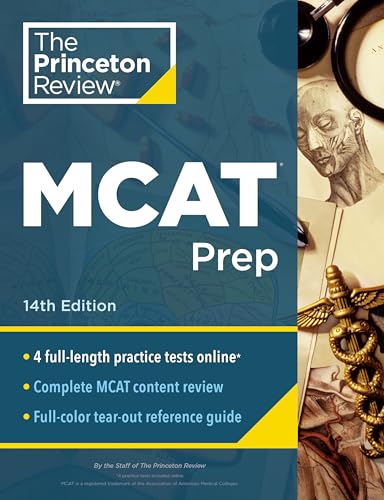
ESSENTIAL SUBJECT REVIEW FOR YOUR TOP MCAT SCORE. This comprehensive, all-in-one resource prepares you for the MCAT with in-depth content reviews, test-conquering strategies, a tear-out "cheat sheet" reference guide, and 4 full-length online practice exams for total test preparation.


Mark Fiebert is a former finance executive who hired and managed dozens of professionals during his 30-plus-year career. He now shares expert job search, resume, and career advice on CareerAlley.com.
Discover more from CareerAlley
Subscribe to get the latest posts sent to your email.

