- Key Takeaways
- Choosing a Career That Fits Your Life
- Start With What You Already Know About Yourself
- Explore Careers Through Your Strengths and Interests
- Consider Spatial, Technical, and Geographic Skills
- Decide Whether College Is Necessary
- Research the Reality Behind Career Titles
- Balance Interest, Opportunity, and Stability
- Test a Career Before Making a Major Commitment
- Turn Your Research Into a Career Decision
- Further Guidance & Tools
- Next Steps
- Final Words
- Additional Resources
We may earn a commission if you click on a product link and make a purchase at no additional cost to you. For more information, please see our disclosure policy.
Last updated: September 3, 2026

Key Takeaways
- Think broadly: The right career combines your interests, abilities, priorities, financial needs, and preferred way of working rather than matching one isolated trait.
- Use existing strengths: Transferable skills, education, experience, and natural abilities can point toward career possibilities you may not have previously considered.
- Compare tradeoffs: Evaluate compensation, education requirements, employment prospects, flexibility, advancement, work environment, and lifestyle before committing to a particular direction.
- Explore alternatives: College is essential for some professions, but apprenticeships, certifications, technical training, experience, and self-directed learning can lead to rewarding careers.
- Test your choices: Research job postings, talk with professionals, and try courses or projects to see whether an appealing career actually fits you.
Choosing a Career That Fits Your Life
Choosing a career can feel like deciding what you will do for the rest of your life. That is an unnecessarily high bar. A better goal is to identify several realistic career options that fit who you are now, provide opportunities you value, and leave room for your interests and circumstances to change.
Modern careers are rarely perfectly linear. People change employers, occupations, industries, and specialties. They return to school, earn new credentials, develop skills outside formal education, or discover that abilities built in one field transfer surprisingly well to another. If you are questioning your career, your past choices are useful information, not a permanent constraint.
This makes career planning less about finding one perfect job title and more about understanding yourself, exploring the range of work available, and comparing alternatives intelligently. The process applies whether you are choosing your first career, reconsidering a college major, returning to work, or making a mid-career change.
Get a ten-step plan for setting and achieving your goals. Unlike other titles, this book will teach you to turn any idea into an actionable plan.


Start With What You Already Know About Yourself
Before browsing hundreds of occupations, take inventory of what you already bring to the table. Your education matters, but so do your work experience, hobbies, volunteer activities, technical abilities, interpersonal strengths, and the tasks people consistently rely on you to handle.
Existing expertise can make a career transition easier because employers can see evidence of what you can already do. Building on existing skills doesn’t mean staying in the same industry.
Think about the work itself as well. Do you enjoy solving problems independently or working with a team? Would you rather analyze information, build something tangible, persuade people, organize complex projects, work outdoors, create visual material, or help individuals directly? These preferences can be more revealing than asking yourself which job title sounds interesting.
Your priorities matter just as much. Salary, stability, advancement, autonomy, predictable hours, travel,
Finally, determine your salary requirements. Compensation should not be your only criterion, but a career that cannot reasonably support your financial obligations is unlikely to be sustainable.
Job search essentials curated to help you prepare, stay organized, improve your resume, and approach interviews with more confidence.
Explore Careers Through Your Strengths and Interests
Instead of starting with a massive alphabetical list of occupations, group possibilities according to the kinds of abilities and activities you enjoy. This approach can uncover careers you might otherwise overlook.
Analytical and problem-solving strengths. If you like numbers, patterns, research, or complex problems, consider careers in finance,
Communication and people skills. Strong communicators can find opportunities in sales, recruiting, human resources, education, marketing, public relations, customer success, management, counseling, and many healthcare roles. Technical knowledge still matters in many of these fields, but the ability to explain, persuade, listen, negotiate, and build relationships can become a major competitive advantage. Clear communication is also valuable in highly technical careers where professionals must explain findings to clients, coworkers, or decision-makers.
Creative strengths. Creativity does not limit you to traditional artistic occupations. Marketing, advertising, user experience, content, product development, architecture, design, media, and entrepreneurship all combine creativity with commercial or technical skills. Look beyond the glamorous part of a creative occupation and examine how people actually spend their working day.
Hands-on and practical strengths. People who prefer tangible results may be happier in skilled trades, construction, maintenance, manufacturing, transportation, healthcare technology, field service, or technical occupations than in conventional office careers. These paths can involve apprenticeships, certifications, licensing, or employer training rather than a four-year degree.
Service-oriented strengths. If helping people is important to you, healthcare, education, counseling, social services, nonprofit work, emergency services, public administration, and many customer-facing professions deserve consideration. Be realistic about emotional demands, schedules, credential requirements, and compensation as well as the satisfaction these careers can provide.
Consider Spatial, Technical, and Geographic Skills
Some abilities are easy to overlook during career planning. Spatial reasoning is a good example. If you naturally understand maps, visualize objects in three dimensions, notice geographic relationships, or enjoy combining technology with the physical world, you may have options that extend well beyond traditional office work.
Surveyors make precise measurements that establish boundaries and support construction and development. The Bureau of Labor Statistics reports that surveyors typically need a bachelor’s degree, and they must be licensed before they can certify legal documents and provide surveying services to the public. The work combines technology, mathematics, fieldwork, analysis, and attention to detail. CareerAlley has more information on becoming a land surveyor.
Cartographers and photogrammetrists collect, analyze, and interpret geographic information to create and update maps and related products. Modern work frequently involves Geographic Information Systems, satellite information, aerial imagery, and other digital tools rather than simply drawing conventional maps. The BLS currently projects employment for cartographers and photogrammetrists to grow 7 percent from 2025 through 2035, compared with 3 percent for all occupations.
Related opportunities include GIS and geospatial work, urban and regional planning, environmental work, civil engineering, construction, remote sensing, and surveying and mapping technology. Urban and regional planners, for example, develop plans and programs involving land use and physical facilities, while engineers use site and terrain information when designing infrastructure.
Construction professionals also need to understand how land conditions affect projects. Resources on construction surveying illustrate how measurement, layout, and site information connect mapping skills with real-world building projects.
A unique, practical, and complete book for the surveyor, field engineer, or student learning construction surveying and layout.

People attracted to this type of work often benefit from mathematics, analytical thinking, GIS knowledge, careful measurement, problem-solving, and the ability to interpret visual information. Field-oriented positions may also require physical stamina and comfort working outdoors. As careers advance, managing projects and ensuring work adheres to timelines can add another layer of responsibility.
Traditional topography remains one specialized application of these abilities. A topography background focuses on representing land features and elevations, while geographic and spatial analysis now extends to far more sophisticated digital applications. Those fascinated by landscape change may also enjoy studying Earth’s topography as part of broader interests in geography, geology, or environmental science.
This notebook is ideal for all Topography lovers. It is composed of 100 pages allowing you to take notes, homework, write down your thoughts

Architecture provides another connection between visual-spatial abilities and professional work. Architects must understand a project’s physical site while integrating design, structural, regulatory, environmental, and client considerations. Resources on topography skills illustrate how buildings interact with the ground and surrounding landscape.
Photogrammetry is another specialized path for people drawn to imagery and spatial information. Modern photogrammetrists use photographs and digital imagery to extract geographic measurements and create mapping products. A specialized resource such as photogrammetrists reflects just how specific occupational interests can become once you begin exploring a broader strength such as spatial reasoning.
Decide Whether College Is Necessary
Education should follow from the career you are considering, not the other way around. Some occupations have clear degree, graduate-school, accreditation, or licensing requirements. Others offer several entry routes, and still others place greater weight on technical competence, portfolios, certifications, apprenticeships, or experience.
College remains an excellent path when a degree is required or when the education strongly supports your goals. Medicine, many engineering disciplines, architecture,
For someone who is uncertain, however, accumulating education without a clear objective can be expensive. It is understandable to reconsider your direction after investing substantial money or taking on student loans. A completed degree can still provide transferable skills and meet degree requirements for jobs unrelated to your original major.
Many occupations also don’t require ever setting foot in a college classroom. Skilled trades, technical occupations, sales roles, transportation careers, certain technology positions, and entrepreneurial paths can offer alternatives to the conventional four-year route. Requirements vary significantly, so research the specific occupation rather than assuming either college or no college is universally better.
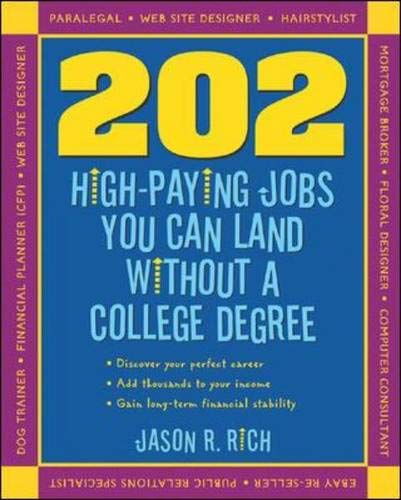
You have something in common with Bill Gates, Michael Dell and Ted Turner: none of them graduated from college. If they can make it, you can too!
Don't settle for a minimum-way job because you're not a college graduate. Try one of these 202 high-paying options. They're more than jobs—they're careers.
Education can also be modular. Certificates, industry credentials, community college programs, online courses, employer training, and self-directed projects allow you to build specific capabilities without immediately committing to another degree. A college education may be right for one destination, while a shorter training route may be more efficient for another.
Research the Reality Behind Career Titles
A career can sound ideal until you understand its daily responsibilities. Once you have a shortlist, move from imagination to evidence. Review occupational information, but also examine current job postings in your region. Employers reveal which skills, credentials, software, experience, schedules, and responsibilities they actually expect.
Resources on doing your research can help structure this process. Compare several postings for the same occupation rather than treating one employer’s requirements as universal.
Career maps can help you see what happens after the entry-level job. Some organizations provide detailed career maps showing relationships among occupations, skills, and advancement routes. Look for paths that provide somewhere worthwhile to go after you gain experience.
Then talk with people doing the work. Informational conversations can reveal the parts of a career that occupational summaries rarely capture: workload, management pressures, repetitive tasks, travel, schedules, workplace culture, career ceilings, and what experienced professionals wish they had known before entering the field.
Research is particularly important when a career requires substantial education or licensing. The greater the investment of money and time, the more evidence you should gather before committing.
The author provides a fresh perspective and replicable strategies and outlines six proven steps to help students secure a competitive advantage in the new economy.

Balance Interest, Opportunity, and Stability
Liking a subject is not the same as liking the jobs associated with it. Likewise, choosing an occupation solely because it appears secure or lucrative can produce a career you dislike. The strongest choices generally sit somewhere between personal fit and economic reality.
When selecting a career path, compare several dimensions rather than focusing on one:
- Daily work: Look at the tasks you will repeatedly perform, not just the mission, industry, or job title.
- Entry requirements: Determine the education, training, experience, licensing, portfolio, or certifications realistically needed to compete.
- Compensation: Compare likely earnings with your financial needs while
accounting for experience, geography, industry, and advancement potential. - Employment prospects: Use current labor-market information, but remember that national projections do not guarantee openings in your location or specialty.
- Work environment: Consider schedule, physical demands, travel, remote-work possibilities, interpersonal demands, stress, and how much independence you prefer.
- Growth potential: Understand where the career can lead and whether advancement requires additional credentials, management responsibilities, relocation, or specialization.
You should also consider how adaptable the underlying skills are. A career that builds capabilities valued by multiple industries may provide more flexibility if your interests or the market changes later.
If a new direction interests you, pursuing a path that uses some of your established knowledge can reduce the risk and time involved in starting over completely.
This book will take you through understanding the way you feel now as well as how to improve your current situation immediately so you can create enough space to work on breaking out and doing what you truly love.

Test a Career Before Making a Major Commitment
You do not have to make every career decision on paper. Whenever possible, create a small experiment before making an expensive or irreversible move.
Take an introductory course. Complete a project. Volunteer. Shadow someone. Attend a professional association event. Freelance on a limited basis if appropriate. Ask to help with related responsibilities in your current organization. These experiences provide information that another career assessment cannot.
Online learning makes testing a new direction easier. You can explore a subject before enrolling in a lengthy program, and targeted training can help you pursue a new career path without immediately abandoning your current employment.
If the experiment increases your interest, take the next step. If you discover the work isn’t what you expected, that is useful information too. Eliminating the wrong career before investing heavily in it is progress, not failure.
Get 10X more Job Interviews with JobCopilot. 87% of JobCopilot users report more interview invitations within 2 weeks. Automatically apply to jobs from 50,000+ companies worldwide

Turn Your Research Into a Career Decision
Once you have explored several options, narrow the list rather than researching indefinitely. A simple comparison can help. Choose three to five serious possibilities and rate them according to the factors that matter most to you: interest, skills fit, required preparation, earnings, demand, schedule, flexibility, advancement, location, and lifestyle.
You do not need one option to win every category. You are looking for a career whose overall combination works for you. One path may pay more but require years of additional schooling. Another may offer faster entry and flexibility but less predictable income. A third may be highly interesting but geographically restrictive. Seeing those tradeoffs together makes the decision more concrete.
Then create a flexible plan. Decide what you need to accomplish during the next six to twelve months and what a reasonable three-to-five-year direction might look like. Revisiting your goals periodically is sensible because your experience, priorities, family circumstances, and opportunities will continue to change.
Most importantly, do not wait for absolute certainty. Career research is meant to improve a decision, not eliminate all risk. Choose the best-supported direction available to you, take a manageable next step, and continue learning from what happens.
Further Guidance & Tools
- Career Exploration: Use O*NET OnLine to compare occupations by tasks, skills, knowledge, abilities, work activities, and other career characteristics.
- Occupation Data: Explore the Occupational Outlook Handbook for current U.S. information on duties, education, pay, outlook, and related occupations.
- Career Assessments: Visit CareerOneStop to explore interests and connect your results with occupations worth researching further.
Learn without limits
Start, switch, or advance your career with more than 5,800 courses, Professional Certificates, and degrees from world-class universities and companies.
Next Steps
- Set Priorities: Identify the five career factors that matter most to you, including income, flexibility, stability, interests, advancement, or work environment.
- Build Shortlist: Select three to five occupations that fit your strengths and priorities instead of trying to evaluate dozens simultaneously.
- Compare Requirements: Research education, credentials, pay, outlook, responsibilities, and current job postings for each option using multiple reliable sources.
- Talk to People: Speak with professionals in your leading fields and ask what their jobs are actually like beyond the job description.
- Test One: Try a course, project, volunteer experience, shadowing opportunity, or similar low-risk step before making a major commitment.
Final Words
Choosing a career is not about discovering a single occupation you were somehow meant to pursue. It is about finding realistic opportunities that make good use of your abilities, interest you enough to remain engaged, support your financial and personal priorities, and offer a future you can see yourself building. Research widely, test your assumptions, and make the best decision you can with the information available. Your next choice matters, but it does not have to define every choice that follows.
Additional Resources
-
 $11.89Learn More
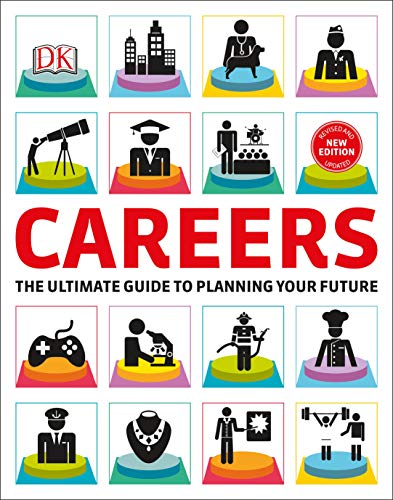
This comprehensive careers handbook is packed with ideas and inspiration to set you on the right career path. Tailor made to suit your individual strengths and interests, you’ll work out where you want to go and the exact route to take.
We earn a commission if you click this link and make a purchase at no additional cost to you.
10/16/2026 02:38 am GMT -

$39.99$35.80Learn MoreLogitech Brio 101 Full HD 1080p Webcam for Meetings, Streaming, Desktop, Laptop, PC - Built-in Mic, Shutter, Works with Zoom, Microsoft Teams, Nintendo Switch 2s New GameChat Mode, USB-A,-...
We earn a commission if you click this link and make a purchase at no additional cost to you.
10/16/2026 02:31 pm GMT -
 $24.99Learn More
A compact glass desktop whiteboard that fits between your keyboard and monitor, offering a smooth dry-erase surface, hidden storage and device trays, and all included accessories to keep notes, tools, and your workspace neatly organized.
We earn a commission if you click this link and make a purchase at no additional cost to you.
10/15/2026 04:28 pm GMT -
 $9.99Learn More
A motivational interactive workbook in which students and undecideds choose a career path directly inside the guide.
Use this direct, specific method to educate, understand, and inspire yourself to reach your full potential in only 10 chapters.
We earn a commission if you click this link and make a purchase at no additional cost to you.
10/16/2026 02:38 am GMT -
Learn More
Job search essentials curated to help you prepare, stay organized, improve your resume, and approach interviews with more confidence.
We earn a commission if you click this link and make a purchase at no additional cost to you.
-
 $14.90Learn More
This book gives you just enough to harness ChatGPT’s power—automating tasks and generating marketing campaigns without getting lost in the details.
We earn a commission if you click this link and make a purchase at no additional cost to you.
10/15/2026 03:32 pm GMT -

$20.00$12.63Learn MoreThe Career Portfolio Workbook offers innovative, step-by-step guidance to help job seekers build a targeted, skill-based portfolio filled with tangible proof of accomplishments, adaptable for interviews, reviews, and career transitions.
We earn a commission if you click this link and make a purchase at no additional cost to you.
10/15/2026 03:35 pm GMT -
 $24.99Learn More
Slim Portfolio Folio Organizer Holder for Letter Legal A4 Note Pads Notebooks for Men Women Refillable Business Leather Portfolio Binder, Dark...
We earn a commission if you click this link and make a purchase at no additional cost to you.
10/16/2026 02:31 pm GMT -

$21.99$14.15Learn MoreA big-picture guide to building a “portfolio career” (i.e., multiple streams, varied work) and aligning it with a sustainable life and income.
We earn a commission if you click this link and make a purchase at no additional cost to you.
10/16/2026 02:29 pm GMT -
Try it now
Get 10X more Job Interviews with JobCopilot. 87% of JobCopilot users report more interview invitations within 2 weeks. Automatically apply to jobs from 50,000+ companies worldwide
We earn a commission if you click this link and make a purchase at no additional cost to you.
-
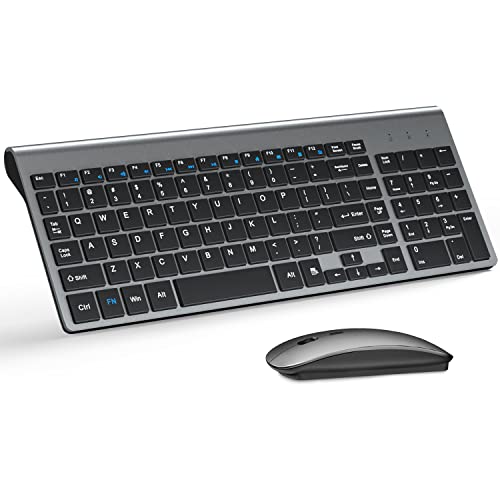 $32.77Learn More
Wireless Keyboard and Mouse Ultra Slim Combo, TopMate 2.4G Silent Compact USB 2400DPI Mouse and Scissor Switch Keyboard Set with Cover, Batteries Included, for PC/Laptop/Windows/Mac - Gray...
We earn a commission if you click this link and make a purchase at no additional cost to you.
10/16/2026 02:33 pm GMT

Mark Fiebert is a former finance executive who hired and managed dozens of professionals during his 30-plus-year career. He now shares expert job search, resume, and career advice on CareerAlley.com.