

- Key Takeaways
- What Does a Real Estate Agent Do?
- Skills and Responsibilities of a Successful Real Estate Agent
- How to Get a Real Estate License: Six Essential Steps
- How Much Does It Cost to Become a Real Estate Agent?
- How Long Does It Take to Get a Real Estate License?
- Choosing the Right Real Estate Brokerage
- Real Estate Agent Salary and Earning Potential
- Can Real Estate Agents Work Remotely?
- Maintaining Your Real Estate License and Building Your Career
- Further Guidance & Tools
- Next Steps
- Final Words
We may earn a commission if you click on a product link and make a purchase at no additional cost to you. For more information, please see our disclosure policy.
Last updated: October 16, 2026

Key Takeaways
- Licensing Requirements: Every U.S. state requires real estate agents to be licensed, but education hours, examinations, background checks, and application procedures vary.
- Career Preparation: Becoming an agent involves more than passing an exam; communication, negotiation, marketing, and client relationships are essential to success.
- Required Education: Most applicants must complete state-approved pre-licensing courses before taking their examination, although some states offer educational exemptions.
- Brokerage Selection: New sales agents generally must work under a licensed broker, making training, commission arrangements, and ongoing support important considerations.
- Financial Expectations: Real estate income can fluctuate significantly, especially early in a career, so prospective agents should understand expenses and commission-based compensation.
Becoming a real estate agent offers an opportunity to build a career around property sales, client relationships, and independent business development. For professionals considering a career change, the profession can offer flexibility and growth opportunities. However, getting started requires more than an interest in homes or architecture.
To become a licensed real estate agent in the United States, you generally must meet state eligibility requirements, complete approved education, pass an examination, satisfy background screening requirements, and obtain authorization to practice. Understanding the process, costs, responsibilities, and earning potential will help you decide whether real estate is the right
What Does a Real Estate Agent Do?
Real estate agents help individuals and businesses buy, sell, and rent property. Their responsibilities extend beyond showing homes and arranging transactions. Agents evaluate local market conditions, advise clients, market properties, negotiate offers, and coordinate the many steps involved in completing a sale.
Common responsibilities include:
- Market Research: Analyze comparable properties, neighborhood conditions, and recent transactions to help clients establish competitive buying or selling prices.
- Property Marketing: Create listings, coordinate photography, arrange open houses, and promote properties through digital advertising and real estate platforms.
- Client Representation: Help buyers identify suitable properties, arrange showings, and explain the purchasing process while assisting sellers with marketing and negotiations.
- Negotiation: Present offers and counteroffers, discuss contingencies, and help clients evaluate proposed terms, inspection findings, and repair requests.
- Transaction Coordination: Work with lenders, title professionals, inspectors, attorneys, and other participants to keep transactions progressing toward closing.
- Documentation: Prepare or coordinate authorized transaction documents, explain required disclosures, and help ensure deadlines and contractual obligations are addressed.
- Client Development: Build professional relationships, maintain contact with previous customers, and generate new business through referrals and marketing.
Agents must also understand applicable fair housing rules, agency relationships, disclosure obligations, and advertising requirements. The exact duties an agent may perform depend on state law, brokerage policies, and the services agreed upon with clients.
If you’ve been thinking about a career change, real estate can be an exciting and rewarding career. When you get a real estate scholarship you can then start taking the steps to become a fully licensed real estate agent.Click To TweetSkills and Responsibilities of a Successful Real Estate Agent
Successful agents combine market knowledge with communication, organization, and business development skills. Clients depend on agents to explain complex transactions, spot potential problems, and provide realistic guidance on buying and selling decisions.
Understanding the local market matters. While national housing trends provide useful context, property values, inventory, buyer demand, and negotiating conditions can differ substantially between neighborhoods. Professionals must remain fluent in real estate and develop a practical understanding of the communities and property markets they serve.
Strong interpersonal skills are equally important. Agents regularly work with clients who have different financial circumstances, expectations, and levels of experience. Being able to explain financing considerations, manage competing priorities, and communicate clearly can make the transaction process easier.
Real estate also requires discipline and self-management. Agents may spend considerable time prospecting, following up with leads, preparing listings, and maintaining professional relationships without receiving immediate compensation. Anyone considering the profession should be comfortable with sales responsibilities and periods of uncertain income.
How to Get a Real Estate License: Six Essential Steps
The process of becoming a licensed real estate agent varies by state, but most applicants follow six general steps. Because requirements can change, always confirm the current rules with the real estate commission or licensing agency in the state where you intend to practice.
- Step 1: Research State Licensing Requirements. Start by reviewing eligibility requirements, including minimum age, education, application procedures, and any restrictions related to prior disciplinary or criminal matters. Most states require applicants to be at least 18 years old, although specific rules differ. Determine whether your state requires a sponsoring brokerage before applying, taking the examination, or activating your license. Use official licensing information to guide your planning rather than general estimates from national training websites.
- Step 2: Complete Approved Pre-Licensing Education. Most states require applicants to complete a specified number of classroom hours covering real estate principles, contracts, agency relationships, financing, property ownership, and applicable laws. Requirements vary widely, so confirm the required hours and approved providers before enrolling. Courses may be available through traditional classrooms, community colleges, private real estate schools, and online education providers. Online courses can offer flexibility, but the school and delivery format must satisfy state requirements. Some providers also offer examination preparation or additional career training. For example, prospective Minnesota agents can explore programs that help candidates earn a real estate scholarship, but they should verify eligibility and financial assistance directly.
- Step 3: Submit Your Application and Complete Background Screening. Depending on your state’s procedures, you may need to submit an application before or after passing the licensing exam. Applications commonly require identifying information, educational documentation, fees, and disclosures about relevant background matters. Some states also require fingerprinting or a criminal background check. Complete every section accurately and follow the licensing authority’s instructions regarding supporting documents. A prior criminal record does not automatically disqualify applicants in every jurisdiction, but eligibility depends on the applicable rules and individual circumstances.
- Step 4: Prepare for and Pass the Licensing Examination. State real estate examinations generally evaluate national real estate principles and jurisdiction-specific laws. Topics may include contracts, property ownership, agency duties, financing, valuation, and fair housing. According to StateRequirement.com, applicants should review their state’s specific examination and licensing procedures before scheduling a test. Use approved course materials, practice examinations, and focused study sessions to identify weak areas. Passing scores, examination fees, scheduling procedures, and retake rules vary by state. If you do not pass on your first attempt, review your examination results, focus on areas requiring improvement, and confirm your state’s retake requirements before scheduling another test.
- Step 5: Choose a Sponsoring Brokerage. Real estate sales agents generally must practice under the supervision of a licensed real estate broker. Depending on the state, you may need to identify your sponsoring brokerage before completing the licensing process. Compare brokerages based on training, mentorship, commission arrangements, technology, administrative support, and business development opportunities. A brokerage offering a higher commission split is not necessarily the best choice for a beginner if it provides little guidance or requires substantial additional expenses.
- Step 6: Obtain Approval and Activate Your License. Passing the examination does not automatically authorize you to begin practicing. You must satisfy all remaining state requirements, including any brokerage affiliation, documentation, fees, and license activation procedures. Some states require additional post-licensing education after initial approval. Confirm that your license is active and that you are authorized to perform real estate activities before representing clients. Keep records of renewal deadlines and continuing education requirements to maintain your license.
How Much Does It Cost to Become a Real Estate Agent?
The total cost of obtaining a real estate license depends on the state, your education provider, exam requirements, and the brokerage you choose. Prospective agents should budget for both initial licensing expenses and the ongoing costs of operating a real estate business.
Typical expenses may include:
- Pre-Licensing Courses: Tuition for state-approved education, study materials, and optional examination preparation.
- Application and Examination Fees: Fees for submitting licensing paperwork, scheduling tests, and obtaining initial approval.
- Background Screening: Fingerprinting and criminal background checks when required by the licensing authority.
- Brokerage Expenses: Potential desk fees, technology charges, administrative costs, or other expenses associated with brokerage affiliation.
- Professional Memberships: Optional or brokerage-required association memberships and access to relevant multiple listing services.
- Business Development: Marketing materials, transportation, advertising, insurance, and other costs associated with finding and serving clients.
Before paying for a licensing course, calculate the total amount needed to become operational, not just tuition. Ask prospective brokerages for a written explanation of fees, including recurring charges and commission deductions.
Some businesses provide educational assistance or reimbursement programs. However, these opportunities may involve eligibility restrictions or commitments to work with a particular brokerage, so examine the conditions before enrolling.
How Long Does It Take to Get a Real Estate License?
The licensing timeline depends primarily on the required education hours, your study schedule, examination availability, and application processing times. Some candidates can complete the process within a few months, while others need considerably longer.
Students attending intensive courses may finish their required education relatively quickly. Those studying part-time while maintaining another job may need additional time. Examination scheduling, background screening, and administrative review can also affect the overall timeline.
When planning your transition, consider how much time you can consistently devote to coursework and examination preparation. Confirm whether course completion certificates expire and whether your state imposes deadlines for passing the examination or completing the licensing application.
It is also important to distinguish between obtaining a license and building a profitable business. Even after licensing, a new agent may need time to develop contacts, generate leads, and complete an initial transaction.
Choosing the Right Real Estate Brokerage
Your first brokerage can significantly influence your experience as a new agent. Beyond providing the supervision required by law, a brokerage may offer mentorship, transaction assistance, technology, marketing resources, and opportunities to develop clients.
When evaluating brokerages, consider the following factors:
- Training and Mentorship: Look for structured instruction covering contracts, negotiations, lead generation, client communication, and transaction management.
- Commission Structure: Understand how compensation is divided, whether additional transaction charges apply, and what services are included.
- Lead Opportunities: Determine whether the brokerage provides leads, how those opportunities are distributed, and whether additional fees apply.
- Technology and Support: Evaluate customer relationship management tools, marketing platforms, administrative assistance, and access to experienced agents.
- Culture and Expectations: Ask about required meetings, sales targets, office attendance, mentoring obligations, and opportunities to collaborate with other agents.
Networking with experienced professionals can help you understand the differences between brokerage environments. Resources on networking with companies and building professional relationships can also offer useful ideas for approaching brokerage interviews and building industry connections.
For beginners, accessible mentorship and practical transaction support may be more valuable than an attractive commission arrangement. Ask prospective brokers how they help newly licensed agents complete their first transactions and build a sustainable client base.
Real Estate Agent Salary and Earning Potential
Real estate earnings vary according to experience, location, transaction activity, commission arrangements, and individual business expenses. Many agents earn commission-based compensation rather than a predictable salary.
According to the U.S. Bureau of Labor Statistics, the median annual wage for real estate sales agents was $52,830 in May 2025. The agency projects employment for real estate brokers and sales agents to grow 2% between 2025 and 2035, slower than the average for all occupations.
These figures provide useful national context but do not represent guaranteed earnings or the typical experience of every newly licensed agent. Commission-based income may fluctuate considerably, and agents operating as independent contractors must account for business expenses and applicable taxes.
Real estate commissions are negotiable, and compensation arrangements can vary by transaction. Agents should understand how their brokerage calculates compensation, what expenses it deducts, and when it distributes payments.
Before changing careers, consider maintaining sufficient savings to cover personal expenses while building your business. Prospective agents may also benefit from exploring local market coverage and comparing conditions rather than assuming national trends will translate into immediate earning opportunities.
Can Real Estate Agents Work Remotely?
Technology has made many real estate responsibilities more flexible. Agents can conduct market research, communicate with clients, coordinate transactions, prepare marketing materials, and manage paperwork without spending every working hour in a traditional office.
However, residential real estate sales are not typically fully remote. Property showings, inspections, client meetings, and local market responsibilities often require in-person participation. Agents also remain subject to the licensing and supervision requirements of the jurisdictions where they conduct business.
Professionals seeking more location-independent work may consider related positions such as real estate transaction coordinator, marketing specialist, research analyst, or certain property management support roles. These occupations involve different responsibilities, and licensing requirements depend on the activities performed and applicable state laws.
Maintaining Your Real Estate License and Building Your Career
Getting a license is the first step in your professional development. Licensed agents must satisfy applicable renewal and continuing education requirements, which commonly include updates on real estate law, professional responsibilities, and industry practices.
Requirements differ between jurisdictions. Some states also require newly licensed agents to complete specific post-licensing courses within a designated period. Missing these obligations can affect your ability to continue practicing, so maintain a record of deadlines and completed education.
Beyond regulatory compliance, successful agents need to develop a reliable approach to client acquisition and service. Building referral relationships, maintaining accurate market knowledge, following up consistently, and learning from experienced colleagues can help establish a stronger business foundation.
It is also important to recognize that real estate sales agents and real estate brokers hold different licenses and have different responsibilities. Sales agents generally work under licensed brokers, while obtaining a broker’s license typically requires additional experience, education, and examination. The term REALTOR is also distinct from a general real estate license because it refers to qualifying members of the National Association of REALTORS.
Further Guidance & Tools
- Career Information: The Bureau of Labor Statistics explains real estate job duties, qualifications, compensation, and employment projections.
- Licensing Resources: The Association of Real Estate License Law Officials provides resources to understand real estate regulation and locate licensing authorities.
- Tax Guidance: The Internal Revenue Service explains federal tax considerations affecting qualifying self-employed real estate professionals.
Next Steps
- Verify Requirements: Visit your state real estate commission’s website and document eligibility rules, required coursework, examination procedures, and application deadlines.
- Compare Schools: Identify approved education providers and compare tuition, scheduling flexibility, course formats, examination preparation, and student support.
- Estimate Expenses: Calculate licensing costs, brokerage charges, and expected business expenses, and set aside a realistic financial reserve for your transition.
- Interview Brokerages: Speak with several local brokers about mentorship, compensation arrangements, training programs, technology, and expectations for newly licensed agents.
- Plan Your Transition: Establish a study schedule, prepare for the licensing examination, and identify potential professional contacts before beginning client development.
Final Words
Becoming a real estate agent requires preparation, persistence, and a willingness to develop both professional knowledge and business skills. The licensing process establishes the qualifications needed to enter the profession, but long-term success depends on how effectively you serve clients, adapt to local market conditions, and manage your business. Approach the transition with realistic financial expectations, choose a supportive brokerage, and keep developing your expertise after you earn your license. A thoughtful start can provide a stronger foundation for a sustainable real estate career.
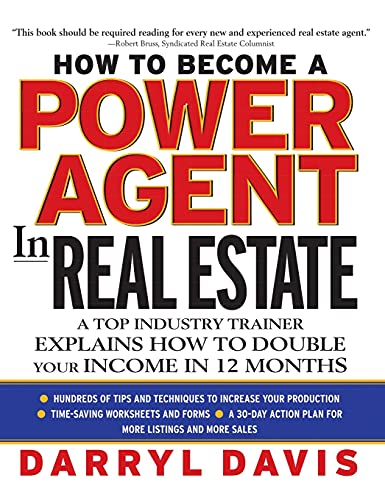
How to Become a Power Agent in Real Estate gives real estate agents both the powerful sales techniques and the practical management tips they need to double their income by closing more transactions.


Mark Fiebert is a former finance executive who hired and managed dozens of professionals during his 30-plus-year career. He now shares expert job search, resume, and career advice on CareerAlley.com.

