We may earn a commission if you click on a product link and make a purchase at no additional cost to you. For more information, please see our disclosure policy.
Last updated: December 13, 2025
Key Takeaways
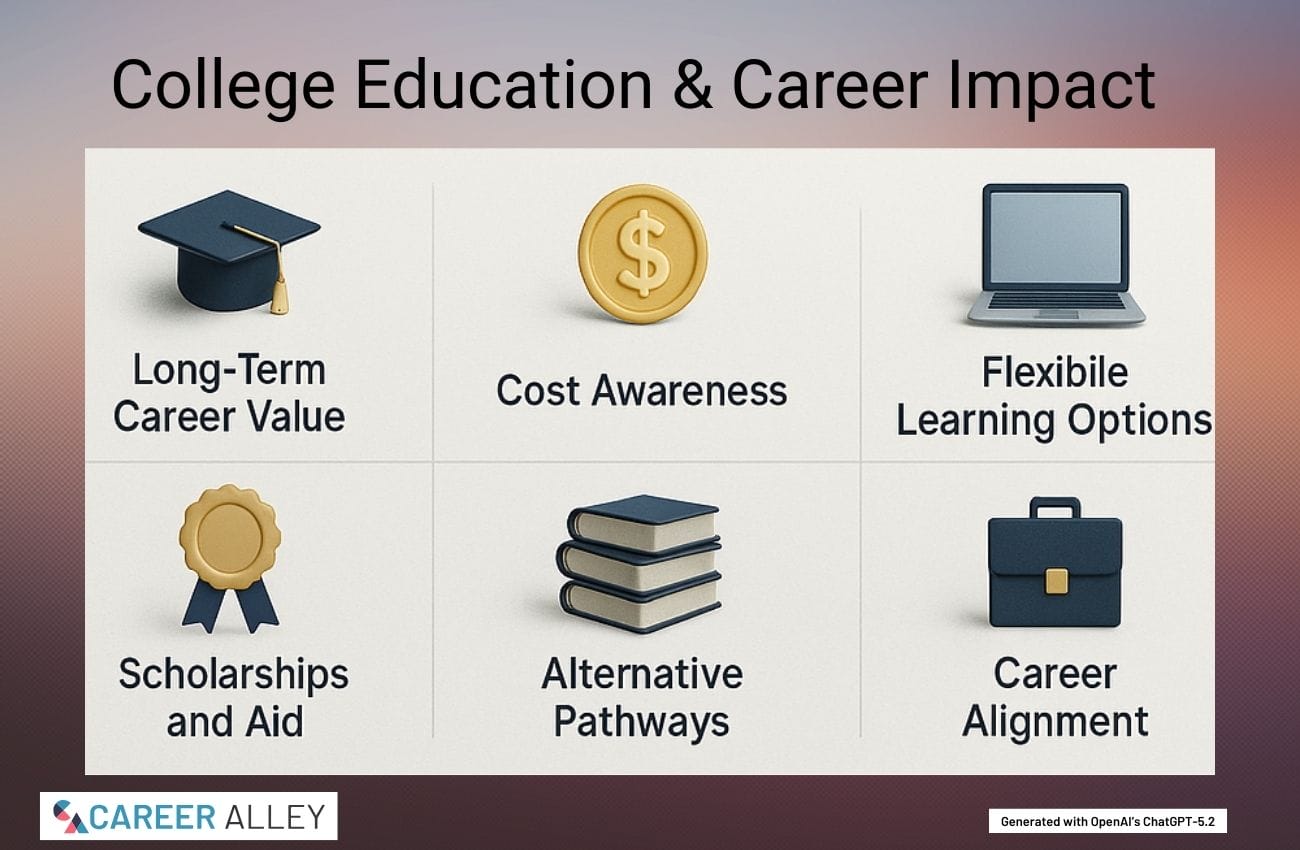
- Education Value: A college education continues to improve long-term career prospects by building marketable
skills , expanding opportunities, and increasing earning potential across competitive industries. - Cost Awareness: Rising tuition makes affordability critical, but strategic choices can significantly reduce costs without sacrificing educational quality or career outcomes.
- Flexible Pathways: Online programs, associate degrees, and certificates offer credible alternatives to traditional four-year degrees while supporting work and life responsibilities.
- Financial Support: Scholarships, aid, and employer sponsorships can meaningfully offset
expenses when researched and applied for strategically. - Career Alignment: Choosing education options aligned with clear career goals helps maximize return on investment and long-term professional stability.
The Value of College
Having a
One of the strongest motivators for pursuing
Affordability Challenges
While education delivers value, affordability has become a central concern for students and families. Tuition, housing, books, and fees can quickly add up, making traditional four-year programs feel out of reach. This reality has driven growing interest in alternative education models that emphasize flexibility, speed, and lower overall cost.
Fortunately, students today have more options than ever to pursue a quality education without incurring unsustainable
Affordable Education Options
There is no single path to an affordable education. The most effective approach often combines multiple strategies, depending on personal circumstances, career goals, and available resources. Exploring the options below can help reduce total costs while preserving long-term value.
- Community Colleges: Begin at a community
college to complete foundational coursework at significantly lower tuition rates. - Financial Aid: Apply broadly for grants, aid programs, and scholarships to minimize out-of-pocket
expenses . - Online Programs: Choose accredited online degrees to reduce housing, commuting, and campus-related costs.
- Work-Study: Participate in work-study programs to earn income while gaining relevant experience.
- Employer Support: Take advantage of tuition reimbursement programs offered by many employers.
- Lower-Cost Schools: Attend a
college with lower tuition while maintaining academic standards. - Certificates: Complete targeted certificate programs instead of full degrees when aligned with career goals.
Scholarship Opportunities
Scholarships remain one of the most effective ways to reduce education costs without repayment obligations. These awards are offered by colleges, private organizations, foundations, and professional associations to support students pursuing
Many institutions actively encourage students to apply for multiple scholarships rather than relying on a single award. By researching opportunities aligned with your background and academic interests, you can significantly reduce the financial burden of
Online Degree Programs
Advances in technology have made it possible to earn accredited degrees without attending in-person classes. Online programs now mirror traditional curricula while offering flexibility for students balancing work, family, or other responsibilities. Many employers recognize and support online education as a practical way to build
Choosing to pursue an education online can reduce costs related to tuition, housing, and daily expenses. Online programs are especially appealing for adult learners and professionals seeking advancement without stepping away from their careers.
Associate Degree Path
An associate degree offers a shorter, more affordable alternative to a bachelor’s program while still providing valuable credentials. These programs focus on practical knowledge and essential
Associate degrees are widely available across disciplines, from healthcare and technology to business and the arts. For example, an associate’s degree in arts can prepare students for creative careers or enable seamless transfer to a bachelor’s program at a lower overall cost.
Employer Sponsorship
Employer sponsorship is an increasingly popular option for
Many organizations actively offer sponsorship to high achieving students in high-demand fields. For motivated learners, sponsorship can eliminate much of the financial risk associated with pursuing
Further Guidance & Tools
- Tuition Trends: Review EducationData.org insights to understand tuition patterns,
debt levels, and return on education investment. - Scholarship
Search : Use Fastweb to find scholarships matched to your background, interests, and academic goals. - Online Learning: Explore accredited programs through edX to compare online degrees and certificates from reputable institutions.
- Career Planning: Reference Occupational Outlook Handbook data to align education choices with labor market demand.
- Employer Benefits: Learn about tuition assistance programs at SHRM to understand how employers support continuing education.
Next Steps
- List your career goals and identify which education pathways best align with the
skills and credentials required in your target field. - Compare tuition costs, program length, and outcomes across at least three institutions before committing to any degree program.
- Create a scholarship and financial aid application calendar to ensure you meet deadlines and maximize
funding opportunities. - Speak with current employers or prospective companies about tuition reimbursement or sponsorship options available.
- Evaluate online and associate degree programs as stepping stones to reduce total education costs.
Final Words
Pursuing a

Information on 1.5 million scholarships, grants, and prizes is easily accessible in this revised directory with more than 300 new listings that feature awards indexed by career goal, major, academics, public service, talent, athletics, religion, ethnicity, and more.


Mark Fiebert is a former finance executive who hired and managed dozens of professionals during his 30-plus-year career. He now shares expert job search, resume, and career advice on CareerAlley.com.