- Key Takeaways
- Understanding Voluntary Severance Packages
- What a Typical Package Includes
- Are You Ready to Leave Now?
- Financial Readiness: The Make-or-Break Factor
- How to Evaluate Whether the Offer Is Strong Enough
- Red Flags That Suggest You Should Consider Taking It
- When You Should Not Accept a Voluntary Severance Package
- Scenario-Based Decision Guidance
- Career Strategy: Using a VSP to Level Up
- Legal Considerations Before Signing
- A Simple Framework to Make Your Decision
- Further Guidance & Tools
- Next Steps
- Final Words
- Additional Resources
We may earn a commission if you click on a product link and make a purchase at no additional cost to you. For more information, please see our disclosure policy.
Last updated: December 22, 2025
Key Takeaways
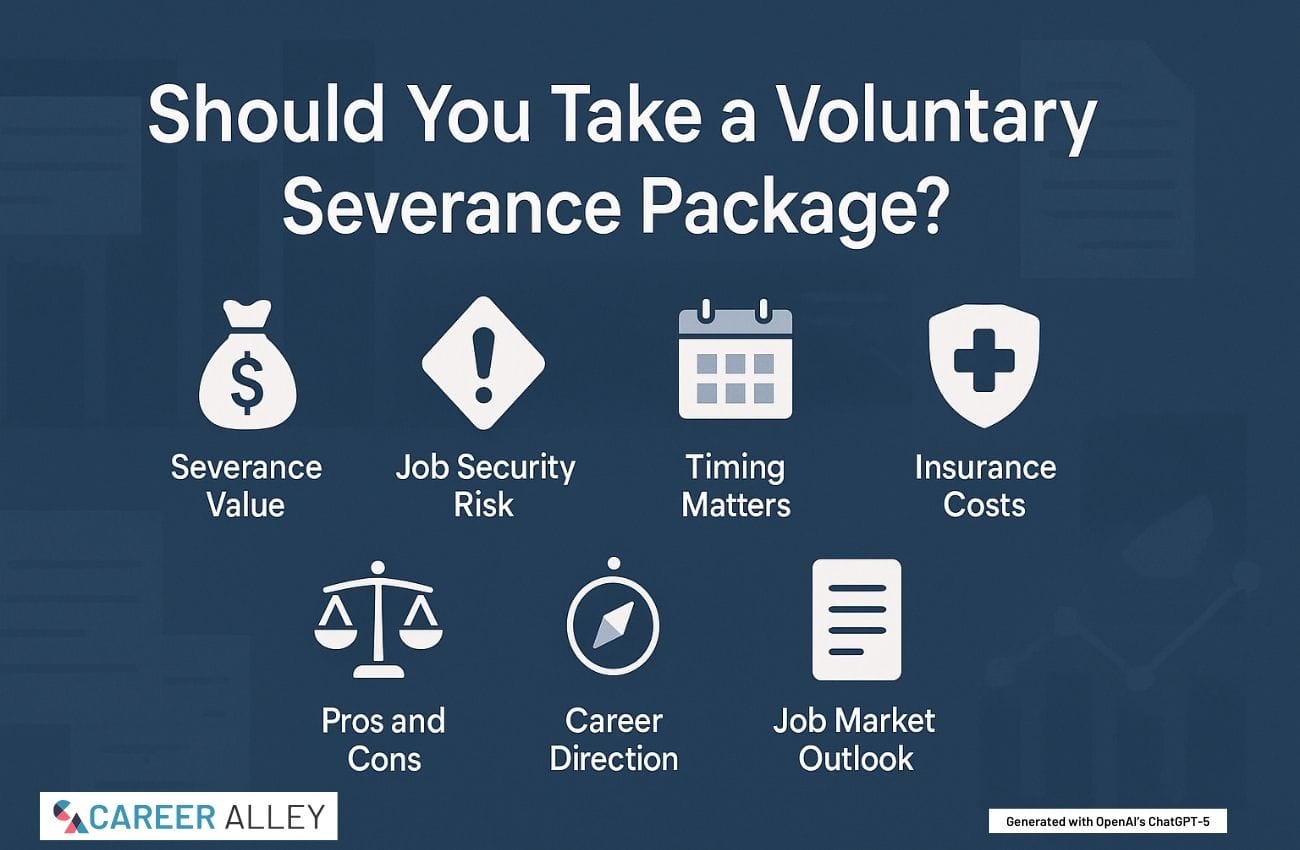
- Right Timing: Accepting a voluntary severance package makes the most sense when the offer is firm, your role is unstable, and you have financial runway.
- Financial Readiness: The ability to cover living expenses,
insurance , and job-search time without stress is the most important factor when weighing a VSP. - Career Strategy: A severance package can accelerate a pivot, open consulting opportunities, or strengthen your long-term career prospects when used intentionally.
- Risk Signals: Organizational instability, shrinking responsibilities, and automation risks are strong signals that taking a voluntary package may protect your future income and flexibility.
- Clear Framework: A structured framework that weighs offer strength, job security, finances, and career goals helps transform an emotional decision into a clear, confident yes-or-no choice.
Understanding Voluntary Severance Packages
Voluntary severance packages are increasingly common as companies restructure, automate, or shift priorities. Unlike traditional layoffs, a voluntary offer gives you a choice: accept compensation and leave, or stay and risk future uncertainty. These packages typically include a lump-sum payout based on tenure, continuation of health benefits, prorated bonuses, and, in some cases, outplacement services. You also sign legal documents that waive certain rights, so understanding the full scope is essential.
From the organization’s perspective, voluntary programs can soften the blow of workforce reductions. They reduce the “surprise” factor, give employees more control, and may lower legal risk because people are choosing to leave. But underneath the softer language, it is still a reduction in force, and someone still loses a job, so you need to treat the decision with care.

This book is for you if you want to do meaningful work that pays well. If you want to make a big career change without going back to school or taking a step down. If you’ve often wondered if there could be more out there for you. Spoiler alert: there is!

What a Typical Package Includes
Most Voluntary Severance Packages (VSPs) follow a predictable structure, although details vary across industries and seniority levels. You’ll often find:
- A lump-sum payout tied to
salary and tenure - Continuation of medical, dental, or vision coverage for a set period
- Eligibility for prorated annual bonuses
- Potential acceleration of vesting for restricted stock or options
- Payout of unused Paid Time Off (PTO) or vacation balances
- Outplacement coaching or career-transition support
This section provides the context you need before evaluating whether the offer makes sense for your situation.
Are You Ready to Leave Now?
A severance package is only “good” if the timing aligns with your personal and professional situation. Ask yourself:
- Are you burned out, disengaged, or frustrated with
leadership or direction? - Is your role likely to be eliminated in the next wave of layoffs?
- Do you already have a strong lead on a new role or consulting work?
- Have your responsibilities been shrinking, signaling reduced value to the organization?
- Is this a natural time to pivot careers, industries, or work models?
If you’re already halfway out the door mentally, a VSP can be a strategic exit rather than a reactive one.

This book will take you through understanding the way you feel now as well as how to improve your current situation immediately so you can create enough space to work on breaking out and doing what you truly love.
Financial Readiness: The Make-or-Break Factor
Your financial position is the most critical part of the decision. A severance package is helpful, but it’s not a long-term income replacement. Before accepting, evaluate:
- Whether you have at least three to six months of living expenses saved
- The cost of COBRA or marketplace health
insurance once employer coverage ends - The impact on retirement contributions, vesting schedules, and pension accruals
- How long do you realistically expect your job search to take in current market conditions
- Whether your severance and reason for separation could affect unemployment eligibility under your state’s rules
- The tax implications of a lump-sum payout versus installments, if there is a choice
If you cannot comfortably absorb months without a paycheck, taking a voluntary package may add stress rather than relieve it.
How to Evaluate Whether the Offer Is Strong Enough
Not all severance packages are created equal. To determine whether yours is worth accepting, look at:
- How many weeks of pay do you receive per year of service
- Whether bonuses, commissions, or equity are included
- How long benefits continue and whether company contributions remain intact
- Your eligibility for unemployment benefits after accepting the package
- Whether the company allows negotiation on payout timing or non-compete language
A strong severance package should meaningfully reduce financial pressure while you transition to your next role.
a step-by-step guide to recovering emotionally, financially, and professionally so you can rebuild your future with confidence and faith. Whether you’re struggling with fear, searching for a new job, or wondering how to survive financially
Red Flags That Suggest You Should Consider Taking It
Certain organizational signals indicate deeper issues ahead. If you’re seeing these, a VSP might be the safest exit:
- Repeated restructuring or departmental consolidations
- Significant
leadership changes or new executives reshaping priorities - Declining performance reviews or shifting expectations
- Automation or outsourcing trends in your function
- Rapid loss of headcount, mandatory
meetings , or unexplained spending freezes
If your job stability is weakening, a voluntary offer may be better than a future involuntary one with fewer benefits.
When You Should Not Accept a Voluntary Severance Package
There are equally valid reasons to reject a severance package. Hold off if:
- You are close to a significant bonus, payout, or equity vesting milestone
- Your role is stable and valued, making layoffs less likely in the near term
- You lack the
savings needed to weather months of job searching - Your current role places you in line for a promotion or expanded responsibilities
- Your industry is strong, and staying could increase future earning potential
Declining is often the better move if staying preserves your financial or career momentum.

This book is about getting one's life in order and moving on after career setbacks. The book shares a number of anecdotes from personal experiences, intending that the book be both instructional and motivational in its tone.
Scenario-Based Decision Guidance
Different career stages can dramatically change the decision. Employees nearing retirement may take the offer to protect
Early-career employees risk losing upward mobility and
Career Strategy: Using a VSP to Level Up
A severance package can be more than a financial cushion—it can be a strategic accelerator. Use the time to strengthen

Every one of us has, at some point in our career, been directly impacted or have a friend or family member that has been impacted by job loss.
Legal Considerations Before Signing
Every severance agreement comes with legal obligations. You may be signing away your right to sue, agreeing to nondisclosure terms, or limiting your eligibility for rehire. Employees over 40 are covered by the Older Workers Benefit Protection Act, which mandates specific timelines and disclosures when waiving age-discrimination claims, so pay close attention to those sections.
Other legal angles matter, too. If you are on a work visa, losing your job can immediately affect your immigration status, so speak with an immigration attorney before accepting. Significant reductions in force may trigger notice requirements under the federal WARN Act or similar state laws. And because severance and “voluntary” separation can affect unemployment eligibility, it is worth confirming how your state treats these cases before you sign.
A Simple Framework to Make Your Decision
To avoid analysis paralysis, evaluate your decision using four factors:
- The strength and generosity of the offer
- The stability of your current role
- Your financial readiness and
savings cushion - Your career goals and personal
timeline
If three out of four lean toward accepting, the VSP is likely a smart move. If most factors argue for staying, you may be better off using the offer as a wake-up call to proactively manage your role,

Most people agree there are few things worse than being stuck in a career you hate. It's not just the daily drudgery of work that has become tedious; it's also the hopeless feeling of life moving in the wrong direction and not knowing how to turn it around.
Further Guidance & Tools
- Severance Basics: Review detailed severance definitions and examples at Investopedia to understand how packages are commonly structured and calculated.
- Labor Rights: Read the EEOC’s guidance on age-related protections at EEOC.gov so you know what must be disclosed if you are over 40.
- Healthcare Planning: Estimate post-employment coverage options and costs at HealthCare.gov to
plan for medicalexpenses after your employer coverage ends. - Job Market Insight: Use Zipjobs to assess
hiring trends, typical salaries, and demand for yourskills before you decide to leave. - Legal Review: Find an employment-law specialist through Nolo if you need professional help reviewing your agreement and separation terms.
Next Steps
- Review the complete severance agreement and confirm payout calculations, benefits duration, and tax implications with your HR contact or financial advisor.
- Evaluate your financial cushion, health
insurance needs, and job-search readiness before making a final decision on accepting or declining the offer. - Consult an employment attorney, and if applicable, an immigration attorney, if any part of the agreement seems unclear, restrictive, or time-sensitive.
- Begin discreetly assessing the job market and updating
your resume ,LinkedIn profile , and professional materials to match your next target role. - Create a 30–60–90 day
plan if you choose to accept, including networking, skill-building, and a schedule for targeted applications and follow-ups.

Explore Career.io, the only Al and human-powered platform where you can find everything you need. For any step of your job search or career growth. All in one place.
Final Words
A voluntary severance package can be an opportunity or a setback, depending on the timing, your financial readiness, and your long-term career goals. The most successful decisions balance logic with strategy—ensuring that your next step puts you in a stronger position than the one you’re leaving. When approached thoughtfully, a VSP can become the catalyst for a more fulfilling and financially secure future, rather than just an ending.
Additional Resources
-

$16.99$9.10Learn MoreLayoff. If you haven't experienced one, you know someone who has. Dwain Schenck speaks with authority; not only has he seen energetic, talented, and accomplished friends undergo the stress of job loss, but he, too, has felt the sting of being "let go."
We earn a commission if you click this link and make a purchase at no additional cost to you.
01/08/2026 10:00 pm GMT -
$10.95Learn More
This book is about getting one's life in order and moving on after career setbacks. The book shares a number of anecdotes from personal experiences, intending that the book be both instructional and motivational in its tone.
We earn a commission if you click this link and make a purchase at no additional cost to you.
01/08/2026 10:00 pm GMT -
$11.49Learn More
a step-by-step guide to recovering emotionally, financially, and professionally so you can rebuild your future with confidence and faith. Whether you’re struggling with fear, searching for a new job, or wondering how to survive financially
We earn a commission if you click this link and make a purchase at no additional cost to you.
01/08/2026 05:02 pm GMT

Mark Fiebert is a former finance executive who hired and managed dozens of professionals during his 30-plus-year career. He now shares expert job search, resume, and career advice on CareerAlley.com.