We may earn a commission if you click on a product link and make a purchase at no additional cost to you. For more information, please see our disclosure policy.
Last updated: December 17, 2025
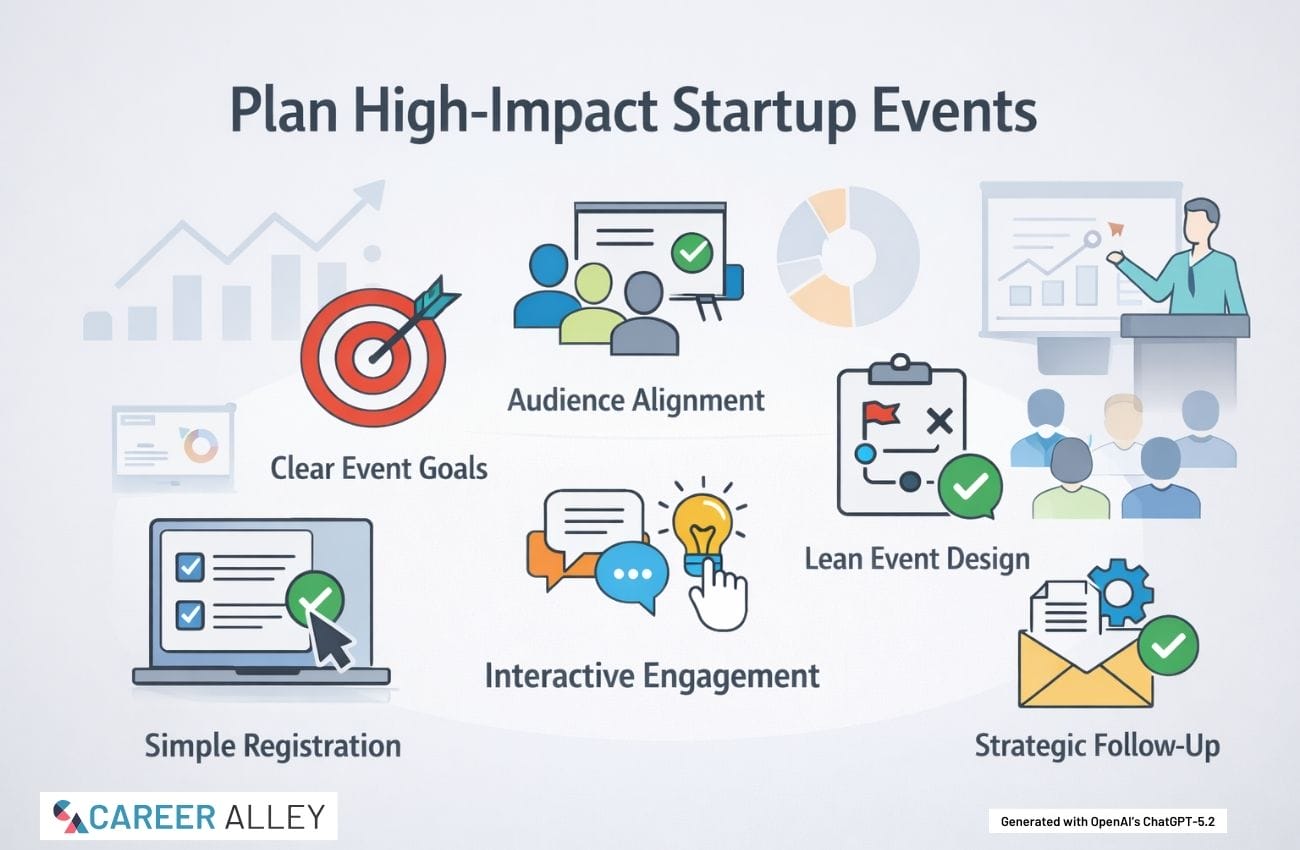
Key Takeaways
- Clear Objectives: Defining a specific event goal upfront helps startups allocate limited resources effectively while aligning planning decisions with measurable business outcomes.
- Audience Focus: Understanding attendee motivations allows founders to tailor messaging, experiences, and follow-up strategies that resonate with customers, investors, or partners.
- Lean Execution: Streamlined registration, focused programming, and selective activities enable high-impact events without excessive spending or operational complexity.
- Engagement Matters: Interactive experiences and thoughtful touchpoints create memorable impressions that strengthen brand recall and deepen attendee relationships.
- Post-Event Value: Strategic follow-up extends the life of an event, turning short interactions into long-term engagement, insights, and potential revenue opportunities.
Purposeful Event Planning
Hosting a business event remains one of the most effective ways for startups to build credibility, generate awareness, and create meaningful relationships. Despite the rise of digital channels, in-person experiences continue to play a critical role in establishing trust and accelerating growth. Research consistently shows that corporate leaders consider in-person events essential for business success, making them a valuable tool even for early-stage companies operating under tight constraints.
For founders juggling limited time and a restricted budget, event planning can feel overwhelming. However, modern best practices emphasize focus, clarity, and efficiency rather than scale. A well-executed small event often delivers greater impact than a large, unfocused gathering, particularly when aligned closely with business goals.
Start With Clear Goals
Every successful business event begins with a clearly defined objective. Are you introducing your startup to the market, unveiling a new product, or strengthening relationships with existing clients? Some founders prioritize networking to build industry visibility, while others focus on direct customer engagement or on collecting feedback.
Clarifying the primary goal early informs every subsequent decision, from venue size to programming and promotion. When planning an event for your startup, goal alignment ensures resources are directed toward outcomes that matter most, maximizing return on effort and spend.
Understand Your Audience
Once objectives are established, identifying and understanding your target audience becomes critical. Events designed for potential customers differ significantly from those aimed at investors, partners, or fellow founders. Each group brings unique expectations, interests, and value metrics.
For example, investors often focus on traction, scalability, and long-term vision, while customers prioritize practical benefits and real-world application. Tailoring content, tone, and format ensures your event speaks directly to attendees’ motivations and highlights your startup in a way that resonates.
Simplify Event Registration
Reducing friction in the registration process significantly increases attendance, especially for startups without extensive promotional reach. Complicated sign-up workflows can deter interested participants, while simple, mobile-friendly forms encourage quick commitment.
Using an online event registration form allows startups to collect essential information efficiently while projecting professionalism. Well-designed forms also provide valuable data for follow-up communication and future event planning.
Create Engaging Experiences
Attracting attendees is only the first step; keeping them engaged determines whether the event delivers lasting value. Modern audiences expect interaction, not passive consumption. Designing activities that invite participation helps create emotional connections and memorable moments.
- Interactive Displays: Hands-on demonstrations allow attendees to experience your offering directly, reinforcing understanding and perceived value.
- Experiential Elements: Thoughtfully chosen activities such as photo booths or live demonstrations encourage sharing and organic promotion.
- Brand Integration: Every activity should subtly reinforce your messaging, ensuring your brand remains central throughout the experience.
Deliver Memorable Value
Creating a memorable experience goes beyond entertainment. Attendees remember events that feel purposeful and relevant. According to research on customer engagement, brands that focus on experience are more likely to build loyalty and advocacy over time.
By aligning activities with clear outcomes and ensuring a consistent brand narrative, startups can create a memorable experience that differentiates them in competitive markets.
Define Event Outcomes
A strong startup event starts with a measurable outcome, not a vague goal like “get visibility.” Decide what success looks like before you pick a venue or send an invite: qualified leads, investor conversations, partner meetings, product feedback, or press interest. This single choice determines everything else—format, attendee list, agenda length, and even how you staff the room. Keep the event small enough that you can deliver a consistent experience, and plan a simple way to capture results, such as a short intake question at check-in or a structured note template your team uses during conversations.
Design A Lean Runbook
To host a high-impact event on a tight budget, you need a lightweight runbook that removes friction for attendees and reduces last-minute decisions for you. Build a simple timeline, assign clear roles, and choose activities that reinforce your message instead of distracting from it. Focus on repeatable steps you can reuse for future events, and make sign-up effortless with a mobile-friendly form and a clear confirmation message.
- Registration Flow: Create a fast RSVP form and automate confirmations using Google Forms so you can track responses without manual follow-ups.
- Program Spine: Use a short agenda with one main moment—demo, mini-talk, or founder Q&A—so attendees know what they’re showing up for.
- Engagement Hooks: Add one interactive element like hands-on testing, a feedback wall, or guided networking prompts to keep conversations purposeful.
- Staffing Roles: Assign a greeter, a conversation lead, and a notes-capturer so every attendee gets attention and you retain usable insights.
Convert Event Momentum
The event’s real ROI is created after everyone leaves. Within 24 hours, send a tailored follow-up that matches why each person came—customers get next-step offers or onboarding guidance, investors get a concise traction update, and partners get a specific collaboration idea. Log what you learned while it’s fresh, then refine your next event based on patterns: which talking points landed, where interest spiked, and what objections surfaced. Treat the event like a repeatable growth channel by scheduling your next outreach wave immediately and tracking outcomes over the next two weeks.
Follow Up Strategically
Event hosting does not end when attendees leave the venue. Without thoughtful follow-up, even the most successful event quickly fades from memory. Post-event communication reinforces connections and extends the impact of your efforts.
Simple actions such as sending a thank-you
Further Guidance & Tools
- Event Planning Basics: Explore frameworks and leadership insights from CareerAlley to align events with strategic business goals.
- Audience Insights: Use demographic and behavioral research from Pew Research Center to understand attendee expectations and preferences better.
- Registration Tools: Simplify sign-ups and data collection with platforms that provide efficient attendee management.
- Experience Design: Learn about customer experience strategies to design events that drive engagement and loyalty.
- Startup Growth: Gain perspective on networking and career growth through resources related to startup leadership.
Next Steps
- Define one clear objective for your next event and write a short statement explaining how success will be measured within 30 days.
- Create a basic attendee profile outlining motivations, expectations, and desired outcomes to guide content and experience decisions.
- Design a simple online registration form and test it on mobile devices before launching invitations.
- Plan two interactive elements that directly connect attendees with your product, service, or core brand message.
- Draft a follow-up communication plan, including thank-you messaging and feedback collection, before the event takes place.
Final Words
Hosting a successful business event does not require a massive budget or elaborate production. With clear goals, focused planning, and intentional engagement, startups can create meaningful experiences that strengthen relationships and support growth. By approaching events strategically and following through after the gathering ends, founders can achieve lasting impact while making the most of limited resources.
Leveraging Social Media and Virtual Events to Connect With Your Customers (Que Biz-Tech)


Mark Fiebert is a former finance executive who hired and managed dozens of professionals during his 30-plus-year career. He now shares expert job search, resume, and career advice on CareerAlley.com.