- Key Takeaways
- Understanding Career Advancement
- Setting Clear Career Goals
- Show Your Interest
- Build Your Skills and Experience
- Always Be a Team Player
- Seek Feedback and Improve
- Maintain a Positive Attitude
- Signals Leaders Notice
- Your Promotion Proof Plan
- Timing the Ask Right
- Further Guidance & Tools
- Next Steps
- Final Words
We may earn a commission if you click on a product link and make a purchase at no additional cost to you. For more information, please see our disclosure policy.
Last updated: January 5, 2026
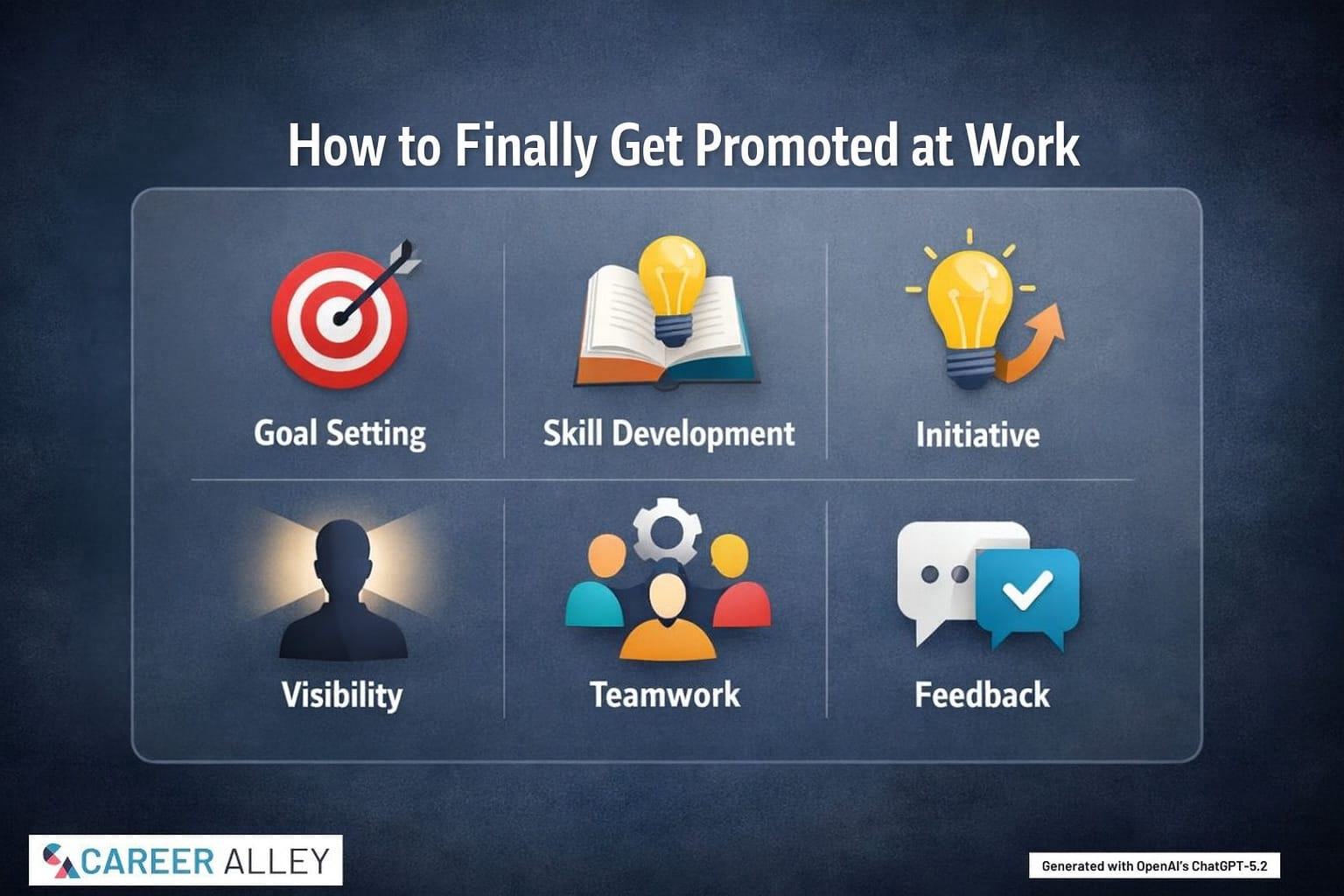
Key Takeaways
- Promotion Planning: Advancing your career requires intentional preparation, visible performance, and alignment with leadership expectations rather than waiting for recognition alone.
- Skill Readiness: Building the right skills and experience before a role opens positions you as a credible and confident candidate.
- Career Visibility: Clearly communicating your interest in advancement helps managers advocate for you when opportunities arise.
- Team Impact: Demonstrating collaboration and leadership within teams strengthens trust and long-term promotion potential.
- Professional Mindset: Persistence and a positive outlook help you navigate delays, feedback, and competitive promotion processes.
Understanding Career Advancement
Most professionals aim to reach career milestones that provide greater responsibility, higher income, and improved work-life balance. Promotions often represent progress toward those goals, but they rarely happen by chance. Instead, they are typically earned through consistent performance, preparation, and alignment with organizational needs.
Understanding how advancement works in your organization allows you to focus your efforts strategically. Employers promote individuals they trust to succeed at the next level, not just those who excel in their current role.

Who Gets Promoted, Who Doesn’t, and Why explains the practical, often unspoken workplace behaviors and strategies that consistently separate high performers who advance from those who get overlooked, regardless of talent or effort.

Setting Clear Career Goals
Clarity is essential when working toward a promotion. Without a defined goal, it becomes challenging to identify which actions will advance your career. You can start by identifying the position you want and understanding what success looks like in that role.
- Define Expectations: Review job descriptions and performance standards for the role you want.
- Create a Timeline: Set realistic milestones for developing skills and experience.
- Align Objectives: Ensure your goals support broader team and company priorities.
Show Your Interest
No one will know you’re after a promotion unless you communicate it. Expressing interest professionally signals ambition and allows managers to support your growth. This does not mean demanding advancement; instead, it means sharing your long-term career goals.
Conversations during performance reviews, one-on-one meetings, or informal check-ins are ideal opportunities to discuss your aspirations. Even when roles are not immediately available, showing interest in climbing the career ladder helps decision-makers keep you in mind.

Great companies, large and small, rise or fall because of their talent; the more high performers on your team, the more successful your organization will be. Of course, that’s easier said than done. Research shows that only about 25% of all new hires turn out to be high performers.
Build Your Skills and Experience
Desire alone does not prepare you for advancement. Promotions often require expanded responsibilities, technical expertise, or leadership ability. Analyze the qualifications associated with your target role and assess where you need to grow.
This may involve earning credentials such as a professional bookkeeping certification, pursuing formal training, or gaining hands-on experience through cross-functional projects. Demonstrating proactive development strengthens your candidacy for the job you’re targeting.
Always Be a Team Player
Regardless of industry or role, collaboration is essential. Employers promote individuals who can work independently while contributing positively to team outcomes. Strong teamwork reflects emotional intelligence, reliability, and leadership potential.
Being recognized as a team player means supporting colleagues, sharing knowledge, and helping projects succeed. You can also strengthen these skills through targeted learning opportunities, such as improving your skills programs.

Discover career-advancing courses and certificates from top universities on edX in business, technology, data science, healthcare, and more—build the skills that open doors to better jobs and bigger opportunities.
Seek Feedback and Improve
Feedback clarifies how others perceive your readiness for advancement. Seeking constructive input from managers and peers demonstrates maturity and a willingness to improve.
When feedback highlights gaps, treat it as guidance rather than criticism. Acting on input and demonstrating measurable improvement reinforces trust and signals that you can meet higher expectations.
Maintain a Positive Attitude
Career progression is rarely linear. You may encounter delays, competition, or missed opportunities. Maintaining a positive attitude helps you stay focused and resilient through these challenges.
Positivity supports collaboration, reinforces professionalism, and makes you easier to work with—qualities leaders value when considering candidates for promotion.
An uplifting handbook for living in each moment as positively and presently as possible - written and illustrated by Instagram sensation Dani DiPirro, who, after years of struggling, figured out how to make the most of each day and now shares her tips with others to help them enjoy life more, too.
Signals Leaders Notice
Promotions usually go to the person leaders already trust to operate at the next level, not the person who wants it most. That trust is built through patterns: you solve problems without drama, communicate clearly, and make your manager’s life easier. Aim to be known for outcomes, not effort. That means defining what “excellent” looks like in your role, then consistently delivering it while staying visible. When your work aligns with business priorities, your promotion becomes the logical next step, not a favor.
Your Promotion Proof Plan
If you want a promotion to feel inevitable, build a simple system that makes your impact obvious and repeatable. The goal is to remove guesswork for decision-makers by showing results, readiness, and leadership behaviors in a way that is easy to review. Keep the process lightweight, consistent, and focused on measurable outcomes that matter to your team and organization, so your progress is undeniable when opportunities open up.
- Impact Log: Track wins weekly with metrics, screenshots, and before-after notes in a simple Google Sheets tracker so you can summarize value fast during reviews.
- Scope Upgrade: Volunteer for one visible responsibility above your current level, then document what changed, what improved, and what you learned.
- Stakeholder Map: Identify who influences promotion decisions and build credibility by collaborating on high-priority work, not random favors.
- Ask Script: Prepare a direct, calm request that links your results to the next role’s expectations and proposes a timeline for evaluation.

7 Steps of Your Career Ladder helps you take full control of your career success by showing you how to define your objectives, leverage your strengths, latch onto unexpected opportunities, and determine your career goals.
Timing the Ask Right
Timing matters because budgets, headcount, and business cycles often constrain promotions. Instead of waiting for an annual review, anchor your promotion conversation to outcomes and planning moments: after a strong project launch, during quarterly goal-setting, or when your team is scoping new responsibilities. Go in with evidence, not emotion, and propose a clear path: what you’ve delivered, what you’ll take on next, and when you and your manager will reassess. This approach reduces defensiveness and increases the odds of a concrete commitment.
Further Guidance & Tools
- Promotion Readiness: Explore leadership insights to understand how managers evaluate advancement potential.
- Skill Mapping: Use guides to compare role requirements and identify experience gaps.
- Professional Learning: Strengthen career-critical skills with structured courses available on Coursera.
- Workplace Feedback: Improve feedback conversations using practical tools from Mindmap.
- Career Research: Review advancement trends and salary benchmarks on Glassdoor to set realistic expectations.

MindMap AI features are built to help you plan, organize, and visualize your ideas effortlessly. From AI Copilot to export, each feature is designed to simplify mind mapping and boost your creative process.
Next Steps
- Self Review: Compare your current role to your target position and document skill gaps and development priorities within the next week.
- Manager Meeting: Schedule a focused discussion to communicate promotion goals and ask for specific feedback on readiness.
- Skill Development: Enroll in one training course or certification aligned with your desired role within the next 30 days.
- Visibility Plan: Track accomplishments monthly and share measurable results with leadership to reinforce your value.
Final Words
Earning a promotion requires more than ambition—it demands preparation, visibility, and persistence. By setting clear goals, building relevant skills, collaborating effectively, and maintaining a positive mindset, you position yourself for long-term career growth. While advancement may take time, consistent effort and intentional action significantly improve your chances of success.
The latest guide in the top-selling, easy-to-use Perfect Phrases series gives you the correct vocabulary to use to get the best salary or job offer possible. Using words and phrases that take away the taboo surrounding the subject of money, you can ask for what you want-and deserve-with confidence.

Mark Fiebert is a former finance executive who hired and managed dozens of professionals during his 30-plus-year career. He now shares expert job search, resume, and career advice on CareerAlley.com.