- Key Takeaways
- Modern Entrepreneur Reality
- Accepting Constant Change
- Learning From Entrepreneurs
- Developing True Uniqueness
- Learning Through Practice
- Understanding Leadership Roles
- Building Sustainable Momentum
- Proving Market Demand
- Building Execution Systems
- Protecting Your Runway
- Further Guidance & Tools
- Next Steps
- Final Words
- Additional Resources
We may earn a commission if you click on a product link and make a purchase at no additional cost to you. For more information, please see our disclosure policy.
Last updated: January 13, 2026
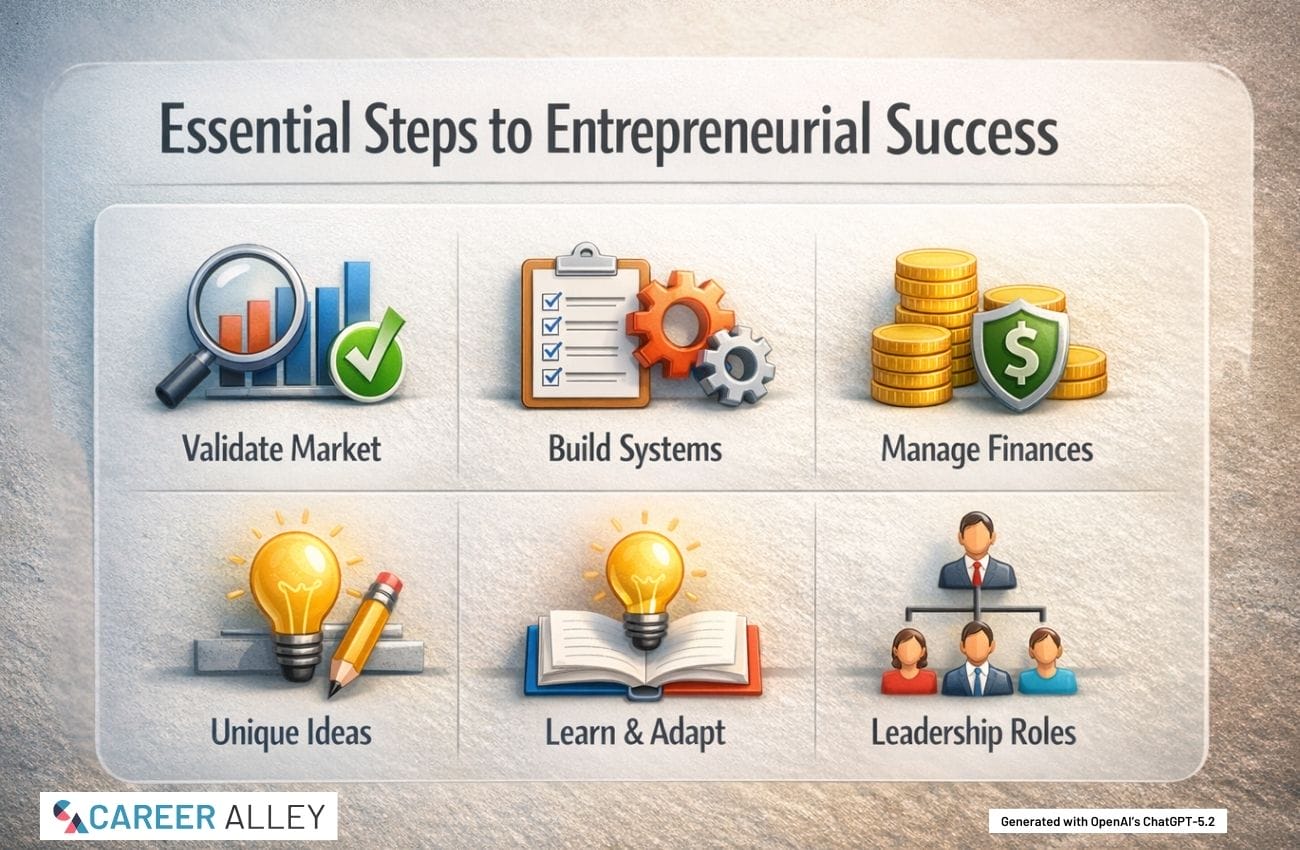
Key Takeaways
- Adaptability matters: Entrepreneurs who accept constant change and respond quickly to market shifts are far more likely to build resilient, long-lasting businesses.
- Original thinking wins: Sustainable success comes from developing and clearly communicating unique ideas that solve problems in ways competitors cannot easily replicate.
- Learning beats perfection: Mistakes are inevitable, but entrepreneurs who analyze failures and adjust quickly gain critical advantages over those who hesitate.
- Roles drive outcomes: Strong companies depend on people excelling in the right roles, not everyone chasing titles or executive authority.
- Knowledge compounds: Continuous learning through experienced entrepreneurs, credible resources, and real-world practice accelerates growth and decision-making quality.
Modern Entrepreneur Reality
The business world has always been competitive, but today it moves faster and with far less margin for error. Great ideas fail every day not because they lack potential, but because execution, adaptability, and leadership skills fall short. Entrepreneurs are no longer competing only with local businesses or known rivals. They are competing with global platforms, automation, and rapidly shifting consumer expectations.
To succeed in this environment, entrepreneurs must master a core set of skills that extend beyond passion or ambition. Building something sustainable requires the ability to learn continuously, communicate clearly, and make uncomfortable adjustments when reality demands it.
Sage accounting software helps small businesses manage billing, invoicing, job costing, inventory, budgeting, purchase orders, and financial tracking with trusted tools and support.


Accepting Constant Change
Change is no longer an occasional disruption; it is the operating environment. Technology, customer behavior, and competitive landscapes evolve constantly, often without warning. Entrepreneurs who cling to rigid plans or outdated assumptions risk becoming irrelevant faster than ever before.
Successful entrepreneurs build flexibility into their thinking and operations. They monitor trends, test new approaches, and remain willing to pivot when data or market feedback demands it. Adaptability is not a weakness; it is one of the strongest strategic advantages available.
Learning From Entrepreneurs
One of the most efficient ways to shorten the learning curve is by studying people who have already navigated the challenges you face. Entrepreneurs routinely share insights, failures, and lessons through blogs, books, and other long-form content available online.
Reading perspectives from experienced founders provides exposure to real-world decision-making that no textbook can replicate. Resources created by entrepreneurs who have built and scaled meaningful businesses often highlight mistakes, trade-offs, and mindset shifts that are otherwise learned the hard way.
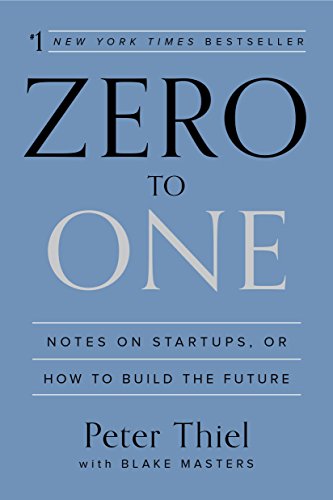
The great secret of our time is that there are still uncharted frontiers to explore and new inventions to create. In Zero to One, legendary entrepreneur and investor Peter Thiel shows how we can find singular ways to create those new things.
Developing True Uniqueness
A crowded market rewards originality, not imitation. Many aspiring entrepreneurs attempt to repackage existing ideas without adding meaningful differentiation. While this may generate short-term traction, it rarely leads to durable success or investor confidence.
Being unique means contributing original ideas and articulating them clearly. Entrepreneurs who think differently, question assumptions, and approach problems from unconventional angles are more likely to uncover opportunities others miss. A clear explanation is just as important as creativity.
Learning Through Practice
Entrepreneurship is an iterative process built on experimentation. Mistakes are unavoidable, and in many cases, they are expensive. What separates successful entrepreneurs from unsuccessful ones is not error avoidance, but how quickly lessons are extracted and applied.
Each setback provides data that can refine a product, improve messaging, or strengthen operations. Entrepreneurs who resist fixing mistakes often compound them, while those who respond decisively improve their odds of long-term success.

Understanding Leadership Roles
Many people enter entrepreneurship expecting to become the CEO, but strong companies are built on effective structures, not titles. Not everyone is suited for executive leadership, and forcing the issue can weaken the entire organization.
Sometimes the most valuable contribution comes from supporting roles that stabilize operations, execution, or culture. A CEO does not define a company any more than a single idea does. Those who hold executive roles must also manage perception, credibility, and trust, making CEO reputation management a practical consideration.
Building Sustainable Momentum
Entrepreneurial success rarely arrives quickly. It is the result of consistent effort, learning, and adjustment over time. Short-term wins matter, but long-term viability depends on systems, discipline, and informed decision-making.
Starting small, learning from credible sources, and refining skills steadily can compound into meaningful progress. Entrepreneurs who stay patient while remaining proactive are better positioned to weather setbacks and capitalize on opportunities.
Stephen Key, one of the world’s leading experts on getting business ideas off the ground, revealed in his groundbreaking book One Simple Idea just how simple it is to make a fortune by selling or “renting” your great ideas.

Proving Market Demand
Entrepreneurship gets a lot easier when you stop guessing and start validating. Before you invest months of effort, pressure-test your idea with real buyers and real constraints: who has the problem, how painful it is, what they do today, and what would make them switch. The goal is not perfect certainty, it is fast clarity. A small pilot, a simple landing page, or a handful of discovery calls can reveal whether you have a true customer need or just a clever concept.
Building Execution Systems
Once you know the problem is real, the next challenge is building a repeatable way to deliver value. Systems beat heroic effort, especially when time, energy, and cash are limited. You want lightweight processes that keep you focused on outcomes: tracking leads, shipping improvements, managing customer feedback, and documenting what works. Start simple, then tighten the loop between learning and doing, so you can make better decisions faster without creating busywork.
- Weekly Scoreboard: Track four numbers every week: qualified leads, conversations, trials or demos, and paid conversions so progress stays measurable.
- Customer Loop: Collect feedback immediately after key moments and turn the top recurring issues into a short, prioritized fix list.
- Demand Check: Use Google Trends to compare search interest for your core phrases, then refine positioning around the strongest signal.
- Process Lite: Write a one-page playbook for outreach, follow-up, and delivery so anyone can execute consistently, including future hires.
Time to be your own boss. Join the millions who launched their businesses with LegalZoom. LLC plans start at $0 + filing fees.

Protecting Your Runway
Most promising businesses die from cash-flow mistakes, not bad ideas. Protecting your runway means knowing your burn rate, planning for slow months, and separating “nice to have” spending from costs that directly drive revenue or retention. Keep financial decisions grounded in reality: conservative forecasts, clear pricing logic, and a straightforward way to track incoming and outgoing cash. When money is tight, discipline becomes a competitive advantage because it forces sharper priorities, cleaner offers, and better negotiations.
Further Guidance & Tools
- Startup Education: Explore Y Combinator Library for practical insights on building, funding, and scaling startups from experienced founders.
- Market Research: Use Statista to access reliable market data and consumer trends that support informed business decisions.
- Skill Development: Learn from Coursera to build foundational business, leadership, and technology skills through expert-led courses.
- Founder Insights: Read Harvard Business Review for research-backed perspectives on strategy, leadership, and organizational performance.
- Execution Tools: Organize projects and workflows using Notion to maintain clarity, accountability, and operational consistency.
Next Steps
- Assess Skills: Identify your strongest and weakest entrepreneurial skills this week and prioritize one area for focused improvement over the next 30 days.
- Study Leaders: Subscribe to two entrepreneur-led blogs or publications and dedicate time each week to applying one actionable insight.
- Test Ideas: Validate one business idea through customer feedback or a small pilot before committing significant time or capital.
- Review Mistakes: Document recent setbacks, extract clear lessons, and implement one operational change within the next two weeks.
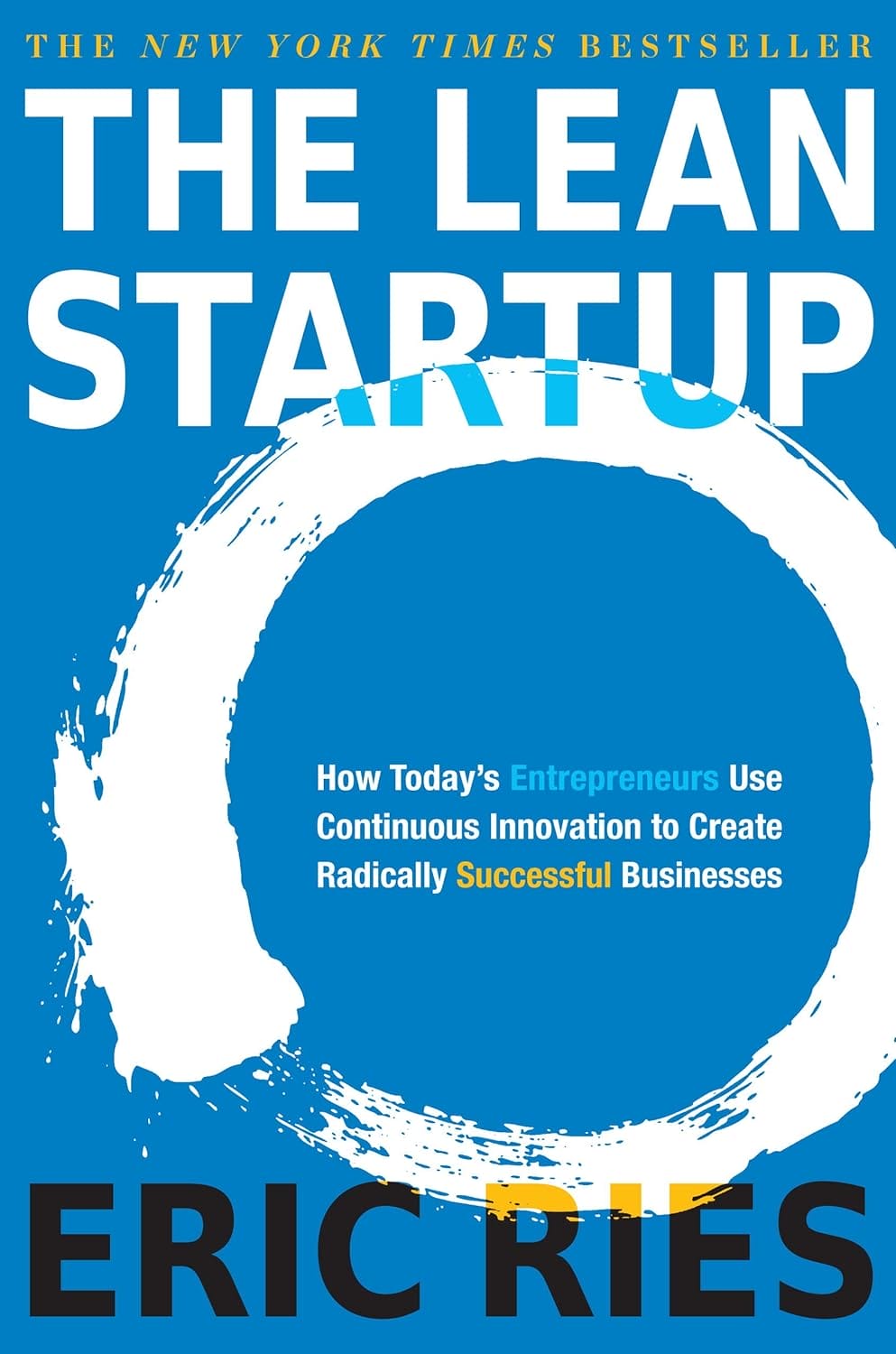
This book is a must-read for entrepreneurs and business leaders looking to launch a successful startup.
Final Words
Entrepreneurship is demanding, unpredictable, and deeply rewarding for those willing to commit to growth and adaptability. Success depends less on luck and more on learning, resilience, and thoughtful execution. By embracing change, developing unique ideas, learning from mistakes, and understanding where you add the most value, you can build a stronger foundation for long-term entrepreneurial success.
Additional Resources
-
$31.00$14.99Learn MoreThe great secret of our time is that there are still uncharted frontiers to explore and new inventions to create. In Zero to One, legendary entrepreneur and investor Peter Thiel shows how we can find singular ways to create those new things.
We earn a commission if you click this link and make a purchase at no additional cost to you.
10/16/2026 02:40 am GMT -

$24.95$17.56Learn MoreStart Your Own Business will guide them through the first three years of business. They’ll gain the know-how of more than 30 years of collective advice from those who’ve come before them
We earn a commission if you click this link and make a purchase at no additional cost to you.
10/16/2026 02:40 am GMT -
 $34.99Learn More
A practical guide for startup founders, Startup Funding explains how venture capital works and outlines clear steps to successfully raise investment capital.
We earn a commission if you click this link and make a purchase at no additional cost to you.
10/16/2026 02:32 pm GMT -

$15.75$13.78Learn MoreThe $100 Startup shows how anyone can launch a successful business with minimal investment by leveraging passion, skills, and practical, real-world strategies.
We earn a commission if you click this link and make a purchase at no additional cost to you.
10/15/2026 06:31 pm GMT -
 $14.99Learn More
Nine out of every ten startups will fail. Want to avoid their mistakes and become part of the 10% that succeed? THE NEXT STEP is the first series to take entrepreneurs step-by-step through the process from raw idea to operational startup
We earn a commission if you click this link and make a purchase at no additional cost to you.
10/16/2026 02:36 am GMT -
$32.00$12.09Learn MoreThis book is a must-read for entrepreneurs and business leaders looking to launch a successful startup.
We earn a commission if you click this link and make a purchase at no additional cost to you.
10/16/2026 01:32 am GMT -
Learn More
$40.00$20.27We earn a commission if you click this link and make a purchase at no additional cost to you.
10/16/2026 03:37 pm GMT -

$29.00$25.66Learn MoreIn this invaluable book, LinkedIn co-founder Reid Hoffman and venture capitalist Ben Casnocha show how to accelerate your career in today’s competitive world. The key is to manage your career as if it were a startup business: a living, breathing, growing startup of you.
We earn a commission if you click this link and make a purchase at no additional cost to you.
10/16/2026 01:32 pm GMT
We’re with you until you land your next job — placement support guaranteed. Four expert services. One simple fee. This personal, done-for-you, job placement support service has everything you need to find your next role.


Mark Fiebert is a former finance executive who hired and managed dozens of professionals during his 30-plus-year career. He now shares expert job search, resume, and career advice on CareerAlley.com.